By Nava Atlas | On July 27, 2020 | Updated August 28, 2022 | Comments (0)
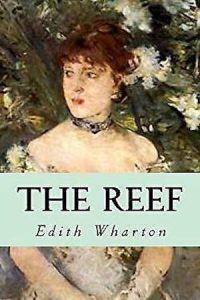
The Reef by Edith Wharton, published in 1912, came more or less in the middle of her novel-writing career. It came after the triumph of The House of Mirth and before her Pulitzer Prize-winning turn with The Age of Innocence.
The author herself wasn’t pleased with this book, writing her regrets over it to a friend not long after its publication, describing it as a “poor miserable lifeless lump,” and vowed that next time she was “going to do something worthwhile!”
Some critics tended to agree with Wharton’s self-assessment. The New York Sun’s review called The Reef “a bitter, disheartening, sordid story and we could wish that Mrs. Wharton would look on brighter and nobler aspects of life.”
Read More→
By Nava Atlas | On July 26, 2020 | Updated December 18, 2022 | Comments (2)
It’s fun and fascinating to watch film adaptations of classic children’s novels. Does the cast of characters match how you imagined them while reading? Is the film true to the book, or does it depart too much?
It’s a good idea to read a book first before seeing a film adaptation. That way, the cinematic visuals and actors don’t interfere with your imagination. Who can ever read the Harry Potter books again without picturing Daniel Radcliffe, Emma Watson, and the rest of the actors in the film series?
Film and television adaptations can be helpful for kids who aren’t big on reading. In those cases, having them watch the movie first might be a way to get them more excited about reading the book it’s based on. Then, comparing the film and written versions might spark lively discussions. Read More→
By Norma Brickner | On July 22, 2020 | Updated September 22, 2026 | Comments (0)
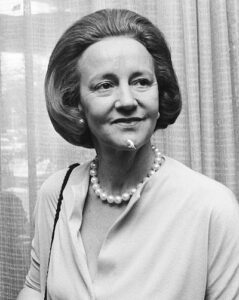
Katharine Graham (June 16, 1917 – July 17, 2001) is best remembered for her role as publisher and CEO of The Washington Post. She oversaw the newspaper’s involvement in the Pentagon Papers controversy and its investigation of the Watergate scandal that led to President Richard Nixon’s resignation in late 1974.
Photo at right courtesy of Wikimedia Commons.
Born in New York City, Katharine Meyer was one of five children raised in a family of great wealth. Her father, Eugene Meyer, was a multimillionaire and businessman who was Chairman of the U.S. Federal Reserve from 1930 – 1933. Her mother, Agnes Ernst Meyer, was a politically active educator. Read More→
By Nava Atlas | On July 20, 2020 | Updated August 28, 2022 | Comments (0)
The Lost Books of Jane Austen by Janine Barchas (Johns Hopkins University Press, 2019) is an ingenious, lavishly illustrated excursion through the printed history of Jane Austen’s books. Barchas contends that the cheap, sometimes shoddily produced printings of Austen’s novels helped keep her work affordable and in the public eye.
From the publisher: In the nineteenth century, inexpensive editions of Jane Austen’s novels targeted to Britain’s working classes were sold at railway stations, traded for soap wrappers, and awarded as school prizes.
At just pennies a copy, these reprints were some of the earliest mass-market paperbacks, with Austen’s beloved stories squeezed into tight columns on thin, cheap paper. Few of these hard-lived bargain books survive, yet they made a substantial difference to Austen’s early readership. These were the books bought and read by ordinary people. Read More→
By Nava Atlas | On July 19, 2020 | Updated August 28, 2022 | Comments (0)
Johanna Spyri (June 12, 1827 – July 7, 1901) born Johanna Louise Heusser, was a Swiss author best known for her first and most successful book, the 1881 children’s novel Heidi.
Born in rural Hirzel, not far from Zurich, she grew up in a happy, cultured home in a literary environment. Her mother, Meta Huesser, was a popular songwriter and poet. Her father was a well-known and greatly beloved physician in Zurich. The Huessers opened their home to the intellectual and literary figures of that time and place.
In 1852, when Johanna was 25, she married a former schoolmate, Bernhard Spyri, who became an attorney. While the couple was living in Zurich, she began to tell stories to their son to amuse him, and her husband encouraged her to set them to paper. Read More→
By Nava Atlas | On July 19, 2020 | Updated September 22, 2026 | Comments (0)
“Patterns,” a poem by American imagist poet Amy Lowell (1874 – 1925), was first published in Men, Women and Ghosts, a 1919 collection. It exemplifies the imagery-dense free verse for which she was known.
Though Men, Women and Ghosts is a book of poems, Lowell begins her preface by writing that “This is a book of stories.” She goes on to say:
“For that reason I have excluded all purely lyrical poems. But the word ‘stories’ has been stretched to its fullest application. It includes both narrative poems, properly so called; tales divided into scenes; and a few pieces of less obvious storytelling import in which one might say that the dramatis personae are air, clouds, trees, houses, streets, and such like things. Read More→
By Nava Atlas | On July 18, 2020 | Updated October 31, 2026 | Comments (0)
“A Haunted House” by Virginia Woolf (1882 – 1941) was published in her first collection of short fiction, Monday or Tuesday (1921). It later appeared as the lead story of another collection of stories, A Haunted House and Other Short Stories (1944), after Woolf’s death.
Presented here is the text of “A Haunted House” in full. First, here are links to a pair of analyses of this classic short story: Read More→