By Nava Atlas | On January 17, 2022 | Updated November 14, 2022 | Comments (2)
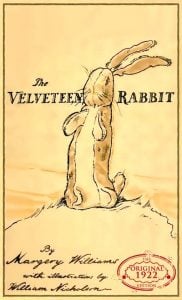
The Velveteen Rabbit (or How Toys Become Real) by Margery Williams was published in 1922 and has been in print ever since. The best-known book by British-born author who was later known as Margery Williams Bianco (1881 – 1944), it has been a children’s classic for generations. In 2022, we celebrate the hundredth anniversary of its publication.
The story is at its heart about the transformative power of love. The original edition was illustrated by William Nicholson, and has been through numerous editions, with artwork by various illustrators.
A 1924 review in The Detroit News observed, “How Toys Become Real is the inner story of The Velveteen Rabbit, but there’s no syrupy moral to it. It’s just that if a toy is loved enough, it finally, through the alchemy of love, becomes real.” Read More→
By Nancy Snyder | On January 16, 2022 | Updated June 27, 2026 | Comments (0)
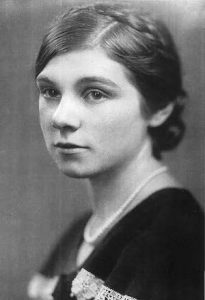
Sydney Taylor (born Sarah Brenner; October 30, 1904 – February 12, 1978) was an American author best known for All-of-a-Kind Family. This series of autobiographical children’s novels portrays the life of an Eastern European Jewish immigrant family in New York City in the early twentieth century.
Though she wrote several other children’s novels, the five books in the All-of-a-Kind Family series proved to be her lasting legacy, earning a devoted audience for their warm and loving depiction of Jewish life in early twentieth-century America.
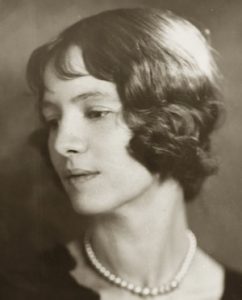
Photo above right, Sydney Taylor (Sarah Brenner) in the 1920s, from the private collection of her daughter, Jo Taylor Marshall. Read More→
By Nava Atlas | On January 11, 2022 | Updated August 25, 2022 | Comments (0)
Anzia Yezierska (October 29, 1880 – November 21, 1970) was a Polish-born Jewish-American writer who achieved renown for her fiction on the immigrant experience in the early twentieth century.
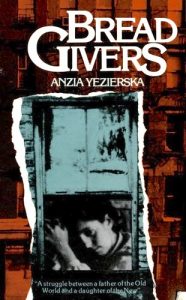
Her most notable novel has remained Bread Givers (1925). She also achieved renown with her first short story collection, Hungry Hearts (1920), and her 1923 novel, Salome of the Tenements (1923).
When her family immigrated to the U.S. in 1893, they were among the masses of Eastern European Jews who arrived between 1880 to 1924. Like many Jewish immigrants, they settled and lived in the immigrant neighborhood of the East side of Manhattan. Read More→
By Nava Atlas | On January 10, 2022 | Updated August 26, 2022 | Comments (0)
Anzia Yezierska (1890 – 1870), a Polish-born, Jewish-American writer was in her early teens when her family immigrated into the United States during the mass Jewish immigration between 1880 to 1924. They settled and lived in the immigrant neighborhood of the East side of Manhattan.
Bread Givers (1925) remains her best-known novel among a body of work that reflected the Jewish immigrant experience in America of the early 1900s. To set this kind of story down with a female perspective was quite a rarity in her time, reflecting the author’s unflagging determination. Read More→
By Elodie Barnes | On January 8, 2022 | Updated March 15, 2025 | Comments (0)
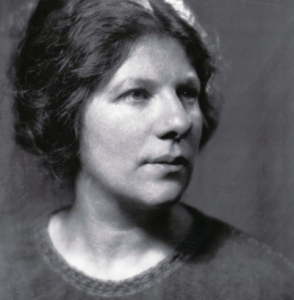
Janet Flanner (March 13, 1892 – November 7, 1978) was an American writer and journalist who spent much of her career writing as Paris correspondent for The New Yorker.
Under the pen name Gênet, she authored the magazine’s “Letter from Paris” for almost fifty years.
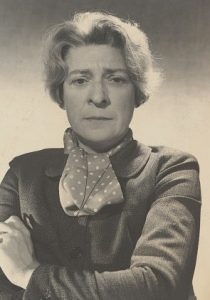
She was a prominent member of the expatriate community that settled in Paris between two World Wars, and made her home there until 1975, after which she returned to New York. Portrait at right, Janet Flanner in 1940 (National Portrait Gallery).
Read More→
By Francis Booth | On January 3, 2022 | Updated July 19, 2024 | Comments (4)
Maude Phelps McVeigh Hutchins (1899 –1991) was raised in an upper-class environment, born to wealthy parents in New York City. She was orphaned at a young age and brought up by her grandparents, prominent members Long Island society.
This introduction to Maude Hutchins’ creative life, first in the visual arts and then more predominantly as the author of fiction considered daring even by mid-twentieth-century standards, is excerpted from Girls in Bloom: Coming of Age in the Mid-20th Century Woman’s Novel by Francis Booth, reprinted by permission.
A 1935 article about Hutchins (in her then role as a sculptor in Chicago) makes it clear just how aristocratic her family was. “Mrs. Hutchins’ mother was a Phelps, of a New England family that made their advent in Massachusetts in 1632. It was her Phelps grandparents who brought her up after her parents died.” Read More→
By Nancy Snyder | On December 28, 2021 | Updated March 17, 2023 | Comments (2)
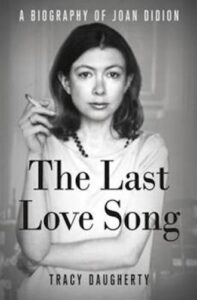
On December 23, 2021, when I learned that writer extraordinaire Joan Didion had passed away at the age of 87, I did what any friend would do: I canceled the day’s planned activities and concentrated on everything Didion.
For forty-four years, Joan Didion had been my own constant and portable companion: of course I needed to devote time to adjusting to the news of Didion’s passing. Our friendship was, obviously, one way. I can proclaim to know piles of intimate Didion facts and details, but of course Didion never knew me.
But that’s besides the point. Didion will remain one of the most significant influences on my writing life: what one remembers about her is the strength and authority of her writing. No one could imitate her; indeed, whenever anyone tried to channel Didion they were detected immediately. Read More→
By Nava Atlas | On December 28, 2021 | Updated August 28, 2022 | Comments (0)
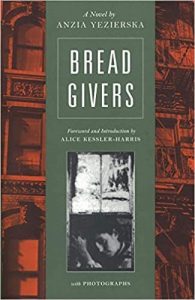
Bread Givers by Anzia Yezierska (1880 – 1970) is the best-known novel by this immigrant writer whose work reflected the Jewish immigrant experience in America of the early 1900s. To set this kind of story down with a female perspective was a rarity in her time, reflecting the author’s chutzpah and determination.
At the age of ten, in 1890, Yezierska arrived with her family to New York City’s Lower East Side. A product of the immigration wave of the late 1800s, she never quite shed the feeling of being an outsider.
Longing to rise above her circumstances, she was somewhat hampered by her brittle personality and a measure of self-loathing. In her final book, the autobiographical Red Ribbon on a White Horse (1950), she wrote: “With a sudden sense of clarity, I realized the battle I thought I was waging against the world had been against myself, against the Jew in me.” Read More→