By Adam Burgess | On March 13, 2017 | Updated October 4, 2022 | Comments (1)
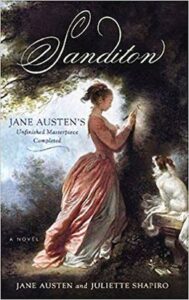
Sanditon, though unfinished, is perhaps Jane Austen’s most exciting, unusual, and promising piece of literature. Unlike The Watsons, whose plot and ending can be relatively inferred, Sanditon, the novel she worked on in 1817, the year of her death, is quite different from any of her other stories.
The narrative of Sanditon could probably have followed a variety of paths, so predicting its resolution is difficult to do.
The story’s heroine, Charlotte Heywood, is a somewhat-exaggeratedly sensible young woman. She comes to the small coastal tourist town of Sanditon upon the urgings and guardianship of its proprietor, who is attempting to build the town’s reputation. Read More→
By Nava Atlas | On March 13, 2017 | Updated May 16, 2023 | Comments (0)
Dear Literary Ladies,
Do you think it’s a good practice to keep a journal? What did you use your journal for, and how did it benefit your writing practice?
One of the most helpful tools a writer has is [her] journals. Whenever someone asks how to become an author, I suggest keeping a journal. A journal is not a diary, where you record the weather and the engagements of the day. A journal is a notebook in which one can, hopefully, be ontological. Read More→
By Tony Riches | On March 13, 2017 | Updated February 15, 2020 | Comments (4)
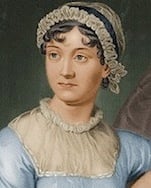
What is known of the writing habits of Jane Austen, the beloved author, is simple and fascinating.
Most of Jane Austen’s best known writing was done at Chawton Cottage in Hampshire, where she revised Pride and Prejudice, Sense and Sensibility,and Northanger Abbey. It was there that she wrote Mansfield Park, Emma, and Persuasion.
Jane would try to write every day, close to a window for the light, using an amazingly small walnut table (which survives at the Chawton Cottage Museum) and a ‘writing box’ thought to have been a gift from her father. Read More→
By Emma Ward | On March 12, 2017 | Updated October 4, 2022 | Comments (2)
Zora Neale Hurston was an American novelist, memoirist, and folklorist. In the anthology, A Zora Neale Hurston Reader, the chapter titled “What White Publishers Won’t Print” (originally published in Negro Digest in 1950) discusses the lack of average black people appearing in literature and film.
In it she wrote about the importance of accurate portrayal of society’s marginalized groups.
In some ways this was ironic, because some African-American writers like Richard Wright criticized her for applying the “minstrel technique” to her characters and penned a scathing review of what is arguably Hurston’s best-known work, Their Eyes Were Watching God. Read More→
By Taylor Jasmine | On March 7, 2017 | Updated January 12, 2026 | Comments (0)
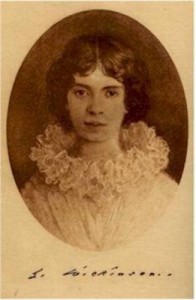
Emily Dickinson (1830-1886) lived in Amherst, Massachusetts where she studied at Amherst Academy with her siblings and wrote 1,800 poems over the course of her lifetime. Here we’ll enjoy a selection of poetic quotes by Emily Dickinson, most being beautiful isolated lines from her poems.
It was during the Civil War years that Emily developed her identity as a poet. She sent some of her poems to Thomas Wentworth Higginson, a noted literary figure.
His critique of her unorthodox style seemed to discourage her, and she retreated to the habit of keeping her writing private. Nevertheless, she continued to write copiously. Read More→
By Nava Atlas | On March 6, 2017 | Updated June 13, 2026 | Comments (0)
Dear Literary Ladies.
It’s always fascinating to discover how those of you who succeeded so brilliantly went about the basics of the practice of writing. Can you share some quick insights on how you developed plots and characters?
My methods of work are very simple & soon told. My head is my study, & there I keep the various plans of stories for years some times, letting them grow as they will till I am ready to put them on paper. Then it is quick work, as chapters go down word for word as they stand in my mind . . . I never copy, since I find by experience that the work I spend the least time upon is best liked by critics & readers. Read More→
By Susan Bailey | On March 6, 2017 | Updated October 4, 2022 | Comments (2)
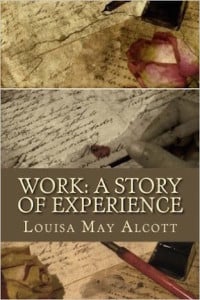
This article is part of a series of posts on Work A Story of Experience as found on the Louisa May Alcott is My Passion blog. To read all the posts associated with this book, explore this link.
“…Work is an expression of Alcott’s feminist principles and a major effort toward synthesizing in popular, readable form the broad set of beliefs encompassing family, education, suffrage, labor and the moral reform of social life that defined feminist ideology in the nineteenth century.” (from Critical Essays on Louisa May Alcott edited by Madeleine Stern) Read More→
By Nava Atlas | On March 6, 2017 | Updated May 17, 2026 | Comments (0)
How do writers get ideas? — that’s a question often asked of published authors, but which defies easy answer, if it can be answered at all.
Most often, ideas seem to find you, not the other way around. Of course, something you see, hear, or read can ignite sparks of inspiration, but the day-to-day work habits you develop can fuel the inception and development of ideas.
Here, Louisa May Alcott, Willa Cather, and Madeleine L’Engle share a common technique: they consciously allowed seedlings of ideas to blossom in their heads before setting them to paper. Read More→