By Nava Atlas | On August 15, 2018 | Updated August 20, 2022 | Comments (2)
Maud Hart Lovelace (April 25, 1892 – March 11, 1980) was an American author best known for the nostalgic Betsy-Tacy series of books for girls.
Born and raised in Mankato, Minnesota, she enjoyed a happy childhood filled with friends, culture, and a loving family. As soon as she could hold a pencil, she began writing stories and poems.
Maud Hart started her college studies at the University of Minnesota but shortly thereafter had to withdraw when she was diagnosed with appendicitis. More than willing to take a break from her studies and continue her recuperation at her maternal grandmother’s home, she escaped to the sun and warmth of California to rest and recover. Read More→
By Nava Atlas | On August 14, 2018 | Updated August 22, 2022 | Comments (0)
Tillie Olsen (January 14, 1912 – January 1, 2007) was an American author of fiction and nonfiction whose body of work was small but influential, drawing upon her personal experiences.
Her writings spoke to the struggles of women and working-class families, placing her in the canon of second-wave feminist literature. While her birth was never recorded officially, it’s been determined she was born in either 1912 or 1913.
Born Tillie Lerner in Omaha, Nebraska, she was the second child of Ida Goldberg and Sam Lerner, Russian-Jewish immigrants. Her father, a laborer, was the Secretary of Nebraska’s Socialist party. Her parents’ socialist views and activism impacted Olsen’s childhood and influenced her later life. Read More→
By Taylor Jasmine | On August 12, 2018 | Updated May 28, 2022 | Comments (1)
What is it about horse stories that kids, and dare we say especially girls, love so much? There’s something grounding and down to earth about the bond between the beautiful animals and humans devoted to their welfare when illuminated in fiction. Here, we’ll take a quick look at four of the most enduring classic horse stories by women authors.
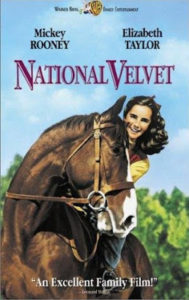
The novels Black Beauty by Anna Sewell, National Velvet by Enid Bagnold, My Friend Flicka by Mary O’Hara, and Misty of Chincoteague by Marguerite Henry seem to have all stood the test of time.
Though they’re now classified as children’s books, they were intended by their authors to be enjoyed by “children of all ages.” Perhaps that’s one of the reasons why they were all adapted to film, reaching wide and appreciative audiences. Read More→
By Aiyana Edmund | On August 3, 2018 | Updated September 25, 2026 | Comments (0)
A Wrinkle in Time by Madeleine L’Engle was published in 1962, but not without its share of challenges. The following selection of quotes from A Wrinkle in Time prove that this beloved novel is a timeless work of fiction for all ages.
“A Wrinkle in Time was almost never published,” Madeleine L’Engle wrote. “You can’t name a major publisher who didn’t reject it. When we’d run through forty-odd publishers, my agent sent it back. We gave up.”
Editors found the fantasy novel too dark and complex for children, but of course, the book eventually found its home. Published in 1962, A Wrinkle in Time is still in print, with millions of copies sold worldwide. Read More→
By Hannah Brown | On July 26, 2018 | Updated November 22, 2025 | Comments (9)
The two intellectuals known as the mother of modern feminism and father of existentialism shared a half-century partnership that defied the conventions of their time and ours.
From 1929, when Simone de Beauvoir and Jean-Paul Sartre met in the same elite graduate program in philosophy, to when they were buried side by side in the Cimetiere du Montparnasse, they shared each other’s work and lives without ever sharing a home.
De Beauvoir and Sartre were classmates and competitors at the Sorbonne in 1929, studying for the aggregate in philosophy, a prestigious graduate degree. Although Sartre’s marks surpassed de Beauvoir’s, she was, at 21, the youngest person ever to pass the exam. Read More→
By Taylor Jasmine | On July 21, 2018 | Updated August 14, 2026 | Comments (2)
When Giant by Edna Ferber was published in 1952, some critics, especially those in the Southern U.S., weren’t impressed. In fact, the book made them hopping mad. Ferber’s books, considered by some as dramatic pot-boilers, often managed to weave in themes of racism and injustice and that didn’t sit too well in areas where racism was prevalent.
A 2011 re-evaluation of the novel in The Texas Observer had this to say:
“Though it now boggles the mind, when Edna Ferber’s classic potboiler Giant was first published in 1952, it scandalized Texans from the Pecos to the Sabine. Critics ripped the novel, a hard-nosed satire of Lone Star mores, and Ferber herself to shreds in papers across the state. Read More→
By Taylor Jasmine | On July 17, 2018 | Updated September 25, 2026 | Comments (0)
Memoirs of a Dutiful Daughter by Simone de Beauvoir (1959) is the first of a multi-part autobiography series by a great intellectual and literary figures of the twentieth century. It depicts her early years growing up in a bourgeois French family, her adolescent rebellion against the convention and religious doctrine, and college education at the Sorbonne.
Toward the end of this memoir, she strikes out as part of an intellectual set in Paris in the 1920s and cements her lifelong open relationship with Jean-Paul Sartre.
Simone de Beauvoir’s friendships, early lovers, teachers, and mentors come to life in this vivid portrait of a fascinating and brilliant woman. It begins like this: Read More→
By Nava Atlas | On July 15, 2018 | Updated January 17, 2026 | Comments (0)
Patricia Highsmith (January 19, 1921 – February 4, 1995) was an American writer known for novels and short stories best described as psychological thrillers. She wove murder, crime, and intrigue through her plots, which were often driven by sociopathic antiheroes.
Born Mary Patricia Plangman in Fort Worth Texas, her parents divorced just days before her birth. She acquired the name Highsmith when her mother remarried a few years later.
Recalling her unhappy childhood as “a little hell,” she disliked her mother and stepfather, who argued constantly. Perhaps that figured into her dim view of human nature, as by age eight she was reading studies of mental illness. Finding them fascinating, some of what she learned may have been tucked away for use in her writing. Read More→