By Nava Atlas | On July 14, 2018 | Updated August 19, 2022 | Comments (0)
Fannie Hurst (October 19, 1885 – February 23, 1968) was a prolific American novelist and short-story writer. Though largely forgotten today, her work was hugely popular in her heyday, roughly from the 1920s through the early 1950s.
Her best-known work is the 1933 novel Imitation of Life, which was adapted twice into feature films.
Fannie’s books and short stories featured romantic and sentimental themes, into which were woven social issues that mattered to her. Her writing made her fabulously wealthy and she was acknowledged as one of the highest-paid American writers, male or female.
Read More→
By Emma Ward | On July 12, 2018 | Updated June 29, 2024 | Comments (0)
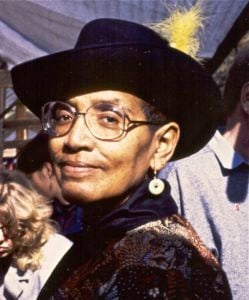
Audre Geraldine Lorde (February 18, 1934 – November 17, 1992) was a self-identified “Black lesbian, mother, warrior, poet.” The daughter of West Indian parents, she grew up in New York City.
Her love of writing took root at an early age. Her first poem published in Seventeen magazine while she was in high school.
As society progressed with the anti-war, feminist, and civil rights movements, Audre shifted her writing from themes of love to more political and personal matters. She used her platform as a writer to spread ideas about intersecting oppressions and experiences faced especially by women of color. Read More→
By Jordan St. Clair-Jackson | On July 11, 2018 | Updated March 27, 2023 | Comments (0)
Wise Blood by Flannery O’Connor, first published in 1952, was this author’s first novel. Followed by The Violent Bear it Away, another novel, and A Good Man is Hard to Find, a collection of short stories, it was reissued in a new hardcover in 1962 as a nod how much O’Connor’s audience had grown in the intervening years.
O’Connor was best known for fiction (primarily short stories) in the form of morally driven narratives populated with flawed characters sometimes described as grotesque. As she herself reminded readers in her essay “The Teaching of Literature”: Read More→
By Aiyana Edmund | On July 6, 2018 | Updated February 11, 2024 | Comments (0)
Octavia E. Butler (1947 – 2006) was an American author of speculative, dystopian, and science fiction. In the white male-dominated field of science fiction, she broke ground as a Black woman writer in the genre. Following is a selection of quotes from Kindred, showcasing Octavia Butler’s keen observations of human nature.
After publishing some short stories, Octavia Butler’s first novel was Patternmaster (1976). It was the first in what would become a four-volume series. But it was Kindred (1979) that placed Octavia Butler firmly on the literary map.
The novel’s protagonist is Dana, a contemporary African-American woman who travels back in time to save an ancestor who happens to be a white slave owner. By saving him in his time, she ensures her own survival in the future. Read More→
By Aiyana Edmund | On July 2, 2018 | Updated September 4, 2026 | Comments (2)
Sylvia Plath (1932 – 1963) was a gifted poet who seemed to have it all: ambition, brains, and beauty. Following are some fascinating facts about Sylvia Plath, a brief portrait of this beloved poet’s life, work, and struggles.
Plath’s lifelong struggles with depression, which led to her taking her own life at the age of thirty, are well known.
Because most of her work was published after her untimely death, she wasn’t able to enjoy the fruits of her labors. Yet her place in the American literary canon is well deserved. Read More→
By Taylor Jasmine | On June 28, 2018 | Updated January 3, 2024 | Comments (0)
For Octavia E. Butler (1947 – 2006), writing speculative and science fiction wasn’t merely a vehicle for escaping into fantasy, but a means to explore universal issues. This is certainly true of Kindred, the 1979 novel that is arguably her most iconic.
Butler’s deep and abiding interest in and observation of human nature — even within fantastical realms — is what makes her work so compelling and complex.
And yet her storytelling is flowing and natural. Her novels are tightly plotted page-turners; many of her protagonists are strong, believable Black women. Read More→
By Aiyana Edmund | On June 24, 2018 | Updated June 24, 2022 | Comments (0)
Jane Austen (1775 – 1817) was an esteemed British author known for six distinguished novels that secured her legacy in literary history. Her first published novel, Sense and Sensibility, appeared in 1811 under the nom de plume “A Lady.” Read on for beloved quotes from Sense and Sensibility, demonstrating Jane Austen’s trademark wisdom and subtle wit.
Sense and Sensibility is an exquisitely crafted portrait of two sisters, Elinor and Marianne Dashwood who are forced to leave their home after their father’s death. Like other women of their time and class, they must make good marriages.
Along the way they encounter meddling matriarchs, conniving rakes, and competitive contemporaries, all standing in their path to love and security. Read More→
By Sarah Wyman | On June 19, 2018 | Updated June 7, 2026 | Comments (0)
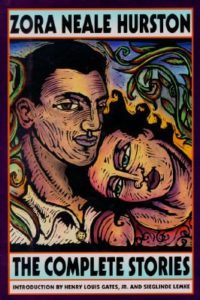
In “The Gilded Six-Bits,” a short story, as well as her other works of fiction and essays, one sees Zora Neale Hurston’s wide scope as a writer.Following is an analysis of “The Gilded Six-Bits,” and you can read the full text of the story here.
Hurston was a key player in the Harlem Renaissance. She took on various topics from marital bliss to the national welfare, writing as a gifted author of fiction, a knowledgeable anthropologist, and a rigorous critic.
Always unconventional, she struck many as overly conservative, as she actually promoted southern segregation for a while, arguing that forced integration was an insult to the African American community. Read More→