Writing as “Ellis Bell,” Emily Brontë‘s only novel, Wuthering Heights, was published in December 1847. Presented here is a synopsis of Wuthering Heights, its ponderous plot described by 19th-century biographer Mary F. Robinson.
The brooding and complex story follows the intersection of two families — the Earnshaws and the Lintons. The passionate connection of Catherine Earnshaw and Heathcliff have sparked romantic imaginations as star-crossed lovers whose dramas and tragedies reverberate into the next generation.
Upon publication, reviewers were rather perplexed by the novel. Charlotte Brontë felt that her sister Emily’s magnum opus was poorly understood and supplied her own preface to the 1850 edition of Wuthering Heights. Read More→
Willa Cather (1873 – 1947) was a masterful American author of fiction whose spare yet evocative prose has held an enduring place in American literature.
Life on the prairie and the immigrant families she had encountered inspired some of her earlier novels, including O Pioneers!, The Song of the Lark, and My Antonia. Death Comes for the Archbishop is considered one of her finest, and One of Ours won the Pulitzer prize.
After abandoning her initial ambition to study medicine, Cather embarked on a life of letters, first working as a journalist, critic, and editor. Read More→
Zora Neale Hurston (January 7, 1891 – January 28, 1960), was a novelist, ethnographer, memoirist, and folklorist whose literary career got off the ground at the height of the Harlem Renaissance era. Presented here are fascinating facts about Zora Neale Hurston that shed light on her complicated life and legacy.
Zora was a natural storyteller. As she grew up, in Eatonville, Florida, she listened to the stories of people she encountered. Her love of story would lead her not only to create her own, but to collect stories from the oral traditions of the African American South and the Black cultures of the Caribbean.
With her determined intelligence and boisterous personality, Zora quickly became a big name in the Harlem Renaissance, or as it was then often called, the New Negro movement of the 1920s. Read More→
My Mortal Enemy by Willa Cather is a 1926 novella by the eminent American author. Cather sketches a character study of a woman and a life not particularly well-lived. In this slim work, the story of an ill-considered marriage unfolds. My Mortal Enemy is considered a minor work by Cather, and critics have debated whether it has stood the test of time.
Unlike the nearly universal praise for her major works —My Ántonia, Death Comes for the Archbishop , and O Pioneers! among others, My Mortal Enemy has been received with praise as well as met with disappointment.
In a later edition, this question was posed: “Has the author tried to undo A Lost Lady? There is a definite mark of similarity between the two books, but one feels that she has not come up to her earlier mark, though she has done so admirably.” Read More→
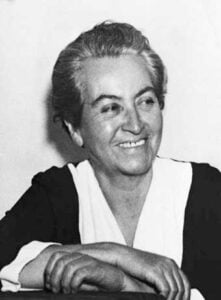
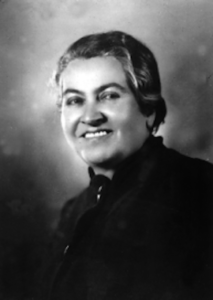
Gabriela Mistral (April 7, 1889 – January 10, 1957, born Lucila Godoy Alcayaga) was a Chilean poet, educator, diplomat, and feminist. Here you can sample nine poems by Gabriela Mistral about life, love, and death, both in their original Spanish (poemas de Gabriela Mistral), and in English translation.
In 1945, Mistral became the first Latin American to win the Nobel Prize for Literature.
Mistral stopped formally attending school at the age of fifteen to care for her sick mother, but continued to write poetry. Just two years later, her heart broke after the sad deaths of her lover, Romeo Ureta, and a close nephew. Read More→
Gabriela Mistral, born Lucila Godoy Alcayaga (April 7, 1889 – January 10, 1957), was a Chilean poet, educator, diplomat, and feminist. She grew up living in poverty with her family in a small Andean village of Montegrande and developed her father’s gift for teaching despite having dropped out of school at age fifteen.
After multiple notable works including Sonetos de la muerte (1914) and Lagar (1954), Mistral received national recognition and praise as her was translated into various languages from her native Spanish.
Though she’s best known for being the first Latin American woman to receive the Nobel Prize in Literature, she did so much more during her remarkable life. Here are some fascinating facts about Gabriela Mistral that may inspire you to learn more about her, and better yet, to read her work.
Read More→
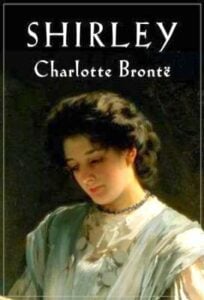
Shirley, the second published novel by Charlotte Brontë, came out in 1849 while she was still using the pseudonym Currer Bell. Charlotte had already achieved fame and notoriety with the wildly successful Jane Eyre under her ambiguous nom de plume.
The question we’ll be exploring here is how much of Shirley’s character did Charlotte draw from her sister Emily.
A more challenging novel to read than Jane Eyre, Charlotte’s best known, Shirley: A Tale is now considered a prime example of the mid-19th century “social novel.” The social novels that emerged from that period were works of fiction dealing with themes like labor injustice, abuse of and bias against women, and poverty. Read More→
Tasha Tudor (August 28, 1915 – June 18, 2008) not only wrote and illustrated some two dozen of her own titles, but her exquisitely detailed watercolors and drawings grace scores of other books. Her writing and art have earned her a secure place in children’s literature, yet she became nearly as famous for her unconventional lifestyle.
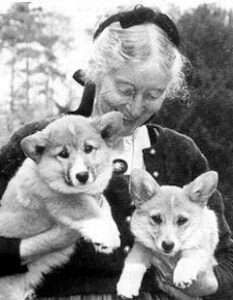
Anyone who knows a bit about Tasha’s private life will know that she was a consummate Corgi lover. And if this is news to you, you’re in for a lovely look at Tasha Tudor’s corgis.
Read More→