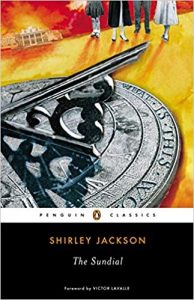
The Sundial by Shirley Jackson (1916 – 1965) was this prolific American author’s fourth novel, published in 1958. It was generally well received, though she had yet to reached her peak as a novelist.
Jackson was already famous for her iconic short story, “The Lottery,” and her amusing memoirs of prettied-up domestic life.
After the publication of her masterpiece novels, The Haunting of Hill House (1959) and We Have Always Lived in the Castle (1962) Jackson struggled with writer’s block and agoraphobia, as well as a host of physical ailments. She died at age 48, a victim of poor health and habits. Read More→
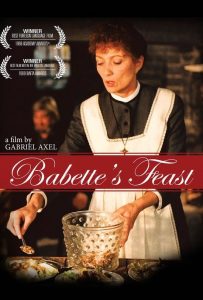
It may be fair to say that the acclaimed 1987 film, Babette’s Feast, is better known than the short story by Danish author Isak Dinesen upon which it’s based. In fact, it’s possible that fans of the movie aren’t aware that it’s based on Dinesen’s story, nor even anything about her.
Isak Dinesen (1885 – 1962) was the nom de plume of this writer, best known for her 1937 memoir Out of Africa, which details her life as the owner of a coffee plantation in colonial Kenya.
Born Karen Christenze Dinesen into a family of aristocrats, merchants, and landed gentry, she was later known after marriage as Karen von Blixen-Finecke. The marriage conferred on her the title of Baroness, but didn’t last. Her ex-husband’s philandering left her with the lifelong effects of syphilis. Read More→
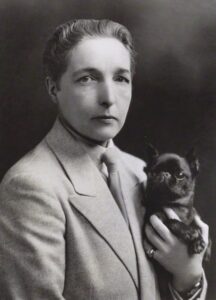
Radclyffe Hall (August 12, 1880 – October 7, 1943), British novelist and poet, is remembered as the author of groundbreaking lesbian literature; her most enduring work is the controversial 1928 novel The Well of Loneliness.
Hall’s struggles with love and gender identity worked their way into her fiction and contributed to a complicated, often unhappy life. (photo at right courtesy of Wikimedia Commons)
Born in Bournemouth, Hampshire, Marguerite Radclyffe Hall’s father was a wealthy Englishman with the unusual moniker Radclyffe Radclyffe-Hall, and her mother, Mary Jane Diehl, was American. Read More→
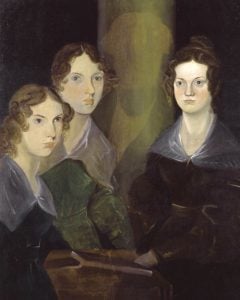
It would be easy enough to compile fascinating facts about the Brontë sisters each in her own right, but here we’ll look at the three together, since their lives were so intertwined.
Charlotte, Emily, and Anne Brontë, acknowledged literary geniuses, were close in age and with few exceptions, preferred one another’s company above anyone else’s.
The three Brontë sisters all cherished literary ambitions from an early age, and despite lives that were cut short by illness, secured a prominent place in the English literary canon. Read More→
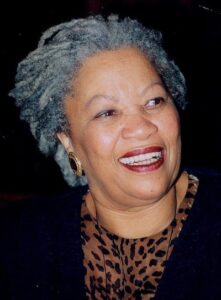
Toni Morrison, born Chloe Ardelia Wofford (1931 – 2019), was an American novelist, editor, essayist, and professor. Presented here are fascinating facts about Toni Morrison that offer a glimpse of what made her one of the most the powerfu voices in contemporary literature.
Morrison was born and raised in Lorain, Ohio, in a working-class family that inspired her love for Black culture.
Her work focused on the Black American experience. Notable works include The Bluest Eye (1970), Sula (1974), Song of Solomon (1977), Tar Baby (1981), and Beloved (1987). She received an abundance of awards, including the Nobel Prize in Literature (1993), the Presidential Medal of Freedom, and many others. Read More→
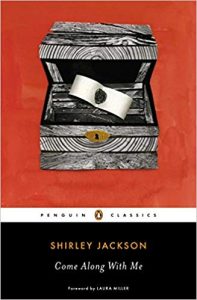
Come Along with Me is the novel Shirley Jackson (1919 – 1965) was working on at the time of her untimely death in 1965 at the age of forty-eight. This unfinished novel was collected in the book of the same title: Come Along with Me: Part of a novel, sixteen stories, and three lectures, and edited by Stanley Edgar Hyman, her husband at the time of her death.
Known for her stories and novels of psychological terror, including The Haunting of Hill House and We Have Always Lived in the Castle, Jackson didn’t leave behind a huge body of work but what she did produce was hugely influential. Read More→
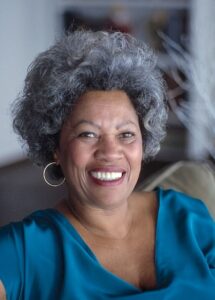
Toni Morrison (1931 – 2019) was an American novelist, editor, essayist, teacher, and professor. She was the recipient of numerous awards, including the Nobel Prize in Literature. Her body of work examined the Black experience in America through great storytelling. Following is a selection of wise quotes by Toni Morrison on writing, living, and love.
Morrison was born and raised in Lorain, Ohio in a working-class African American family that influenced her love and appreciation of Black culture.
Morrison was a great influence on numerous writers, including National Book Award finalist Jamel Brinkley, best-selling author Julia Alvarez, prize-winning poet Saeed Jones, and many others. Read More→
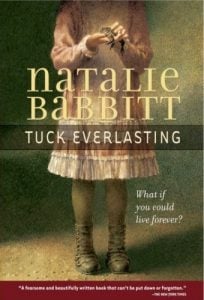
Tuck Everlasting is a 1975 novel by Natalie Babbitt (1932 – 2016) about a young girl who stumbles upon a family with an incredible secret. The quotes from Tuck Everlasting that follow demonstrate how the book balances a sense of fun adventure with some truly thought-provoking concepts.
Originally intended for middle grade readers, it’s a gracefully written story that has resonated with readers of all ages. It explores the idea of eternal life, and its flip side, mortality.
When 10-year-old Winnie Foster inadvertently comes upon the Tuck family, she learns that they became immortal after drinking from a spring on her family’s property. Read More→