By the time of Zora Neale Hurston’s death, most of her considerable body of work was out of print, rarely read or studied. Here we’ll explore how Alice Walker rediscovered Zora Neale Hurston and revived her literary legacy.
Zora Neale Hurston (1891 – 1960) had a dual career as an anthropologist and writer, incorporating regional and cultural realism in her short stories, folklore collections, and novels.
Alice Walker (1944 – ) is an activist, novelist, short story writer, and poet best known for the 1982 novel The Color Purple. Some of her views and alliances are controversial, yet if there is one good deed she has done, it has been to return Zora to her rightful place in the world of literature.
Read More→
Elizabeth Taylor (1912 – 1975) knew from a young age that she wanted to be a novelist — to be clear, this isn’t in reference to the renowned actress, but to the prolific British author. In the following selection of quotes from Elizabeth Taylor’s fiction, we get a glimpse of her literary gifts.
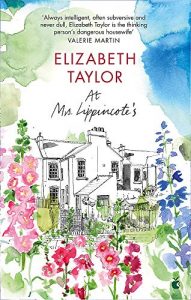
Her first novel, At Mrs Lippincote’s, was published in 1945. Here, Roddy, an RAF officer has been stationed in a small town in southern England and, now, his wife and son and cousin have joined him in what used to be Mrs Lippincote’s house. Mr and Mrs Lippincote have died, but the Davenant family is building a life together. Read More→
“The Garden Party” by Katherine Mansfield is a widely anthologized short story by the New Zealand-born master of this form of fiction. It was first published as the lead story in the collection The Garden Party and Other Stories (1922).
Warren S. Walker wrote in an essay on the story: ‘The most frequently anthologized of Katherine Mansfield’s works, ‘The Garden Party’ has long enjoyed a reputation for near-perfection in the art of the short story.’ In her time, Mansfield was seen as one of the prime innovators of the short story form.” Read More→
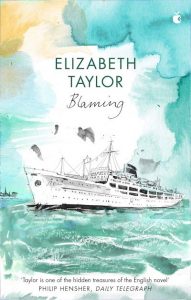
A unique voice comes through in the following selection of quotes by British author Elizabeth Taylor (not to be confused with the actress of the same name) on love, loneliness, beauty, and marriage from her novels and short stories.
Elizabeth Taylor (1912 – 1975) knew from a young age that she wanted to be a novelist. She received high marks in English as a student and, after graduation, borrowed books through the Boots Library system which informed her natural storytelling abilities: works by of Jane Austen, Anton Chekhov, Henry Fielding, E.M. Forster, Samuel Richardson, Ivan Turgenev and Virginia Woolf.
Taylor found inspiration for twelve novels and sixty-five short stories in the everyday lives of ordinary people. She described it like this to her American publisher: Read More→
This analysis of “Désirée’s Baby,” an 1893 short story by Kate Chopin, explores the narrative of miscegenation and motherhood in the antebellum American South. Chopin is best known for the groundbreaking classic novella The Awakening (1899).
Désirée, a young woman adopted as a child, is married to a plantation owner named Armaud. She is startled when she suddenly realizes that their baby is of a darker complexion than her own and her husband’s.
Chopin uses the setting of Louisiana to create a delicate yet hostile environment for a disillusioned young mother. Motherhood in this era can be deemed sensitive and complicated, since Désirée lives in a time when its treatment is based on ethnicity and social stratification. Read More→
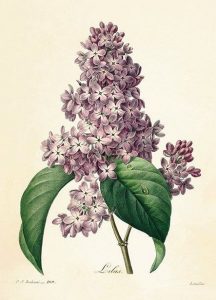
Amy Lowell (1874 – 1925), an influential yet undervalued American poet, was an energetic evangelist of the art of poetry for all her adult life. Here is presented “Lilacs,” said to be the one of the poet’s own favorites, and among the poems she recited most often in her many public readings.
First published first published in the New York Evening Post on September 18, 1920, “Lilacs” went on to be included in a 1922 modernist poetry anthology.
Finally, “Lilacs” became part of Lowell’s 1925 collection What’s O’ Clock, which received the Pulitzer Prize the following year. Unfortunately, the poet died before receiving this honor. She was only 51, having suffered from poor health for some time. Read More→
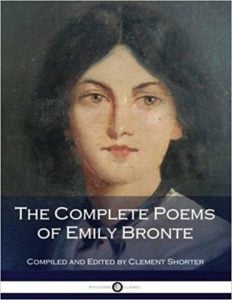
Who was Emily Brontë? This is a question not easily answered. This thoughtful chronology of her brief life by W. Robertson Nicoll was part of the introduction to the 1908 edition of The Complete Poems of Emily Brontë. It provides much insight into how she lived and worked.
Emily Brontë (1818 – 1848), the English author known for the novel Wuthering Heights, was also recognized as a brilliant poet. The sister of Charlotte and Anne Brontë, she is arguably the most enigmatic of the trio who produced some of the most widely read classics in English literature.
Emily lived only to age thirty and led a sheltered life at Haworth Parsonage in Yorkshire. After her boarding school education, brief sojourn to study in Brussels, and even briefer stint as a governess, she rarely engaging with anyone outside of her immediate family. That appeared to have been by choice.
Read More→
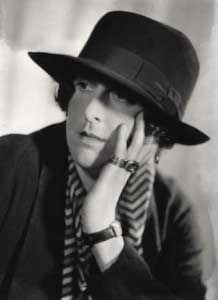
The relationship of Virginia Woolf and Vita Sackville-West has earned a place in literary history, and continues to fascinate with its allure of the unconventional, bohemian, and charmingly eccentric.
On December 15, 1922, Virginia Woolf recorded in her diary that she had met “the lovely aristocratic Sackville-West last night at Clive’s. Not much to my severer taste … all the supple ease of the aristocracy, but not the wit of the artist.”
She was, of course, writing of Vita, the woman who would go on to become her lover, friend, and confidante. Read More→