At the age of eleven, Françoise d’Eaubonne (March 12, 1920 – August 3, 2005) wrote on a convent wall, “Vive le féminisme!”
This was just the start of what would be a radical life as a member of the French Communist Party, writing more than fifty novels and essays and, most importantly, coining her defining theory: ecofeminism.
One of the best-known leaders of the French feminist movement, d’Eaubonne’s most famous work was her essay “Le Féminisme ou Le Mort” (Feminism or Death), published in 1974. Read More→
Honoring their rich tradition, here are a dozen classic novels and memoirs by Black women writers. While there’s much more to explore in Black literature of the distant and more recent past, classics like those in this roundup are a good place to start.
Historically, it was challenge enough for women to become published authors; this was especially true for Black women facing the dual struggle of race and gender bias.
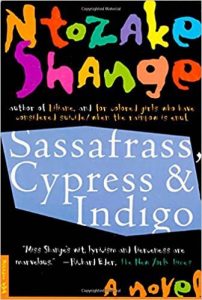
From what were once referred to as slave narratives of the 19th century, to the identity-seeking stories of the Harlem Renaissance, to the unique voices of more recently departed authors like Toni Morrison, Ntozake Shange, and Audre Lorde, these foundational classics have stood the test of time, and will always be incredibly good reads. Read More→
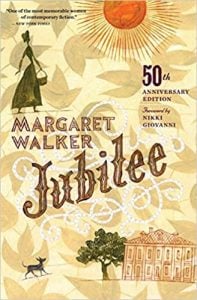
Jubilee by Margaret Walker (1966), the only novel by this esteemed American author, poet, and educator, was the culmination of some twenty-five years of research and writing.
The story of Vyry, an enslaved woman, is based on the real-life experiences of Walker’s great-grandmother. Walker received the Houghton Mifflin Literary Fellowship for this book, and its completion served as her Ph.D. from the University of Iowa.
Covering the antebellum years, Civil War, and Reconstruction periods, the narrative moves from a Georgia plantation to Alabama, following Vyry’s life and loves. Jubilee received much praise for its realistic depictions of daily life in the era of slavery and its aftermath.
Read More→
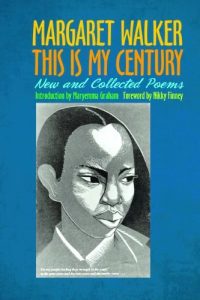
Margaret Walker (1915 – 1998) is best known for her acclaimed novel, Jubilee (1966) as well as her richly evocative poetry. Here we’ll explore a sampling of poems by Margaret Walker, works that speak powerfully to the African-American experience.
Born in Birmingham, Alabama, Walker grew up in New Orleans and eventually settled in Chicago, where she earned a Bachelor’s degree in 1935. Growing up, she was particularly taken with the poetry of Langston Hughes.
In 1936, Walker joined the Federal Writers’ Project and the South Side Writers Group, where she became friends with fellow writer and poet, Richard Wright. In 1940, she earned a master’s degree in creative writing from the University of Iowa. She and Wright both participated in the movement called The Chicago Black Renaissance. Read More→
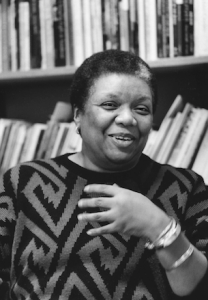
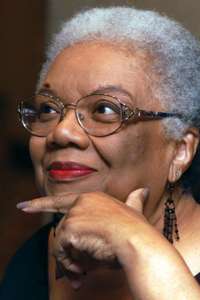
Lucille Clifton (1936 – 2010) was a poet, teacher, and children’s book author whose life and career began in western New York. Here is a selection of 10 poems by Lucille Clifton, a small sampling of her prolific output.
Clifton’s widely respected poetry focuses on social issues, the Black American experience, and female identity. Her poetry has been praised for its wisdom and use of strong imagery; the way she constructed her poems’ lines even give meaning to the spacing of words.
Her poetry is recognizable for its purposeful lack of punctuation and capitalization. Read More→
Lucille Clifton (June 26, 1936 – February 13, 2010) was a prolific American poet, teacher, and children’s book author.
Clifton’s work focused on issues of race, family affairs, and gender through the lens of the Black American experience. She also created works about women’s issues, everyday family struggles, and health. Her work has been described as feminist.
Clifton’s poetry was first published by Langston Hughes, who included it in his impactful anthology, The Poetry of the Negro (1746-1970). Read More→
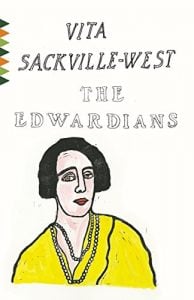
The Edwardians by Vita Sackville-West, published in 1930, is a novel that critiques the aristocracy of the early 20th century. The work was very much a reflection of the world that Vita grew up in.
As the only child of the aristocratic Victoria and Lionel Edward Sackville-West, a Baron, she had all the duties of a male heir, yet as a female, she wasn’t able to inherit Knole, the castle in which the small family lived.
In The Edwardians, the country estate of Knole castle becomes the fictional Chevron. Within the fictional framework, Vita reproduces in exquisite detail its physical features. Read More→
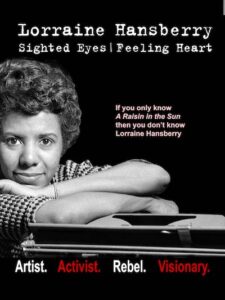
Lorraine Hansberry (1930 – 1965) was an American playwright and author best known for A Raisin in the Sun, a 1959 play influenced by her background and upbringing in Chicago. The fascinating facts about Lorraine Hansberry following illustrate her development as a Black woman, activist, and writer.
Though A Raisin in the Sun is the crown jewel in Hansberry’s legacy, she was also known for the plays The Sign in Sidney Brustein’s Window and Les Blancs.
To Be Young, Gifted and Black was a posthumously produced play and collection of writings that capped a brief and brilliant career. When she died of pancreatic cancer in 1965, she was only thirty-four years old. Read More→