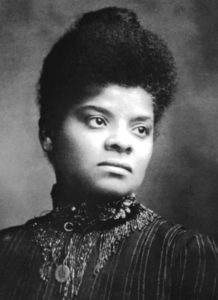
Ida B. Wells (July 16, 1862 – March 25, 1931), also known as Ida B. Wells-Barnett, was a fearless journalist and crusader in the early civil rights movement. A feminist, editor, sociologist, she was one of the founders of the NAACP.
She was best known for spearheading a national antilynching campaign, through which she worked tirelessly to end the uniquely American practice of the public mob murders of Black Americans. Wells’s reputation continues to grow, even decades after her death.
Journalism awards have been established in her name, scholarships are endowed in her honor, and there’s a museum celebrating her legacy in her hometown in Mississippi. Read More→
It is a truth universally acknowledged that there are Jane Austen fans so devoted that they read Pride and Prejudice (and/or her other novels) every year or two.
Contemporary Austen-flavored retellings only add fuel to the literary fire. In that vein, the witty pen of Sonali Dev has produced Pride, Prejudice and Other Flavors (2019) and Recipe for Persuasion (2020).
For fervent devotees, for whom there can never be Too Much Jane, Ms. Dev’s novels will be a delicious treat. They transpose Austen-esque complicated relationships to the modern world, and season them with culinary themes. Here’s a look at these entertaining reads by Sonali Dev. Read More→
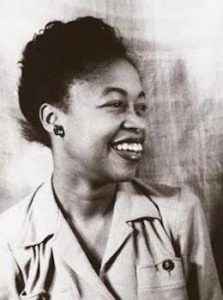
Margaret Walker (July 15, 1915 – November 30, 1998) was an American poet and novelist. Though she’s recognized today as one of the foremost Black American female writers of her generation, she deserves greater appreciation.
In addition to her acclaimed novel, Jubilee (1966), her poetry is collected into several volumes. Walker participated in the literary movement known as the Chicago Black Renaissance, and was a longtime friend of novelist and poet Richard Wright.
Walker was a university professor from the 1940s through the 1970s, and held positions at colleges in North Carolina, West Virginia, and Mississippi. She received six honorary degrees and was inducted into the African American Literary Hall of Fame in October 1998. Read More→
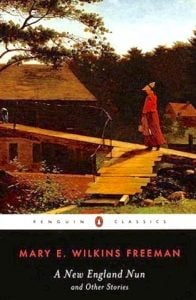
Mary Eleanor Wilkins Freeman (1852 – 1930), more commonly known as Mary E. Wilkins Freeman, was an American novelist and short story writer. Though no longer widely read, her 1891 short story, “A New England Nun,” is widely anthologized and still studied.
Born in Randolph, Massachusetts, Freeman came from New England Puritan stock. A prolific writer of novels, short stories, children’s books, and poems, her work has been largely forgotten, though it’s widely available online, all of it being in the public domain.
Read More→
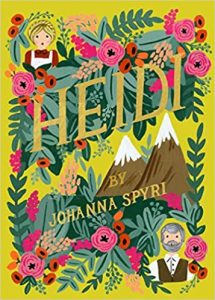
Johanna Spyri (1827 – 1901), the author of Heidi, has been called the “Swiss Louisa May Alcott.” Tens of millions of copies of this classic children’s novel (first published in 1881) have sold worldwide in translations of more than forty languages.
Originally written in German, Heidi was Spyri’s first published novel. None of her subsequent books — and there were many — achieved the level of success as did Heidi. It’s not only the bestselling Swiss book ever published, but one of the bestselling books in the world.
Heidi has also been adapted numerous times to the stage, including an opera, plus several movies and television series. Read More→
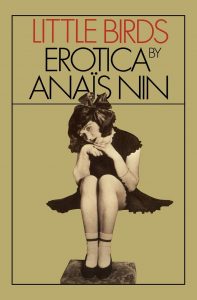
Little Birds was Anaïs Nin’s second volume of erotic short stories, following Delta of Venus. Originally written as a way to make quick money, she sold them at a rate of a dollar per page to an anonymous client in the 1940s.
Little Birds was published in 1979, two years after Nin’s death. This collection of thirteen stories, perhaps more accurately termed vignette, cover a range of sexual topics from the female perspective.
Some of the characters from Delta of Venus make an appearance in these pages. The publisher describes the work: Read More→
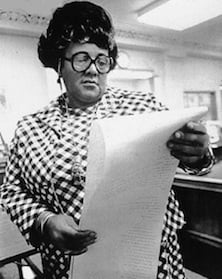
Let’s pay tribute to a trailblazing group of mid-twentieth-century Black women journalists — Alice Dunnigan, Ethel Payne, Daisy Bates, Evelyn Cunningham, and Marvel Jackson Cooke.
Their work encompassed all facets of this era’s journalism, including reporting, editing, broadcasting, and publishing.
All of these women’s careers began at legendary Black newspapers, including the Chicago Defender, the Arkansas State Press, the Pittsburgh Courier, and The Crisis. Read More→
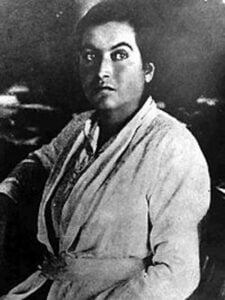
Gabriela Mistral (Lucila Godoy Alcayaga, 1889 – 1957), the Chilean poet, educator, diplomat, and feminist was the first Latin American to receive the Nobel Prize in Literature. Here, we’ll take a concise look at the poetry of Gabriela Mistral — an overview of her published works and analysis of major themes.
She was cited “for her lyric poetry which, inspired by powerful emotions, has made her name a symbol of the idealistic aspirations of the entire Latin American world.”
Born in Vicuña, Chile, Mistral had a lifelong passion for eduction and gained a reputation as the nation’s “national schoolteacher-mother.” That she hasn’t retained a literary stature comparable to her countryman, Pablo Neruda, is surprising, given her Nobel Prize and many other achievements and accolades. Read More→