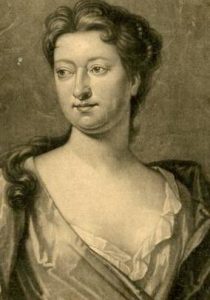
This introduction to Susanna Centlivre (1669 – 1723), the English poet, playwright, and actress, is excerpted from Killing the Angel: Early British Transgressive Women Writers ©2021 by Francis Booth. Reprinted by permission:
Very much as Virginia Woolf wrote about Aphra Behn, the anonymous author of the introduction to Susanna Centlivre’s collected works wished that Centlivre had been buried as a national treasure in Westminster Abbey. Read More→
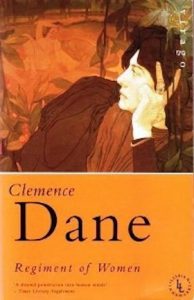
This introduction to Regiment of Women (1917), a proto-lesbian novel by the pseudonymous Clemence Dane, is is excerpted from Girls in Bloom: Coming of Age in mid-20th Century Women’s Fiction by Francis Booth, reprinted with permission:
The Well of Loneliness by Radclyffe Hall (1928 ), usually said to be the first English-language novel containing veiled lesbianism was just beaten to the title by Rosamond Lehmann’s Dusty Answer (1927).
But ten years before even that was Regiment of Women, 1917, the debut novel of Clemence Dane, the pseudonym of Winifred Ashton (1888-1965), London-born novelist, playwright, and early feminist. Read More→
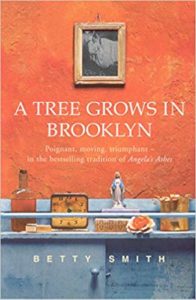
Francie Nolan, the gentle, relatable heroine of A Tree Grows in Brooklyn by Betty Smith is considered in this character analysis from Girls in Bloom: Coming of Age in mid-20th Century Women’s Fiction by Francis Booth. Reprinted with permission.
The coming of age of a strong female protagonist was a surprisingly common theme in mid-20-century literature by women authors. At a time when women’s progress suffered setbacks, perhaps the pages of books were an outlet for repressed ambitions and desires.
A Tree Grows in Brooklyn (1943), the first published novel by Betty Smith (1896-1971) is a wonderful example of the female bildungsroman, following the central character Francie Nolan in an epic sweep from age eleven to seventeen. Read More→
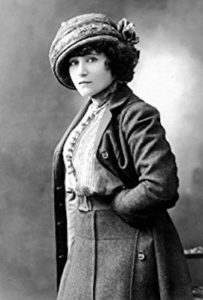
This heartwarming essay by Tyler Scott is an homage to Colette (1873 – 1954), the bold and fearless French author, and discusses how she continues to inspire writers at any stage of practice:
In the fraught year of 2020, I had been too addled and worried to write very much. After a career as a freelancer, I started to wonder if things had ground to a halt. Was this the end of the line for me? After all that work? All that research? All those accolades?
As Claudia Emerson, the late Pulitzer Prize-winning poet and onetime classmate told me, “Sometimes it’s just easier to quit.” Read More→
Aphra Behn (1640 – 1689), was far ahead of her time as the first Englishwoman to earn a living by the pen as a playwright, poet, and novelist. She was also considered scandalous not just for thriving in a profession generally closed to women, but for the sexually explicit nature of her writing.
This aspect of her artistry is explored in this excerpt from Killing the Angel: Early British Transgressive Women Writers ©2021 by Francis Booth. Reprinted by permission:
In A Room of One’s Own, Virginia Woolf espoused Aphra Behn’s cause as the great precursor of free women writers — though the first book in English was written by Julian of Norwich, the first autobiography was written by Margery Kempe, the first playwright and female poet since antiquity was Hrotsvitha and the first professional woman writer was probably Christine of Pizan. Read More→
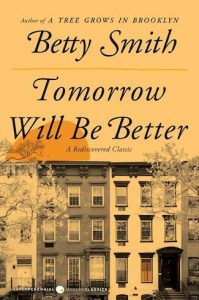
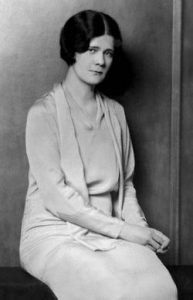
Betty Smith’s first novel, A Tree Grows in Brooklyn (1943), was a tough act to follow. And while her subsequent novels were all solid efforts, they didn’t achieve the phenomenal success of her debut. Tomorrow Will Be Better (1948), Smith’s second novel, is still very much worth discovering.
The families depicted in Tomorrow Will Be Better — the Shannons and the Malones — might be fictional neighbors of the Nolan family of A Tree Grows in Brooklyn. Set in the tenements of Brooklyn in the 1920s, it’s a quintessentially American tale of pursuing dreams in the face of obstacles — not the least of which is poverty.
Margy Shannon, a young woman filled with hope, is central to the narrative. In search of happiness and a better life, she faces disappointment with fortitude and dignity. As the review that follows noted, “Miss Smith has written a quiet, warm book about people she obviously knows and loves well.” Read More→
Elinor Wylie (September 7, 1885 – December 16, 1928) was a popular American poet and novelist of the 1920s. She was a celebrated author in her lifetime, with a cult following in her pinnacle years.
Wylie was lauded for her passionate writing, fueled by ethereal descriptors, historical references, and feminist undertones. She was also known for her tumultuous personal life, which often made its way into her writings.
During her short span of eight years as a writer, Elinor published four volumes of poetry and four novels, all garnering praise. Many of her works offered insight into the difficulties of marriage and the impossible expectations that come with womanhood. Read More→
Is it possible that early female authors actually warned their target audience —female readers —against the practice of reading novels? It’s not only possible, but seemed to be a fairly common occurrence. Excerpted from Killing the Angel: Early British Transgressive Women Writers ©2021 by Francis Booth. Reprinted by permission.
When Madame Bovary first commits adultery, Flaubert tells us that it was her early reading of novels that was to blame: “she recalled the heroines of the books that she had read, and the lyric legion of these adulterous women began to sing in her memory with the voice of sisters that charmed her.”
In his A Plan for the Conduct of Female Education of 1797, Erasmus Darwin warns that ‘many objectionable passages’ are to be found in novels and Rousseau said ‘no chaste girls ever read a novel.’ But even groundbreaking literary ladies who wrote novels themselves were in two minds about letting their daughters, granddaughters and nieces read them. Here’s a sampling:
Read More→