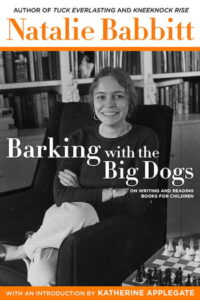
Natalie Babbitt (July 28, 1932 – October 31, 2016) was an American author and illustrator of children’s books, best known for Tuck Everlasting (1975).
Born in Dayton, Ohio, her first ambition was to be a pirate. By second grade, she decided that she wanted to grow up to be a librarian.
She discussed her aspirations in Anita Silvey’s The Essential Guide to Children’s Books and Their Creators: “I might have made a pretty good librarian, but with my distaste for heavy exercise, I would probably have made a poor pirate.”
Read More→
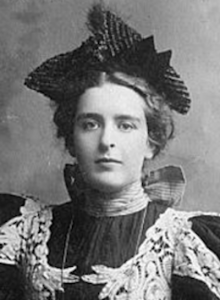
Natalie Clifford Barney (1876 – 1972) was an American-born poet and novelist also known for her epigrams and pensées. Here you’ll find a selection of quotes by Natalie Clifford Barney on life and love, from a woman who lived and loved to the fullest.
Barney was an expat living the high life in early twentieth-century Paris where she presided over a famous literary salon.
Though she published ten critically acclaimed books, she seems to be equally remembered for her colorful personal life as one of the movers and shakers of the Parisian lesbian circles of the time. She also used the wealth and privilege she was born into as a means of promoting other talented writers and artists. Read More→
Doris Lessing, (October 22, 1919 – November 17, 2013) was a British novelist, playwright, poet, short story writer, and biographer. One of the most revered voices in modern literature, she has written intelligently and passionately about politics, parenting, aging, love relationships, and feminism.
She was born Doris May Tayler in what was then Persia (present-day Iran) to British parents, Captain Alfred Tayler and Emily Maude Tayler. When she was five, her parents moved with her to Rhodesia (what is now Zimbabwe) to farm crops on one thousand acres of land.
Observing the strife caused by the British in their colonial rule of the African nation, she developed a strong moral compass and political bent. Read More→
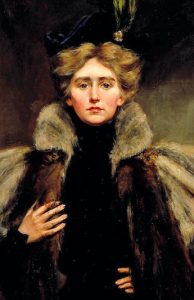
Natalie Clifford Barney (October 31, 1876 – February 2, 1972) was an American-born writer of poems, epigrams, pensées, and novels.
She made her home in Paris, where she was known more for her literary salon and her colorful personal life than her writing, despite publishing ten critically acclaimed books in her lifetime.
Natalie was “the wild girl of Cincinnati,” the grande dame of the literary salon and Parisian lesbian circles, and used her considerable wealth and influence to promote talented writers and artists from around the world.
Read More→
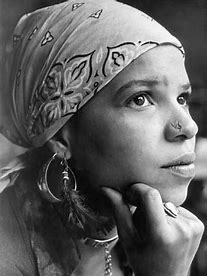
Ntozake Shange (1948 – 2018) was an African American playwright, poet, and feminist. She is best remembered for her 1975 Obie Award-winning choreopoem, For Colored Girls Who Have Considered Suicide / When the Rainbow is Enuf. Following is a selection of inspiring and empowering quotes by Ntozake Shange, a valiant and unapologetic talent. Photo at right, 1978, courtesy of Wikimedia Commons.
Born in Trenton, New Jersey, she was the oldest of four children in an upper-middle-class family. She attended a white school where she endured racial attacks to receive a “quality” education. Shange’s family pushed her to find an artistic outlet which was how she discovered her love for poetry.
Heartbreak and racial attacks were influences in her work, which spans several genres addresssing injustice, violence, and oppression. Though her choreopoems have been criticized for using African American dialect and one-sided attacks on black men, many value her work for its flair and lyricism.
Read More→
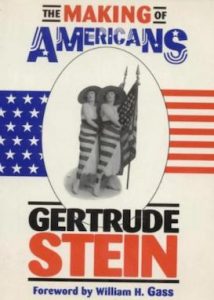
In 1925, Gertrude Stein’s The Making of Americans: Being a History of a Family’s Progress was published, though the author had finished it many years earlier.
It was quite a task to find a publisher for it, and so it languished until the inscrutable author had her first major commercial success with The Autobiography of Alice B. Toklas — a memoir that Gertrude Stein (1874 – 1946) not Alice, had actually written.
The Making of Americans is considered a modernist novel covering the history, progress, and genealogy of the fictional Herlsand and Dehning families. It’s written in Stein’s inimitable and experimental style, one that requires much patience, as it is steeped in excruciating detail and heavy repetition. Read More→
The Borrowers by Mary Norton (1903 – 1992) is the first volume a classic series of children’s books by this British author. First published in Great Britain in 1952 and in the U.S. in 1954, the Borrowers are perhaps themselves “borrowed” from the tradition of Ireland’s little people.
Humans in miniature who live behind the wainscoting or under the floors of big old houses, they survive by borrowing whatever it is they need, as their name implies.
As Mrs. May muses in the book’s first chapter, what do you think happens to the countless safety pins, pencils, spools of thread, match boxes, and knitting needles that are lost every day? How do they disappear without a trace? Read More→
Ntozake Shange, born Paulette Linda Williams (October 18, 1948 – October 27, 2018), was an African American playwright, poet, and feminist. As a Black feminist, her work often shed light on issues relating to Black power, race, and gender.
Among her many powerful works, she’s best known for the Obie Award-winning play, For Colored Girls Who Have Considered Suicide / When the Rainbow Is Enuf. Photo at right, AP. 1976.
Born in Trenton, New Jersey, she was the oldest of four children in an upper-middle-class family. Her father, Paul T. Williams, was an Air Force surgeon, and her mother, Eloise Williams, was a psychiatric social worker and an educator. Read More→