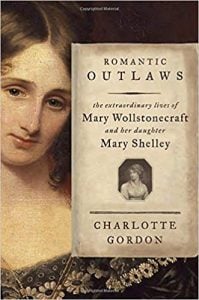
There’s a profound connection between Mary Wollstonecraft (1759 – 1797) and Mary Shelley (1797 – 1851), author of the 1818 masterpiece Frankenstein. These two iconic authors were mother and daughter.
The remarkable biography, Romantic Outlaws: The Extraordinary Lives of Mary Wollstonecraft and Mary Shelley by Charlotte Gordon is well worth reading.
Mary Wollstonecraft and Mary Shelley were part of one another’s lives for only a few days. The elder Mary died ten days after giving birth to her daughter due to an infection. Yet the space her mother filled in her daughter’s life was much wider. Read More→
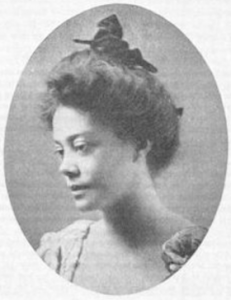
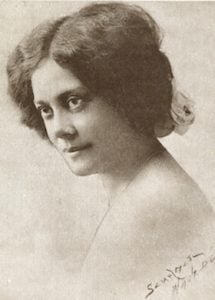
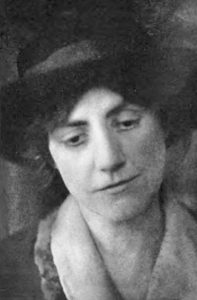
Alice Dunbar-Nelson (1875 – 1935) used her poetry, essays, and short stories to confront complex issues of being a multiracial woman in America. “Brass Ankles Speaks” is an undated essay she wrote (presumably sometime in the early 1900s) on the subject. It was never published during her lifetime.
Active in the late 19th and early 20th centuries, Dunbar-Nelson grappled with the feeling of non-belonging to one racial community nor the other.
Despite her personal struggles, she devoted her life to fighting for social and racial justice and women’s equality not only through her writing, but as an activist and speaker. Read More→
Alice Dunbar-Nelson (July 19, 1875 – September 18, 1935) was an American poet, essayist, short story writer, journalist, columnist, and activist.
Through various genres, Alice advocated for the rights of women and people of color. She’s often considered one of the significant writers associated with the Harlem Renaissance movement of the 1920s, though a good portion of her work predates this era.
Read More→
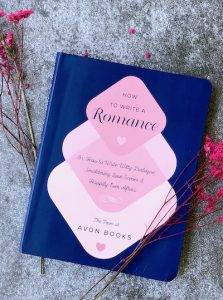
Are you in the mood for romance? Most of us are, at least some of the time. Did you ever ponder how to write a romance novel? If you’ve ever fancied giving it a try, the editors of Avon Books, one of the leading publishers of romance books, have produced How to Write a Romance: Or How to Write Witty Dialogue, Smoldering Love Scenes, and Happily Ever Afters (Morrow Gift, July 2019).
It’s a cleverly designed guided journal that just might get you going, and a perfect gift for the aspiring romance writer in your life.
Many of the most beloved novels of all time are incredibly romantic, and perhaps the literary predecessors of contemporary romances. Classic plot lines often feature a plucky heroine who wants to be her own person, while at the same time, yearns for the love of a brooding, mysterious man. Read More→
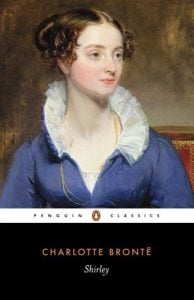
Shirley was the second published novel by Charlotte Brontë. Published in 1849 under the pseudonym Currer Bell, the author had already become famous with the success of Jane Eyre (1847).
While Charlotte was at work on this book, her remaining siblings died (two sisters had died in childhood). The first to go was her troubled brother Branwell. He was soon followed to the grave by Emily and Anne, who would also come to be celebrated for their literary accomplishments.
The lengthy novel has two female protagonists — the eponymous Shirley Keeldar, as well as Caroline Helstone. Set in Charlotte’s native Yorkshire, it takes place against the background of the textile industry’s Luddite uprisings of 1811 and 1812. Read More→
Susan Glaspell (July 1, 1876 – July 28, 1948) was an American playwright and fiction writer. Glaspell and her husband George Cram Cook founded the Provincetown Players, considered the first modern American theater company.
Susan Glaspell grew up on a farm near Davenport, Iowa. Her father was a hay farmer, her mother was a schoolteacher, and she had two brothers.
As a child she had a natural affinity for animals, often rescuing strays. Her grandmother regaled her with real-life pioneer adventure stories that sparked her imagination. Read More→
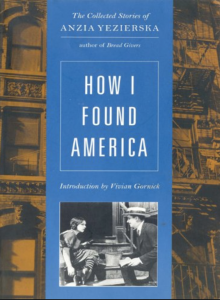
Anzia Yezierska (1880 – 1970) was a writer whose body of work focused on the Jewish immigrant experience in America in the early 1900s.
Born in an area that’s now Poland but which was part of the Russian Empire when she was was a child, her family arrived in New York City’s Lower East Side during the immigration wave of the late 1800s. Anzia, then in her early teens, never shed the feeling of being an outsider looking in.
All of Yezierska’s short stories are collected in How I Found America: Collected Stories of Anzia Yezierska, 1991. In her introduction to the book, literary critic Vivian Gornick wrote: Read More→
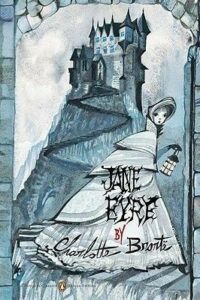
Jane Eyre (1847), Charlotte Brontë’s best known novel, tells the story of the title heroine’s love for the mysterious and reclusive Mr. Rochester and her quest for independence.
Though considered a proto-feminist work, it also fits into the gothic novel genre due to the strange detail of Rochester’s mad wife being locked away in an attic. Through the concise plot summary of Jane Eyre that follows, the reader will get an overview of the book that made Charlotte Brontë famous.
Jane, a young woman of unassuming background and appearance, searches for love and a sense of belonging while preserving her independence. The book sparked a fair amount of controversy when first published, which was fueled by critics and the public suspecting that “Currer Bell” (the author’s ambiguous pseudonym) was a woman. Read More→