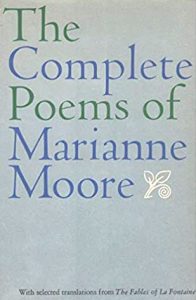
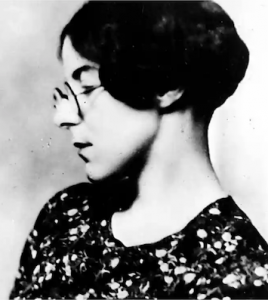
In 1967, The Complete Poems of Marianne Moore was published to great acclaim, being the most thorough collection of this distinguished American poet up to that time.
For Marianne Moore, heartfelt and precise expression was the most important aspect of the written word. Most of her poems were written in syllabic verse.
About her own work, she commented “I tend to write in a patterned arrangement, with rhymes … to secure an effect of flowing continuity … there is a great amount of poetry in unconscious/fastidiousness.” Read More→
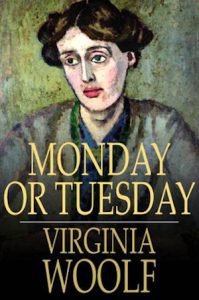
“Monday or Tuesday,” a 1921 short story by Virginia Woolf, appeared in the only collection of stories she published during her lifetime. The title of the collection was also Monday or Tuesday. It was later anthologized in A Haunted House and Other Short Stories (1944), which contained six of the eight original stories.
First published by Hogarth Press, the small publishing company run by Virginia and Leonard Woolf, Mr. Woolf deemed it the worst book ever printed due to a plethora of typographical errors. They were corrected in later editions.
Read More→
English author (not the actress) Elizabeth Taylor (1912 – 1975) published seventeen books: four collections of stories, one children’s book, and twelve novels. If you’re just discovering this under-appreciated author and wondering where to begin or considering a reread, here is a glimpse of Elizabeth Taylor’s novels.
She’s “not like most novelists,” Elizabeth Jane Howard observes; she’s “one in a thousand: how deeply I envy any reader coming to her for the first time.”
In Contemporary Novelists, Elizabeth explained her process: “I write in scenes, rather than in narrative, which I find boring. I am pleased if the look of a page is interesting, broken by paragraphs or dialogue, not just one dense slab of print.”
Read More→
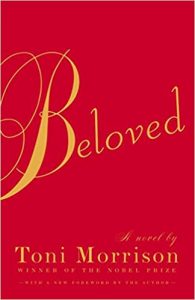
Toni Morrison (1931 – 2019), the American novelist, editor, and essayist is remembered for her powerful novels exploring the African American experience. Following is a selection of powerful quotes from Beloved, her Pulitzer Prize-winning 1987 novel.
Morrison based Beloved on a historic incident. In 1856, an enslaved female escaped and crossed the Ohio river from Kentucky into Ohio to seek freedom.
Instead, she was captured, and killed her child so she wouldn’t have to be returned to enslavement. Similarly, Sethe, the protagonist of the novel, kills her baby, who she calls Beloved, and is ever after haunted by her ghost. Read More→
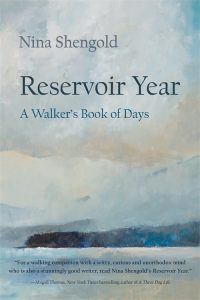
Nina Shengold’s Reservoir Year: A Walker’s Book of Days takes its place in the tradition of deeply felt nature writing, the kind that heightens observation of the world while delving into questions of self.
Literary Ladies Guide rarely features books that aren’t by classic (that is, departed) women authors or directly related to them (fictional homages, biographies, etc.).
But when I opened Reservoir Year (Syracuse University Press, 2020), I at once imagined it as a descendant of the works of several classic authors whose profound affinity to the natural world became central to their art. Read More→
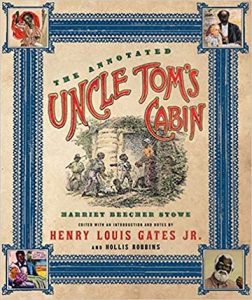
Harriet Beecher Stowe’s impactful novel, Uncle Tom’s Cabin (1852), was the first ever to be an international best-seller. Following is a selection of quotes from Uncle Tom’s Cabin, which isn’t always considered great literature, but is credited for helping to turn public opinion against slavery.
More than 1.5 million copies of the anti-slavery novel were sold worldwide during its first year of release in 1852. The novel helped fuel the anti-slavery movement, and is thought to have changed the course of history as well the publication business. No other book sold as many copies in the 19th century, other than the Bible.
Stowe’s astounding success with novel affected the fight for the abolition of slavery and displayed her fearlessness by writing on this subject in a white-dominated world. Read More→
Sylvia Townsend Warner (December 6, 1893 – May 1, 1978) was an English novelist, poet, and musicologist. Best known for her novels Lolly Willowes and The Corner That Held Them, she was also a prolific writer of short stories and contributed to The New Yorker for over forty years.
Despite a revival of her work in the 1970s, led by feminist publisher Virago Press, she is still an under-appreciated figure in literature and is probably just as well known for her long-term relationship with Valentine Ackland. Read More→
At the age of eleven, Françoise d’Eaubonne (March 12, 1920 – August 3, 2005) wrote on a convent wall, “Vive le féminisme!”
This was just the start of what would be a radical life as a member of the French Communist Party, writing more than fifty novels and essays and, most importantly, coining her defining theory: ecofeminism.
One of the best-known leaders of the French feminist movement, d’Eaubonne’s most famous work was her essay “Le Féminisme ou Le Mort” (Feminism or Death), published in 1974. Read More→