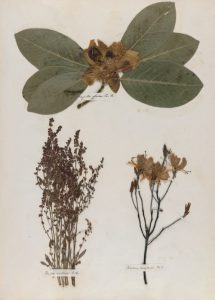
Emily Dickinson’s herbarium serves as a time capsule into the poet’s mysterious life. It reflects her poetic connection to nature, and her sensitivity to life and mortality, echoing the enigmatic nature of the poet herself.
Emily lived a quiet life in her hometown of Amherst, Massachusetts, where she was born in 1830. She was a gardener before she was a poet, having studied botany beginning at the age of nine. She also enjoyed working alongside her mother in the garden.
Collecting and pressing flowers was a common hobby for young girls of her time. Emily began her assemblage of flowers while attending Amherst Academy in 1844, and took her passion to new levels, often including pressed flowers in letters she sent. Read More→
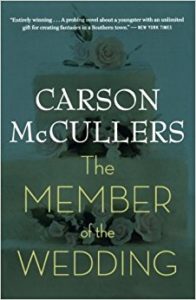
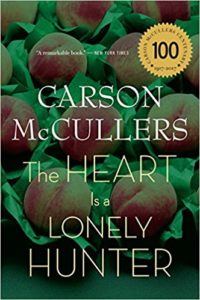
Like Mick Kelly of The Heart is a Lonely Hunter and her author, Carson McCullers, Frankie Addams is a tall, gangling tomboy. This in-depth look at the complicated young heroine of The Member of the Wedding (the 1946 novel) is excerpted from Girls in Bloom by Francis Booth.
“ … She was almost a big freak, and her shoulders were narrow, the legs too long … Her hair had been cut like a boy’s, but it had not been cut for a long time and was now not even parted.”
At the age of ‘twelve and five-sixths’ Frankie is five feet five and three-quarter inches tall and wears size seven shoes. Read More→
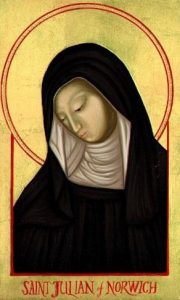
In A Room of One’s Own, Virginia Woolf espoused the cause of the playwright and novelist Aphra Behn (1640 – 1689) as the great precursor of free women writers — though the first book in English was written by Julian of Norwich.
The first autobiography was written by Margery Kempe, the first playwright and female poet since antiquity was Hrotsvitha, and the first professional woman writer was probably Christine of Pizan. And we can’t leave out Sappho, the ancient Greek poet.
Presented here are five early English women writers who may not be as well known as Aphra Behn, though each came before her, and set the stage for those who came after — Julian of Norwich, Margery Kempe, Jane Anger, Æmalia Lanyer, and Margaret Cavendish.
Read More→
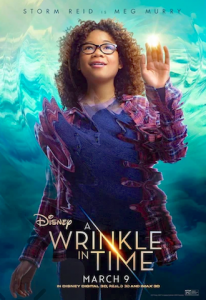
The 60th anniversary of Madeleine L’Engle’s A Wrinkle in Time (1962) capped a wave of nostalgia for this classic for children of all ages — including the 2018 film adaptation.
A Wrinkle in Time follows the story of siblings, Meg and Charles Wallace, in their cosmic search to find the whereabouts of their missing father.
The story is cinematic in all ways possible; however, it has already had two unsuccessful attempts at being brought to the big screen. Why have both of these films flopped? Can A Wrinkle in Time ever be successfully filmed? Read More→
This literary musing on Mick Kelly, the complex yet lovable tomboy character in The Heart is a Lonely Hunter by Carson McCullers, is excerpted from Girls in Bloom: Coming of Age in mid-20th Century Women’s Fiction by Francis Booth. Reprinted by permission.
Carson McCullers (1917–1967) was born Lula Carson Smith but chose to use the gender-neutral Carson; she was the epitome of the literary tomboy: as tall as a man, with long, lanky limbs, short, bobbed hair, boyish dress, and elfin face – the ideal author to create fictional tomboys.
And that she did, in two of literature’s greatest tomboys, Mick Kelly (The Heart is a Lonely Hunter) and Frankie Addams (The Member of the Wedding), with their equally gender-neutral names. Read More→
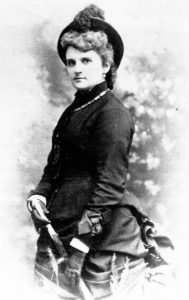
Kate Chopin’s long short story (very nearly a novella) “Charlie” was written in 1900 but wasn’t published until 1969, when it appeared in The Complete Works of Kate Chopin, edited by Per Seyersted (Louisiana State University Press).
Published the year following The Awakening (which at the time was deemed scandalous), Chopin sent “Charlie” to Youth’s Companion, a magazine that had published other stories by her, but it was rejected. It seems that she decided not to send it out again.
In his analysis of “Charlie,” Francis Booth (excerpted from his book Girls in Bloom: Coming of Age in mid-20th Century Women’s Fiction) writes: Read More→
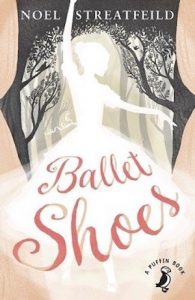
This intriguing look at Petrova Fossil, one of the three Fossil sisters of Noel Streatfeild’s best-known work of children’s literature, Ballet Shoes (1932), is excerpted from Girls in Bloom: Coming of Age in mid-20th Century Women’s Fiction by Francis Booth, reprinted with permission
Noel Streatfeild (1895 – 1986; note that she was a female author with a male-sounding first name and an unconventionally-spelled surname), was born in Sussex, England and was the daughter of the Bishop of Lewes.
She wrote several children’s books, of which Ballet Shoes – beautifully illustrated by her older sister – was the first and most well-known and well-loved by more than one generation of girls; her subsequent books were renamed by the publishers to have the word Shoes in the title, though in fact they are not a series. Read More→
“The Storm” by Kate Chopin is a short story written in 1898, just a year before what is now her best-known work, The Awakening (a novella). Had it been published it would surely have been just as controversial, since it also explores extramarital passion as its theme.
At the time these works were written, women — especially married mothers — were supposed to be “the angels in the house.” Any hint of agency over one’s sexual desires in a work of fiction, particularly from a woman’s pen, was considered shocking.
The Awakening, now considered a proto-feminist work and a staple in literature courses, was reviled by critics and banned in many quarters long after its publication. Read More→