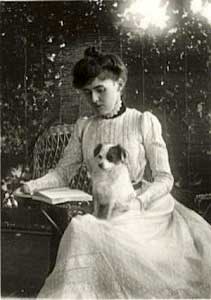
From all outward appearances, Edith Wharton, an heiress from one of late-19th century’s wealthiest families, seemed to be a woman in charge of her life.
But just beneath the surface, she was deeply insecure, especially about her writing abilities. Her family disapproved of her taking up the pen, and her society friends just didn’t care — or understand.
Wharton described how she overcame her obstacles with a great deal of humility. The following passages are from her memoir, A Backward Glance (1934). Read More→
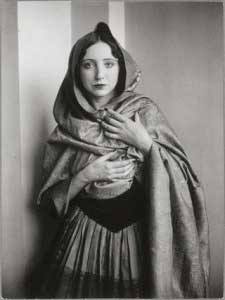
An excerpt from The Early Diaries of Anaïs Nin, Volume II. From an entry dated November 1921, when the author was 18 years of age:
“I have been made to write. I have been to sit by my desk day after day, pouring into a million pages the contents of my mind and heart, the results of my observations, the thing I conceive, the things that are revealed to me, the things I must speak.
How else can I explain this flow of ideas to which my words are attached almost miraculously? It comes from within me, something stronger than my will, at the times I least expect it. I am led, I am carried way by a thing which is beyond my self, beyond control and discipline.” Read More→
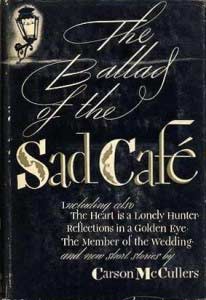
The Ballad of the Sad Café by Carson McCullers was first published in 1951. The original book (shown at right) included, in addition to the title novella, Carson’s other major works of fiction. In later editions, the title novella is presented with six short stories, as follows:
- “The Ballad of the Sad Café”
- “Wunderkind”
- “The Jockey”
- “Madame Zilensky and the King of Finland”
- “The Sojourner”
- “A Domestic Dilemma”
- “A Tree, a Rock, a Cloud”
The title story, written in the genre of Southern Gothic, concerns Miss Amelia, a masculine and eccentric woman (who is also a moonshiner), her purported cousin Lymon (a hunchback), and Marvin Macy, a recently released convict two whom Miss Amelia was briefly married. Read More→
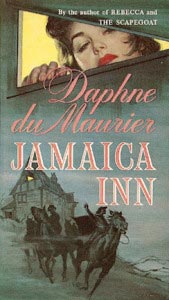
Jamaica Inn, a 1936 novel by British author Daphne du Maurier, is a period piece set in Cornwall, England of the early 1800s. Du Maurier was inspired by a stay at the actual Jamaica Inn, located at Bodmin Moor. Central to the story is a group of “wreckers” — murderers who run ships aground, kill sailors, and steal cargo.
The heroine of the tale is Mary Yellan, a young woman of twenty-three when the story opens. Upon her mother’s death, Mary moves from the farm in Helford where she was raised, to live with her mother’s sister.
Her Aunt Patience is married to a vicious drunkard and giant of a man named Joss Merlyn, who has her completely intimidated. Read More→
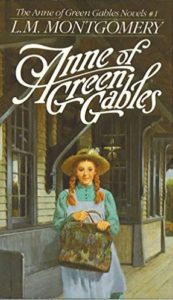
Anne of Green Gables is a 1908 novel by beloved Canadian author L. M. (Lucy Maud) Montgomery (1874 – 1942). Her first full-length book, it was a great success from the the time it was published, and has appealing to generations of readers of all ages and backgrounds sine.
Anne Shirley is a dreamy, imaginative 11-year-old orphan girl mistakenly sent to middle-aged brother and sister Matthew and Marilla Cuthbert, who meant to adopt a boy to help on their farm.
Set in Prince Edward Island, where the author grew up, the original volume and its sequels follow Anne from her arrival in the fictional town of Avonlea, through school, college, marriage, and motherhood. Read More→
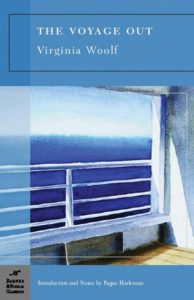
The Voyage Out by Virginia Woolf was the first novel by this iconic English author, published in Britain in 1915 and in the U.S. in 1920. Written at a point when Woolf was suffering from an acute period of mental illness during which there was a suicide attempt, the novel proceeded painfully slowly.
Nevertheless, it showed all the promise of her later work that would include stream of consciousness writing and themes of sexuality and death.
The final work was over-edited; her publisher felt that her commentary on British politics was too pointed and that it could nip her career in the bud. Read More→
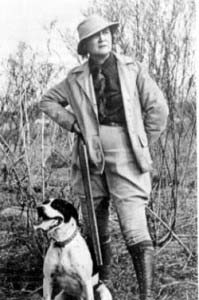
An interview with Marjorie Kinnan Rawlings, the author of The Yearling and Cross Creek, who discusses her way of life and methods of work. This interview was conducted on November 30, 1941, excerpted from Writers and Writing by Robert van Gelder, 1946:
“Writing,” said Marjorie Kinnan Rawlings, “is agony. I stay at my typewriter for eight hours every day when I’m working and keep as free as possible from all distractions for the rest of the day. I aim to do six pages a day but I’m satisfied with three. Often there are only a few lines to show.” Read More→
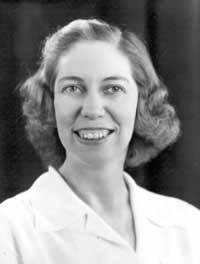
This interview with the wonderful Southern writer Eudora Welty (1909 – 2001) is excerpted from Writers and Writing by Robert van Gelder (1946).
A short story writer of exceptional talent talks of her work – June 14, 1942: Eudora Welty said that when she was younger she was very much interested in herself and always projected herself into her stories.
“The stories were awful. I’m from Jackson, Mississippi, and never had been much of anywhere else, but the action in my stories took place in Paris. They were awful. I remember the first line in one of them: ‘Monsieur Boule deposited a delicate dagger in Mademoiselle’s left side and departed with a poised immediacy.’ Read More→