Louisa May Alcott (1832 – 1888) imparted wisdom in her fiction as well as in her personal writings and interviews. Here’s a sampling of life lessons from Louisa May Alcott, a woman who worked hard and loved her family fiercely, even as she struggled with her health. We can all learn from her!
Best known for Little Women, she conducted her career as a professional determined to profit from her pen. In her life and writings, Alcott promoted women’s rights and campaigned for women’s suffrage.
Her views were espoused by her lead characters, strong young women who wanted more from life than to get married and have babies. She and her family were ardent abolitionists, a view that wasn’t as widely accepted in Massachusetts as one might think. Read More→
Louisa May Alcott’s Obituary, originally published in the New York Tribune, March 7, 1888: BOSTON, Mass., March 6 – Miss Louisa M. Alcott Following her Father to the Grave — Cold Quickly Develops into Spinal Meningitis
Miss Louisa May Alcott died this morning. Coming so soon after the death of her father the suddenly announced decease of Miss Alcott brings a double sorrow to the many friends of the family.”
For a long time Miss Alcott has been ill, suffering from nervous prostration. Last autumn, placing herself under the charge of Dr. Green of Columbus Avenue, she appeared to be improving and afterward went to Dunreath Place at the Highlands to live temporarily with Dr. Lawrence. Read More→
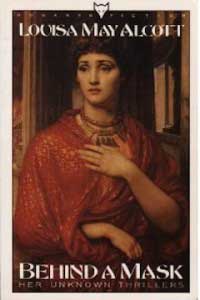
Behind a Mask: The Unknown Thrillers of Louisa May Alcott is a collection of four novellas that reveal another side of the author best known for Little Women.
Louisa May Alcott started her writing career with “blood and thunder” tales that evidently, she rather enjoyed producing, even as they helped her make the money she so needed to earn as a way to support her family.
Each of these stories features sharp-witted, outspoken women. Alcott manages to give each tale a twist, and imbues them with suspense and irony. Four stories are included in this edition, although Alcott wrote several more Gothic tales.
Read More→
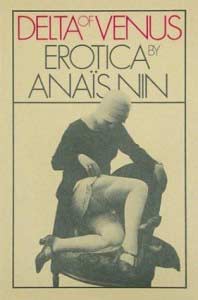
Following is an excerpt from the preface of The Delta of Venus by Anaïs Nin, in which she discusses why she wrote this 1976 collection of erotica, mainly aimed at a female audience:
“At the time (1941) we were all writing erotica at a dollar a page, I realized that for centuries we had only one model for this literary genre — the writing of man. I was already conscious of a difference between the masculine and feminine treatment of sexual experience.
I know that there was a great disparity between Henry Miller’s explicitness and my ambiguities — between his humorous, Rabelasian view of sex and my poetic descriptions of sexual relationships in the unpublished portions of the Diary. Read More→
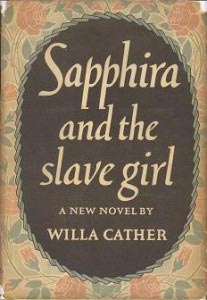
Sapphira and the Slave Girl (1940) was Willa Cather’s last novel. It was the only book the Virginia-born author set in her home state. It was generally not as well-received as many of her other works, and today, is not as widely known or studied.
An actual incident from Cather’s family history provided the seed of the story, which concerns the troubled marriage of Henry and Sapphira Colbert, who own and operate a small farm and mill near Winchester, Virginia, before the years of the Civil War.
Sapphira, an unhappy and ill middle-aged woman, suspects that her husband is intimately involved with Nancy, a pretty young mixed-race enslaved female of the household. Read More→
Virginia Woolf (1882 – 1941) might have lived the ideal writing life were it not for her lifelong struggle with mental illness. But this wasn’t the only source of anguish.
Surrounded by brilliant intellectuals in the Bloomsbury circle, she was also nurtured and protected by her husband, Leonard Woolf.
Yet she was relentlessly self-critical, restless, and rarely satisfied with her literary efforts. Perhaps that was what drove her to greatness, on the other hand. Read More→
The following 1940 interview with Pearl S. Buck is excerpted from Writers and Writing by Robert van Gelder, 1946: Pearl Buck says that in American life she has found a limitless reservoir of material for writing.
She never “became Chinese,” she always knew that she was American, yet her discovery of this country has had a certain Columbian freshness. (Photo at right courtesy of Wikimedia Commons)
The Good Earth was, in a way, “a pot-boiler,” written on “borrowed money and it had to be written at the time it was because I needed oh, a lot of money. Not just needed it. Had to have it.” Read More→
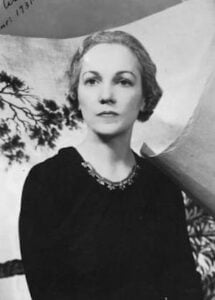
Excerpted from Writers and Writing by Robert van Gelder, 1946, an interview conducted with Porter in 1940: Katherine Anne Porter stated with evident surprise that her papers are now in order and in her own house.
Formerly she traveled a great deal with a suitcase for personal effects and a steamer trunk filled with manuscripts and notes. “Always I was up to my chin in paper.”
Now she has burned numerous short stories and four novels that she decided not to publish. But the material that she kept to work over is enough to occupy her well into her eighties. There are notes for novels, for a biography of Cotton Mather, and for some forty short stories.
Read More→