Dear Literary Ladies,
Some days, I just can’t find the resolve to work. I could blame all sorts of distractions and interruptions, but maybe it’s the discipline I lack. If the words don’t flow right away, I’ll get up and find some fine excuse not to stick with it. How do you develop the discipline to just sit down and write?
Ultimately, you have to sit down and start to write. And even if all you do is type out “I can’t write this morning; I can’t write this morning; oh, bother, I can’t write this morning,” that will sometimes prime the pump and get it started. It is a matter of discipline. It is particularly a matter of discipline for a woman who has children or another job. Read More→
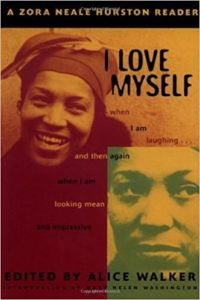
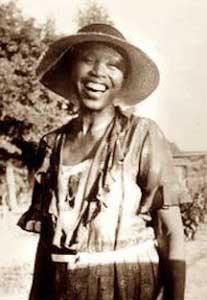
Edited and introduced by Alice Walker, I Love Myself: When I am Laughing … and Then Again When I am Looking Mean and Impressive is an anthology of writings by Zora Neale Hurston.
This 1979 collection pays tribute to Hurston’s role in Black literature of the early twentieth century.
Hurston wasn’t known for being humble. She was upset over receiving second place in literary contests, yet confidently flaunted her talents. Walker wrote: “To know that second place, in such a society, has often required more work and innate genius than the first is to trust your self-evaluation …” Read More→
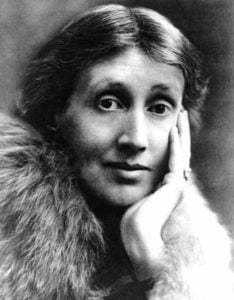
The following passage from A Room of One’s Own by Virginia Woolf reminds us that each woman who writes is both an inheritor and an originator.
In it, she asks women who write to produce all kinds of books — and why stop at books? Let’s include all sorts of written output, fiction and nonfiction; articles, essays, blog posts, verse, and many etceteras for our own good and that of the world at large.
Let’s pay homage to her and other women writers who have paved the way by doing just that — elevating the voices of women in literature and in discourse in general. Read More→
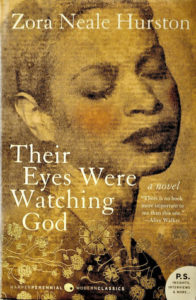
Their Eyes Were Watching God (1937) was the third published book and second novel by Zora Neale Hurston (1891 – 1960), the noted author and ethnographer. It’s arguably her best known work and something of a feminist classic.
Zora had a dual career as a writer (producing novels, short stories, plays, and essays) and as an anthropologist. With her determined intelligence and humor, she became a big name in the Harlem Renaissance movement of the 1920s.
Janie, the story’s heroine, searches for independence, identity, love, and happiness over the course of twenty-five years and several relationships. This story is actually not unlike Zora’s own, though it could be argued that she never found true happiness. Read More→
Dear Literary Ladies,
Sometimes I feel that I don’t have enough life experience to be a good writer. Everything I write, in hindsight, looks rather shallow and inauthentic. Should I wait until I’ve lived more fully, and gain some wisdom, before I bare my soul to the public in writing, or should I just plow ahead?
I wrote Their Eyes Were Watching God in Haiti. It was dammed up in me, and I wrote it in seven weeks. I wish I could write it again. In fact, I regret all of my books. It is one of the tragedies of life that one cannot have all the wisdom one is ever to possess in the beginning. Read More→
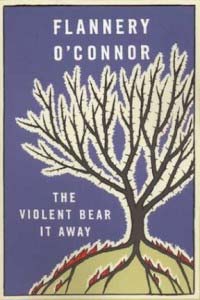
Excerpted from review of The Violent Bear it Away by Flannery O’Connor in The Kansas City Star (Kansas City, Missouri), March, 1960: Flannery O’Connor, a comparatively young Southern woman, writes with such skill and control that to praise her novel to excess would come easily and willingly.
Suffice it to say that The Violent Bear It Away is the best of her three books and that a comparison between this neo-Gothic tale and the novels written by William Faulkner at the height of his literary powers, could in no way harm Miss O’Connor. Read More→
Dear Literary Ladies,
I’m plugging away at a modest but steady writing career, but sometimes I think about aiming higher. I admit that I’m afraid to fail— and then look foolish to myself and others. What about you? Do you think it’s better to stick with what you do best, rather than stick your neck out and possibly fail?
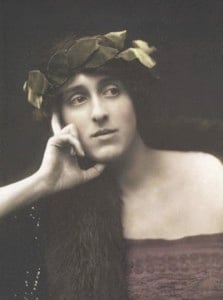
Is it better to be extremely ambitious, or rather modest? Probably the latter is safer; but I hate safety, and would rather fail gloriously than dingily succeed.
—Vita Sackville-West, from a letter to Virginia Woolf, August, 1928
Over the recent years, writers have increasingly turned to self-publishing. The reasons vary: It’s a route to consider if finding a publisher or agent has proven impossible; one has a niche audience that’s easily reachable; or there’s a specific reason to want complete control over the process. Here’s a bit of surprising self-publishing history by some classic authors.
Gone are the days of having to store copious numbers of cartons of unsold books in the garage or under the bed. User-friendly print-on-demand or e-book services allow writers to create books on an as-needed basis, avoiding the pitfalls of overprinting.
Whether the product ends up only in the hands of the author’s mom and cousins or becomes one of the rare successes that sells like wildfire, it’s good to have options. Read More→