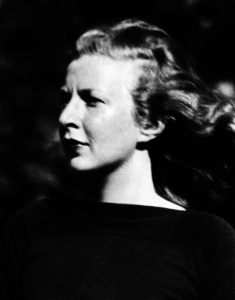
Are you in the mood for some gutsy quotes? Martha Gellhorn (1908 – 1998) was best known as an American war correspondent, though she was a prolific writer of fiction and memoir as well. She was the third wife of iconic American author Ernest Hemingway.
Gellhorn is ranked among the top war journalists of the twentieth century — and didn’t wish to be merely remembered as one of the four wives of “Papa” Hemingway. Famously, she lamented, “Why should I be a footnote to somebody else’s life?”
Indeed, she was enormously accomplished in her own right, having covered nearly every global conflict spanning the twentieth century. Read More→
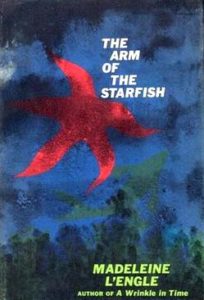
From the 1965 Farrar, Straus, Giroux edition of The Arm of the Starfish by Madeleine L’Engle: Young Adam Eddington, a brilliant student specializing in marine biology, secures a summer job as assistant to the world famous Dr. O’Keefe, who’s laboratory is situated on Gaea, a small island off the coast of Portugal.
Before the plane takes of from Kennedy International Airport, Adam makes the acquaintance of Caroline Cutter, an attractive girl whose father has business interests in Portugal. Read More→
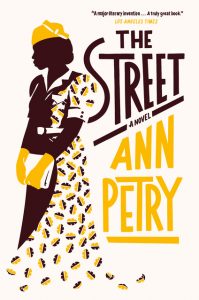
Ann Petry’s 1946 novel, The Street, presents the story of a single mother struggling to raise her young son and avoid the dangerous influences surrounding their Harlem apartment. The following quotes from The Street illustrate the raw energy and engrossing storytelling of the novel that make it feel fresh and engaging for the contemporary reader.
The Street was the first novel by an African-American woman author to sell over a million copies, and in total, sold more than a million and a half.
The story centers on Lutie Johnson, who copes with racism, sexual harassment, violence, and class divisions in World War II-era New York City. Lutie loves the wisdom of founding father Benjamin Franklin, and believes that if she follows his principles of thrift and hard work, that she can aspire to the American dream. Read More→
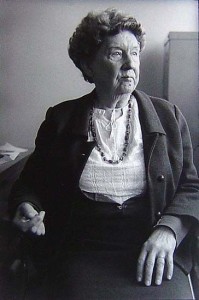
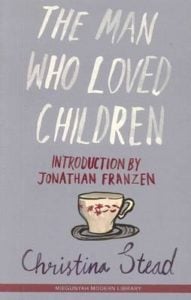
Christina Stead (1902 – 1983), the Australian-born novelist and short story writer, was best known for the novel The Man Who Loved Children. Following is a selection of quotes from this talented but somewhat embittered author.
The author of fifteen novels and numerous short stories, Stead never gained the success she felt she deserved. Viewed as a misanthrope and curmudgeon, she was a largely unapproachable person who revealed little of herself even as she self-invented. She destroyed many of her personal papers, making it more difficult to preserve her legacy.
In her works, the main characters were often based on herself and the stories very close to her own life. Read More→
The Man Who Loved Children by Christina Stead, the Australian author, was originally published in 1940. But it wasn’t until this novel was reissued twenty-five years later, in 1965, that it received critical acclaim and a wide audience.
Sam Pollit the title character, is the father and husband in the dysfunctional Pollit family. Supposedly, he was inspired by Stead’s father, a marine biologist. Egotistical, perhaps even narcissistic, Sam dominates the blended family, especially his wife Henny and older daughter Louie.
When it was first published, The Man Who Loved Children was set in Sydney. The reissued edition changed the venue to Washington, D.C. as a way to appeal more to American readers. Read More→
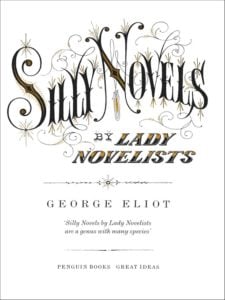
In Silly Novels by Lady Novelists, one of George Eliot’s most famous essays, she slammed her sister writers who flooded the market with formulaic romantic novels. They might be the equivalent of today’s trashier romance novels, with more archaic language and no bodice-ripping.
This essay is written in a tone that today might be described as “snarky.” Eliot skewered the popular, frothy women’s novels with their vacuous, heroines and clichéd plots, characterization, and language. Read More→
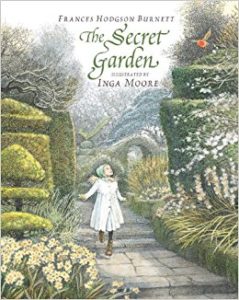
The Secret Garden by Frances Hodgson Burnett (1849 – 1924) was first published as a book in 1911 after being serialized starting in 1909. Here we’ll explore a selection of touching quotes from A Secret Garden, filled with metaphors for hope and transformation.
At the start of the story, we meet Mary Lennox, a sickly and neglected 10-year-old born to wealthy English parents in colonial India. After a cholera epidemic kills her parents, Mary is sent to England to live with her uncle in a mysterious manor.
The tale follows the spoiled and sulky young girl as she slowly sheds her sour demeanor after discovering a secret locked garden on the grounds of her uncle’s manor. Read More→
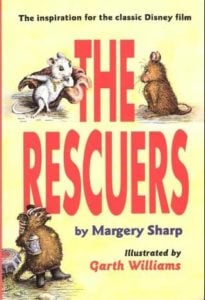
The Rescuers by Margery Sharp was the first children’s novel by this British author, who was also known for her romantic comic novels for adults (one of the best known of which was Cluny Brown). With drawings by well-known American illustrator Garth Williams, it was published in 1959, both in the UK and US.
The novel launched a series of books starring Miss Bianca, a socialite mouse who assisted animals as well as humans in perilous situations, and fellow mice Bernard and Nils. These well-received children’s novels have had legions of grown-up fans as well, and all told added up to nine books.
Disney adapted the stories to two animated films, The Rescuers (1977) and The Rescuers Down Under ( 1990). This brief description is from the New York Review of Books edition (2016): Read More→