While this is by no means an exhaustive list of classic feminist authors, it’s easy to argue that these women writers (who are no longer with us) were all visionaries in their unique ways. Fortunately, many more women writing today weave their feminist views into their fiction and nonfiction works.
It’s safe to say that they stand on the shoulders of those presented here. Are there any others you would have included in this list? Who are today’s leading feminist authors? Read More→
Daphne du Maurier (1907 – 1989) was a British novelist, playwright, and short story writer.
As the author of romantic suspense thrillers, she’s arguably best known for Rebecca (1938), though Jamaica Inn, My Cousin Rachel, and the short story “The Birds” (which inspired the terrifying 1963 film are close contenders.
Initially, some reviewers dismissed Rebecca as “women’s fiction,” or mere gothic romance. But with the benefit of decades of perspective, it’s viewed as a masterful psychological thriller. Read More→
The introduction to The Tenant of Wildfell Hall (1848) by Anne Brontë is excerpted from Life and Works of the Sisters Brontë by Mary A. Ward, a 19th-century British novelist and literary critic. It’s not so much an analysis, but rather, places the novel in the context of Anne’s life.
The Tenant of Wildfell Hall, first published under Anne’s pseudonym Acton Bell, was an immediate success. It was considered shocking for its time, and in retrospect, it’s considered one of the earliest feminist novels.
When the novel was first published, reviews on both sides of the Atlantic identified it as the work of Currer Bell (Charlotte Brontë‘s pseudonym), author of Jane Eyre, or Ellis Bell (actually Emily Brontë), author of Wuthering Heights, or both. It was common for the three sisters to be mistaken for one writer, which was quite vexing to them. Read More→
Maya Angelou (1928 – 2014) was a multi-talented poet, civil rights activist, memoirist, and more. Here we present a compilation of Maya Angelou’s inspirational quotes that we would all do well to live by.
In the course of Angelou’s writing career, she published seven memoirs (starting with the classic I Know Why The Caged Bird Sings, 1969), three books of essays, and several books of poetry.
She also wrote plays, screenplays, and television shows spanning more than fifty years, received dozens of awards, and collected more than thirty honorary doctoral degrees. Angelou led a bold, inspiring life, and was a true trailblazer to be remembered and honored. Read More→
Maya Angelou (1928 – 2014) was an American author, actress, screenwriter, poet, civil rights activist, and more. The fascinating facts about Maya Angelou presented here tell just a small part of her storied life and career.
Best known for her 1969 memoir I Know Why The Caged Bird Sings this trailblazing woman led a vibrant life filled with a multitude of accomplishments.
Angelou published seven autobiographies, three books of essays, several books of poetry, and two cookbooks. Her autobiography series chronicled her childhood, youth, and early adult experiences. Read More→
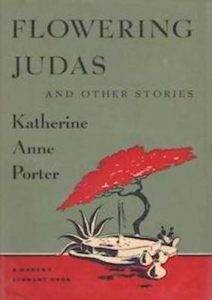
Taking a cue from Judas who revealed Christ’s identity to his persecutors with a kiss, “Flowering Judas” by Katherine Anne Porter, a short story published in 1930, revolves around the theme of betrayal.
Laura, an adventurous young woman from the southwest U.S. has an identity crisis, questioning her own values and her involvement in the Mexican revolution of 1910 – 1920.
At age twenty-two, she resembles Katherine Anne Porter herself, who traveled often to Mexico in her thirties, after the war ended. Characteristic of Porter’s heroines, Laura is one for whom personal choices have serious political implications. Read More→
Marguerite Annie Johnson Angelou (April 4, 1928 – May 28, 2014), widely known as Maya Angelou, was an American author, actress, screenwriter, dancer, poet, and civil rights activist. This celebrated, inspiring, and prolific woman is best known for a multitude of accomplishments.
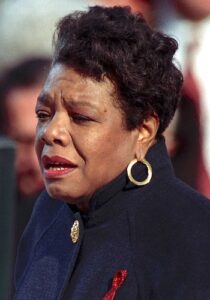
Photo above right, Maya Angelou at Bill Clinton’s inauguration courtesy of the William J. Clinton Presidential Library and Wikimedia Commons.
Her 1969 memoir, I Know Why the Caged Bird Sings, made literary history as the first nonfiction best-seller by an African American woman. Read More→
Wide Sargasso Sea by Jean Rhys is the last work by this Dominican-British author. Considered a prequel and response to Jane Eyre by Charlotte Brontë, the novella presents the perspective of Antoinette Cosway, the sensual Creole heiress who wound up as the “madwoman in the attic.”
When Wide Sargasso Sea was published in 1966, Rhys had all but disappeared from the literary scene; her previous novel, Good Morning, Midnight, was published in 1939.
Wide Sargasso Sea became her most successful novel, praised for its spare yet evocative language and its exploration of the power imbalance between men in women, between patriarchal colonizers and the original inhabitants of the Caribbean in the 1830s. It was the novel that rescued Rhys’s flagging reputation. Read More→