Margaret Mitchell (November 8, 1900 – August 16, 1949) is best known as the author of Gone With The Wind, one of the best-selling novels in American literature.
It was published in over 40 countries and adapted into the famed movie of the same name. It has been said that she herself was the model for Scarlett O’Hara, one of the most complex and charismatic of literary heroines.
Her father Eugene M. Mitchell, was an attorney and an authority on Georgia history. Her mother was Maybelle Stephens Mitchell, and she had one brother, Stephens Mitchell, who became an attorney and history buff like his father. Read More→
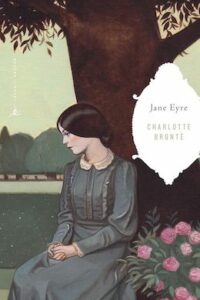
The following introduction to and analysis of Jane Eyre by Charlotte Brontë is excerpted from Life and Works of the Sisters Brontë (1899) by Mary A. Ward, a 19th-century British novelist and literary critic.
Though much has been written about Jane Eyre, Charlotte’s 1847 classic. The excerpt following, abbreviated from Ward’s 1899 book about the Brontës, is a critical yet insightful analysis of the beloved novel. Ward doesn’t hold back on what she feels are the inconsistencies and even the absurdities of the plot and characters. Seriously — locking a mentally ill wife in an attic? Read More→
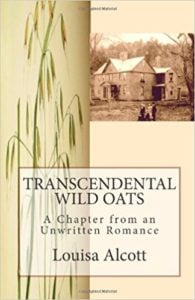
Transcendental Wild Oats by Louisa May Alcott is a satire, somewhere in length between a short story and novella, about her family’s misadventures as part of the Fruitlands community in the 1840s. It was first published in a New York newspaper in 1873.
Alcott thinly disguised the members of the Transcendentalist community. Her father, Amos Bronson Alcott was a co-founder of the community. In the fictional version he became “Abel Lamb.” Her mother, Abigail May Alcott, is presented as “Sister Hope.”
Louisa makes no attempt to soften the truth in her satire, portraying Abel Lamb is an impractical dreamer; Sister Hope actually feels hopeless —overworked and frustrated by the hapless men. Read More→
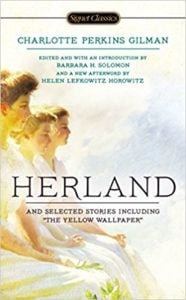
Charlotte Perkins Gilman (1860 – 1935) was an American novelist, poet, and pioneering feminist. Outspoken in conveying her strong beliefs about women’s equality and independence, Gilman’s works have influenced generations of feminist writer and theorists.
Following is a sampling of the best known books by Charlotte Perkins Gilman. It’s a concise guide to where to start with the works of this dynamic writer and thinker.
Though best remembered for her semi-autobiographical work of short fiction, The Yellow Wallpaper, Gilman’s fiction and nonfiction works both addressed the ways in which women’s lives were impacted by social and economic bias, and are still relevant today. Read More→
What is it about writers and procrastination? Here we’ll look at some tips from writers past and present to help you stop procrastinating and start writing — or delve into a long-delayed project.
We’ll also take a look at the reasons why procrastination can loom large when taking pen to paper, or more likely, fingers to the keyboard.
Does any of the following sound familiar? Read More→
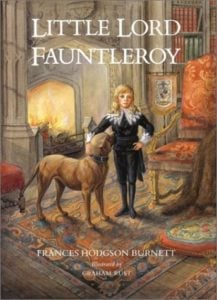
Little Lord Fauntleroy by Frances Hodgson Burnett was the British-American author’s first novel for children. The story was published as a serial in the St. Nicholas Magazine from November 1885 through October 1886 and released as a book later in 1886.
The novel’s illustrations would later inspire fashion trends throughout Europe and America — often to the chagrin of little boys who were compelled to wear them.
The story follows the journey of a little boy who goes to live with his bitter grandfather in England, after he unexpectedly inherits a lofty British title and a great deal of wealth. Burnett skillfully threads the story with timeless themes of family and kindness, creating a classic book relatable across all ages. Read More→
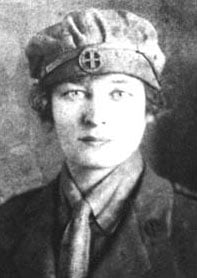
What writers like to do most is to write — ideally in a quiet place, and most often, by themselves. So what motivated these four authors — Edith Wharton, Agatha Christie, Dorothy Canfield Fisher, and Enid Bagnold — to leave their comfortable homes and writing desks, and get involved in war efforts, as nurses and refugee and relief workers?
Each of them, two Brits and two Americans, has a unique story of their involvement in World War I, in Britain and France. At right, the young Enid Bagnold as a Volunteer Aid Detachment nurse. Read More→
There are lots of wonderful novels that don’t grab you with the first sentence (or even the first paragraph or two), but when a book’s first line is great, that bodes well for the story ahead.
Here are some famously memorable first lines from 25 classic novels by women authors that have hooked generations of readers. What has been left out? Please comment at the end to share your favorites.
Read More→