Sarah Orne Jewett (September 3, 1849 – June 24, 1909) was American author whose works embodied her love for the natural surroundings of her native South Berwick, Maine.
The coastal community served as the fictionalized setting for most of her novels and short stories.
The Country of the Pointed Firs (1896) is considered Jewett’s masterpiece, and as a whole, her work is credited for helping to popularize the genre of regionalism in fiction. Her work also displays a deep compassion for women, respecting their hopes and ambitions in an era that wasn’t always conducive to their realization. Read More→
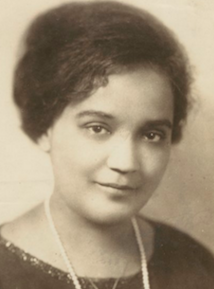
Jessie Redmon Fauset (April 27, 1882 – April 30, 1961) was an American editor, poet, essayist, and novelist who was deeply involved with the Harlem Renaissance literary movement.
Jessie Fauset was known as one of the “midwives” of the movement, as someone who encouraged and supported other talents. She was especially noted for her work as an editor of The Crisis, NAACP’s journal, in the Harlem Renaissance era. In that capacity, she discovered and nurtured several major Black literary figures.
She also wrote four well-regarded novels and numerous short stories and essays; she was an accomplished poet as well.
Read More→
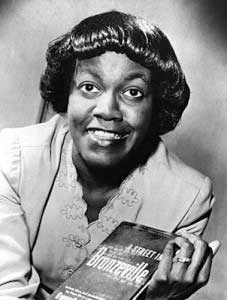
Gwendolyn Brooks (June 7, 1917 – December 3, 2000) was a highly awarded American poet whose works included sonnets and ballads as well as blues rhythm in free verse. She also created lyrical poems, some of which were book-length.
Arguably her most famous poem is the brief, much-anthologized “We Real Cool,” but it would be sad to stop with this brief but memorable poem — her career as a working poet was rich and varied.
Though her work reflected urban Black life, its underlying themes were universal to the human experience. Gwendolyn Brooks’ lifetime output encompassed more than twenty books, including children’s books. Read More→
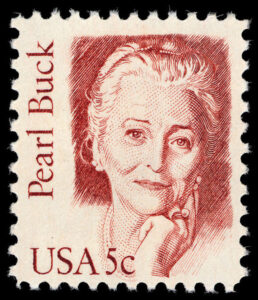
Pearl S. Buck (June 26, 1892 – March 6, 1973), was an American author of fiction and nonfiction, as well as a humanitarian and human rights advocate. She was the first American woman to win the Nobel Prize in Literature.
Born Pearl Sydenstricker in Hillsboro, West Virginia, she was the daughter of Southern Presbyterian missionaries. Her parents had spent much of their years of marriage, from about 1880 on, in China.
They returned to the U.S. shortly before Pearl was born, then, when she was just five months old returned to China, settling in Zhenjiang, a town near Nanking. Read More→
Georgia Douglas Johnson’s first poems were published in the NAACP’s magazine, The Crisis, in 1916. She published four poetry collections: The Heart of a Woman (1918), Bronze (1922), An Autumn Love Cycle (1928), and after a long gap, Share My World (1962).
Though considered an important participant in the Harlem Renaissance movement, Georgia Douglas Johnson (1880 – 1966) was never a New York City resident. Georgia and her family lived in Washington, D.C. Their house on S Street NW came to be known as the “S Street Salon” — a satellite of sorts for writers of the movement visiting in the nation’s segregated capital.
Among the colleagues who were regular visitors were the leading lights of the Renaissance: Langston Hughes, Jean Toomer, Alain Locke, and many of the noted women writers of the Harlem Renaissance. Read More→
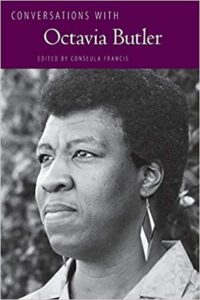
As a Black woman science fiction writer, Octavia E. Butler (1947 – 2006) blazed a trail when she broke through the then-white male-dominated genre. Here we’ll delve into some fascinating facts about Octavia E. Butler.
In her New York Times obituary, she was described as “an internationally acclaimed science fiction writer whose evocative, often troubling novels explore far-reaching issues of race, sex, power, and ultimately, what it meant to be human.”
It wasn’t easy to break into publishing, but after publishing some short stories, Octavia’s first novel was Patternmaster (1976). It was the first in what would become a four-volume series. Central to these novels are Patternists, people with telepathic powers. Read More→
Simone de Beauvoir (January 9, 1908 – April 14, 1986), born Simone-Lucie-Ernestine-Marie Bertrand de Beauvoir, was a French author, existential philosopher, political activist, feminist, and social theorist. Her most enduring work is The Second Sex (1949).
Born in Paris, de Beauvoir was deeply religious in her youth. She intended to become a nun until a crisis of faith at age fourteen resulted in her becoming an atheist. This remained central to her philosophy for the rest of her life.
Read More→
Louisa May Alcott (1832 – 1888) is best known as the author of Little Women and its sequels, including Jo’s Boys and Little Men, though the scope of her work goes far beyond these beloved books. Following is a selection of quotes from Little Women that remind us why the classic novel is so timeless.
In 1868, Louisa’s publisher offhandedly asked that she try writing a “girls’ story” for their list. Thinking little of the request, she cranked it out in two and a half months, though her heart wasn’t in it. Neither she nor her publisher thought it was in any way remarkable.
In addition to her literary pursuits, Louisa May Alcott was also known for promoting women’s rights and campaigning for women’s suffrage. In Little Women and subsequent novels, she expresses her views through her characters, in their dialogues and actions.
Read More→