Madeleine L’Engle (November 29, 1918 – September 6, 2007) was an American novelist and memoirist best known for her award-winning fantasy and science fiction series for young adults and children of all ages. She’s particularly well known for A Wrinkle in Time and its sequels.
L’Engle’s writing life that can be described as one of perseverance. She recorded in detail the long years of rejection of her work as “too dark and difficult for children.”
Hers is a story of triumph following years of silence and frustration. She persisted because she felt compelled to, though she often had little to show for her labors but rejection slips. Read More→
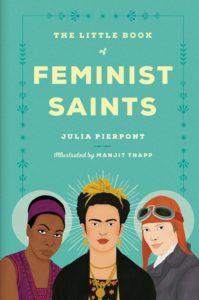
The Little Book of Feminist Saints by Julia Pierpont & Manjit Thapp is an inspiring, beautifully illustrated collection that honors one hundred exceptional women throughout history and around the world.
In this luminous volume, New York Times bestselling writer Julia Pierpont and British artist Manjit Thapp match short, vibrant and surprising biographies with stunning full-color portraits of secular female ‘saints’: champions of strength and progress. Read More→
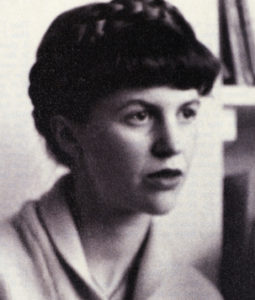
Sylvia Plath (October 27, 1932 – February 11, 1963) was a gifted writer of poetry and fiction whose life ended all too young by suicide. Triggered by the death of her father when she was eight years old, depression took root and led to a life of struggle.
She made no pretense about the degree of her pain in her writings. Plath’s poetry is considered part of the frank and revelatory “confessional movement.” (Photo at right courtesy of Wikimedia Commons)
As a young woman, Plath seemed to have what it would take to succeed. She was attractive, smart, and talented. As a college student at Smith, she was well liked and showed immense academic promise. Read More→
Katherine Anne Porter (May 15, 1890– September 18, 1980), was an American author and journalist best known for her short stories and her 1962 masterwork, Ship of Fools.
She spent her early years working as a teacher of drama, dance and song to help support her and her father. These misfortunes are what made Porter the amazing writer that she became, focusing on themes of death, mistrust, and depraved human behavior. Read More→
Gertrude Stein (February 3, 1874 – July 27, 1946) was an American author, poet, and art collector. She’s considered one of the most significant modernist writers of the early twentieth century.
Though some consider her writing incoherent or absurd, others view it as a singular voice from the era of literary modernism.
Born into a well-to-do family Jewish family in Pennsylvania, Stein went to college at Radcliffe and then studied medicine for four years at Johns Hopkins University. Read More→
L.M. Montgomery (November 30, 1874 – April 24, 1942), born on Prince Edward Island, Canada, was a novelist and short story writer best known for the Anne of Green Gables series. Her full name was Lucy Maud Montgomery.
When she was not yet two years old her mother died of tuberculosis, and her father left her to be raised by her grandparents. Strict Presbyterians who ran the Cavendish post office, they provided a stable home for restless, imaginative Maud.
Maud started writing on scraps of paper when she was just a girl, and would eventually draw upon the beautiful Prince Edward Island habitat for the adventures of Anne Shirley. Read More→
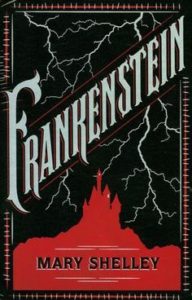
Mary Wollstonecraft Shelley (1797 – 1851) is the British author, is best known for the 1818 classic, Frankenstein: The Modern Prometheus. In the summer of 1814, seventeen-year-old Mary ran off to Europe with the married poet Percy Bysshe Shelley.
There she joined his literary circle, which included Lord Byron. The events that inspired the creation of the tale took place during the couple’s sojourn in Italy. It was published in 1818, when Mary was barely 21 years old.
Read in Mary Shelley’s own words how she came to write one of the most haunting tales of all time. Read More→
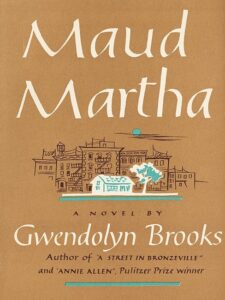
Maud Martha by Gwendolyn Brooks is the only novel by this esteemed and much honored American poet. Published in 1951, its language is both spare and profound; it reads beautifully and poetically without seeming affected. It’s the story of a middle-class, mid-twentieth century black woman leading an ordinary, extraordinary life.
The story opens when Maud Martha is seven, observing the adults around her with wonder and bafflement. The story begins to grip as she enters adulthood, with its dating rituals, love, jealousy, marriage, motherhood, disappointment, loss, contentment and joy.
It skims the surface of segregation and bias, and explores familial and neighborly bonds — all within a surprisingly short novel. Presented here is a selection of quotes from Maud Martha by Gwendolyn Brooks, a book that deserves to be rediscovered and treasured. Read More→