By Nava Atlas | On February 23, 2016 | Updated January 6, 2025 | Comments (2)
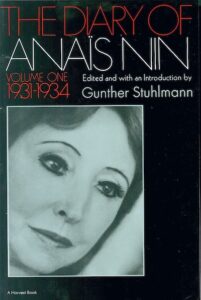
Anaïs Nin (1903-1977) embodied the practice of writing as a grand passion and a path to delving deeply into the self. In this sense she foreshadowed the immediacy of today’s world of self-revelatory memoir and blogging.
Best known for her multi-volume Diary of Anaïs Nin, which became a touchstone of feminist thought, she also broke ground as a writer of female erotica, and was a splendid essayist as well. For Nin, writing was as necessary as breathing.
Of course, as her famous Diary series progressed, she became aware that she was writing not only for an audience, but for posterity. Still, her raw, honest diaries resonated with millions of women who felt she had awakened something in them. Here are some of the responses she got from readers: Read More→
By Taylor Jasmine | On February 21, 2016 | Updated October 18, 2024 | Comments (0)
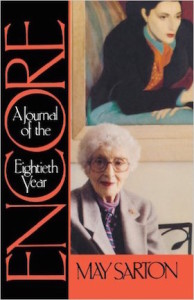
From the 1993 W.W. Norton edition of Encore: A Journal of the Eightieth Year by May Sarton: In this affirmative new journal May Sarton describes both hardships and joys in the daily round — physical struggles counterbalanced by the satisfactions of friendship, nature, growing fame, and a return to writing poetry.
Sarton writes perceptively of how age affects her: the way small things take longer and tire more, how the body often hurts and feels fragile and scared.
Other days energy returns, spirits lift, projects abound. She returns to the garden — and her descriptions of flowers have never been more luminous. She savors particular pleasures, from good soup to the friends who come and help keep everything going. Read More→
By Taylor Jasmine | On February 21, 2016 | Updated September 30, 2022 | Comments (0)
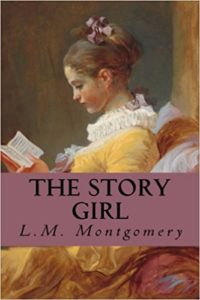
From the 1990 Avenel edition of Days of Dreams and Laughter: The Story Girl and Other Tales by Lucy Maud Montgomery. The Story Girl by L.M. Montgomery was first published in 1911.
“Never had we heard a voice like hers,” says the young narrator, describing the first meeting with Sara Stanley, “The Story Girl.”
So begins a merry journey into the hearts and lives of a close-knit group of Canadian teenagers. the heroine and her young companions, like Anne of Green Gables, are blessed with humor, spunk, a strong sense of adventure, and romantic souls. Read More→
By Taylor Jasmine | On February 21, 2016 | Updated March 15, 2026 | Comments (2)
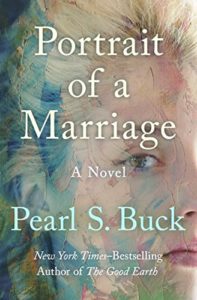
From the 1941 John Day edition of Portrait of a Marriage by Pearl S. Buck. “Marriage is so profound an experience,” William Wrote to his grown daughter, “I should be sorry if you missed it. It takes place sometimes between two who are unsuited, but it is profound.”
Surely no two could have seemed less suited than he and Ruth — he a sensitive artist, son of a rich and proud family, widely traveled, cosmopolitan, and she the unlettered daughter daughter of a farmer. She could never come into his world, and he came into hers — giving up, for their deep love, his family and fame and almost all else he had known.
Yet at the end of nearly fifty years he could think, with gratitude to her, how rich his life had been, how little he had lost to gain happiness. Read More→
By Taylor Jasmine | On December 30, 2015 | Updated September 26, 2022 | Comments (0)
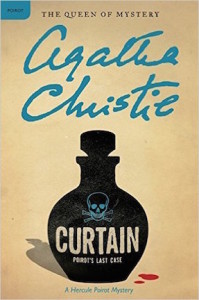
From the 1975 Dodd, Mead edition: Hercule Poirot, one of Agatha Christie’s most enduring characters, made his debut in The Mysterious Affair at Styles (1920). More than a generation later, he meets his final challenge in Curtain, in which he confronts the most fiendishly clever murderer of his long career.
The little English Village of Styles St. Mary provides the setting for both adventures. In his first case, Poirot investigates the baffling death of the mistress of Styles Court, the great manor house. Her returns there for his last adventure, to find that in the years since the Great War, Styles Court has degenerated into a “guest house.” Read More→
By Taylor Jasmine | On December 16, 2015 | Updated March 15, 2026 | Comments (0)
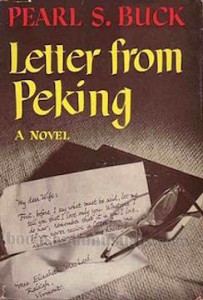
From the 1957 John Day Company edition: Pearl S. Buck‘s Letter from Peking is a tender and suspenseful story of love in a world split apart, love struggling against the barriers of race, politics, distance, and misunderstanding. This time is modern, the setting Vermont, with flashbacks to China.
The protagonist, Elizabeth, as an American woman whose husband Gerald, half Chinese, has elected to stay in Peking under communism while she returns to live in America.
The counterpoint to their continuing love is the search of their quarter-Chinese son Rennie, who has just reached manhood, for a love that will yield happiness instead of the frustration his parents reaped. Read More→
By Nava Atlas | On December 13, 2015 | Updated June 13, 2026 | Comments (0)
Dear Literary Ladies,
It’s so hard to make a living at writing these days. There used to be so many more paying outlets for short stories, essays, and sketches; now everyone expects writers to contribute free content. How did you manage to earn a living while building your reputation? Do you think it’s necessary to be a “starving artist” until one’s ship comes in?
I always took little dull jobs that didn’t take my mind and wouldn’t take all of my time, and that, on the other hand, paid me just enough to subsist. I think I’ve only spent about ten percent of my energies on writing. The other ninety percent went to keeping my head above water. Read More→
By Nava Atlas | On December 9, 2015 | Updated October 19, 2024 | Comments (0)
Best known for her Pulitzer Prize-winning novel The Yearling and her memoir, Cross Creek, Marjorie Kinnan Rawlings was as comfortable in the kitchen as she was at the typewriter — maybe more so, as cooking was a joy to her, whereas she belonged to the “writing is agony” school of thought.
Rawlings collected the recipes of her time and place in Cross Creek Cookery (1942).
For the most part, the recipes are simple and familiar, with a decidedly Southern accent. Still workable if not always healthful (lots of butter and sugar!), some of the dishes would now be considered a extreme and gross — Alligator-Tail Steak and Minorcan Gopher Stew among them. Read More→