By Nava Atlas | On September 27, 2018 | Updated September 20, 2025 | Comments (0)
Dodie Smith (May 3, 1896 – November 24, 1990), born Dorothy Gladys Smith in Lancashire, England, was one of the most successful female dramatists of her generation.
The British novelist and playwright is even better known for her novel The Hundred and One Dalmatians (later better known as The 101 Dalmatians) and the young adult novel I Capture the Castle.
Dodie Smith came to her love of theatre early, with many of her family members either enthusiasts or amateurs in that realm. She studied at the Academy of Dramatic Art, exploring a short career in acting before becoming a successful playwright and novelist. Read More→
By Taylor Jasmine | On September 25, 2018 | Updated August 14, 2026 | Comments (0)
Giant, the 1956 film, was based on the epic 1952 novel of the same title by Edna Ferber.
The saga of a wealthy Texas ranching family, the film starred Elizabeth Taylor, Rock Hudson, and James Dean, with appearances by Chill Wills, Mercedes McCambridge, Carroll Baker, Jane Withers, Dennis Hopper, Sal Mineo, and Rod Taylor.
Giant was notable for being James Dean’s final film performance before his tragic death in a car accident. He was nominated posthumously for an Academy Award nomination for his portrayal of Jett Rink, a poor but ambitious ranch hand. Read More→
By Nava Atlas | On September 24, 2018 | Updated January 22, 2026 | Comments (6)
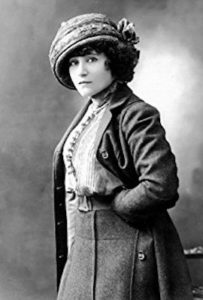
Colette (1873 – 1954), the French author (born Sidonie-Gabrielle Colette) was as known for her writing as for her scandalous love life in the course of her prolific career.
Rejecting society’s rules for female expression and sexuality, she overcame notoriety to be regarded as one of the most treasured authors in the canon of French literature. Colette was no angel and certainly had her flaws in a full life of great accomplishment as well as of scandal. Read More→
By Aiyana Edmund | On September 20, 2018 | Updated April 30, 2022 | Comments (0)
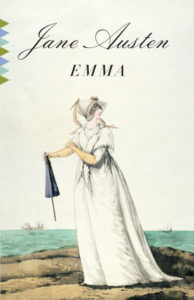
Emma by Jane Austen (1775 – 1817) was first published in December, 1815. Before she began the novel, Austen wrote, “I am going to take a heroine whom no one but myself will much like.”
In the first sentence she introduces the main character as “Emma Woodhouse, handsome, clever, and rich.” Emma is privileged and headstrong, greatly overestimating her matchmaking abilities, her imagination often leading her astray.
Emma was the last novel to be completed and published during Jane Austen’s life, as Persuasion, the last novel Austen wrote, was published posthumously. Emma has been adapted for several films, many television series, multiple stage plays, and has been the inspiration for several novels. Following are a collection of quotes from Emma, a novel that has been said to have “changed the face of fiction”: Read More→
By Nava Atlas | On September 19, 2018 | Updated October 29, 2026 | Comments (0)
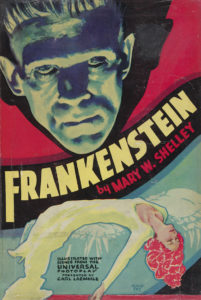
It was with great excitement that Literary Ladies Guide helped spread word about the exhibition at The Morgan Library & Museum (NYC): It’s Alive! Frankenstein at 200, which was on display from October 12, 2018 to January 27, 2019.
It’s hard to overstate the impact of Mary Shelley’s Frankenstein on literature as well as popular culture. This exhibit celebrated the 200th anniversary of the 1818 classic, published when its author was barely twenty-one. Read More→
By Nava Atlas | On September 15, 2018 | Updated September 22, 2026 | Comments (2)
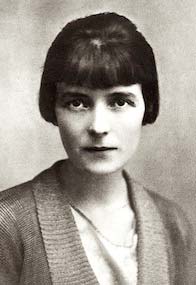
Katherine Mansfield (October 14, 1888 – January 9, 1923), best known for her mastery of the short story form and for revolutionizing the modern English short story.
Born Katherine Mansfield Beauchamp in Wellington, New Zealand, she enjoyed a comfortable childhood as part of a well-to-do family.
A serious student of the cello, she first expected that music would be her career. Still, she found the colonial Edwardian atmosphere stifling and was inspired by rebels like Oscar Wilde. Read More→
By Taylor Jasmine | On September 13, 2018 | Updated July 27, 2025 | Comments (7)
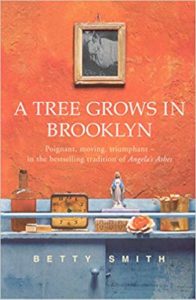
How many of us have read and re-read A Tree Grows in Brooklyn? It’s one of those books that can be revisited at various stages in life and appreciated from a different perspective each time.
After years of aspiring to be a successful novelist (she had already achieved a measure of success as a playwright), Betty Smith struck literary gold, drawing on her own experience as the child of immigrants at the turn of the twentieth century.
Read More→
By Taylor Jasmine | On September 9, 2018 | Updated April 25, 2022 | Comments (0)
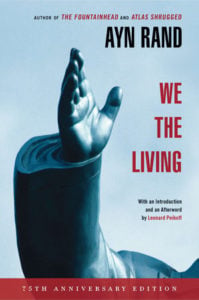
We the Living (1936) was the first published novel by Ayn Rand, the ever-controversial Russian-American novelist. Set in post-revolutionary Russia, it reflected Rand’s opposition to communism and totalitarianism. It was, in her own estimation, her most semi-autobiographical.
Though the reviews the book received upon its initial publication were mixed, it became a bestseller. This set the stage for the popularity of her subsequent novels, especially The Fountainhead and Atlas Shrugged, which sold like gangbusters — even though critics were even less kind to them.
Many reviews of We the Living appreciated the direct look at the effects of Soviet policies on society, but felt the writing was heavy-handed. As the New York Times put it, the book seemed “slavishly warped to the dictates of propaganda.” Read More→