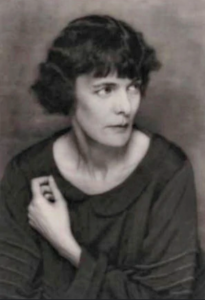
Elizabeth Bishop (1911 – 1979) was recognized with numerous awards during the course of her career, including the Pulitzer Prize. Here you’ll find a brief introduction to the poetry of Elizabeth Bishop, the noted American poet.
Not a particularly prolific writer, Bishop published only 101 poems during her lifetime. Her literary reputation has grown since her death, with poems like “One Art,” “A Miracle for Breakfast,” “Sestina,” and “The Fish.”
As a poet, Bishop took great care to rewrite and revise her work. She didn’t give the reader much of a glimpse into her own life, but instead, her poems contained intimate observations of the physical world. She often expressed themes of loss and the struggle to find one’s place in the world in universal rather than personal way. Read More→
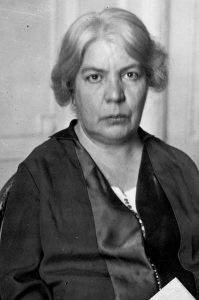
Grazia Maria Cosima Damiana Deledda (September 28, 1871 – August 15, 1936), more commonly known as Grazia Deledda, was an Italian writer.
She is remembered for being the first Italian woman to receive the Nobel Prize in Literature (1926) and just the second woman to receive this award (Swedish writer Selma Lagerlöf was the first, in 1909).
She was praised “for her idealistically inspired writings which with plastic clarity picture the life on her native island and with depth and sympathy deal with human problems in general.”
Read More→
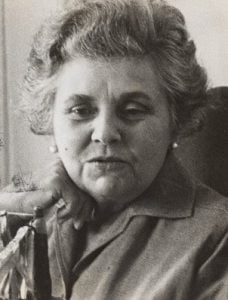
Elizabeth Bishop (February 8, 1911 – October 6, 1979) was a noted American poet. Born in Worcester, Massachusetts, Bishop won numerous awards during the course of her career, including the Pulitzer Prize.
Her reputation as a significant poet has only grown since her death. Her most iconic poems include “The Fish,” “One Art,” “A Miracle for Breakfast,” and “Sestina.” (photo above right courtesy of Wikimedia Commons)
Bishop wasn’t a particularly prolific poet, preferring to spend long periods of time revising her work; she wrote just over one hundred poems.
Read More→
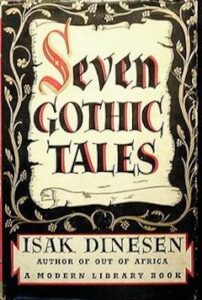
Seven Gothic Tales by Isak Dinesen (1885 – 1962) is a masterful collection of short stories by the Danish author best known for Out of Africa (1937), a now-controversial memoir of her life as a coffee plantation owner in the colonized Kenya of the 1920s.
In 1931, the plantation’s fortunes collapsed, and she returned to her family home in Denmark from Kenya. Karen Christenze Dinesen was the author’s original name, and she was known as Baroness Karen von Blixen-Finecke, or simply Karen Blixen, during her disastrous marriage.
Upon her return to her home country, she began writing in earnest. In 1934, Seven Gothic Tales, a collection of stories she had written in English, was published. Read More→
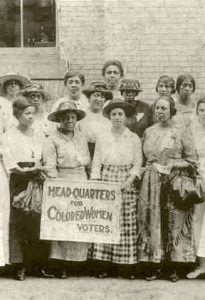
Presented here are twelve Black American suffragists whose contributions shouldn’t be overlooked. This is just a small sampling of the many Black women who fought for women’s right to vote.
The women’s suffrage movement in the United States led to the establishment of the legal right for women to vote nationally when the 19th amendment was ratified in 1920.
As the women’s suffrage movement gained momentum in the late nineteenth and early twentieth centuries, Black women were often marginalized. They dealt with the political concerns of white suffragists who were aware that they needed the support of Southern legislators both on the state and federal levels. Read More→
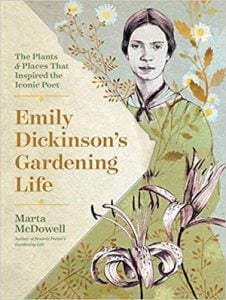
If you or someone you love is both an Emily Dickinson aficionado and an avid gardener, Emily Dickinson’s Gardening Life by Marta McDowell is a book to treasure. This 2019 publication (Timber Press, Portland, OR) is a full color, lushly illustrated homage to an enigmatic woman who was not only a brilliant poet, but a keen observer of the natural world around her.
Organized by season, this gorgeous book is revised from an edition first published in 2004, by an author whose expertise in gardens dovetails with an avid interest in classic women authors who cultivated them. From the publisher: Read More→
Louisa May Alcott (1832 – 1888) may be best known as the author of Little Women and its sequels, but there was more to her than these genteel (yet gently subversive) domestic tales. The fascinating facts about Louisa May Alcott that follow might surprise those who don’t know a lot about the woman behind Little Women.
From her teen years on, Alcott was determined to make a living as a writer. She became her family’s primary breadwinner at a young age, mostly by writing and selling anonymous thrillers, or what she called “blood and thunder” tales.
And from there her writing life unfolded, often in unexpected ways. She was a complex woman whose views were reflected in her literary output. Read More→
Hilda Doolittle (1886 – 1961), known by her nom de plume H.D., was an American-born poet, novelist, translator, and essayist. Following is a selection of poems by H.D. that speak to her experimental and innovative approach to the craft.
Modernism, psychoanalysis, and feminism were all influences on her work, as were the effects of World Wars I and II. H.D earned her place among iconic modernist writers including T.S. Eliot, Ezra Pound, Marianne Moore, and William Carlos Williams.
Read More→