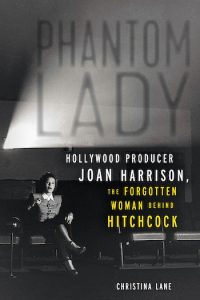
The following is excerpted from Phantom Lady: Hollywood Producer Joan Harrison, the Forgotten Woman Behind Hitchcock, published by Chicago Review Press. © 2020 by Christina Lane.
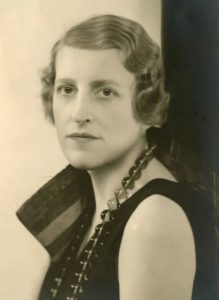
In the summer of 1938, Alfred Hitchcock signed on to direct an adaptation of Daphne du Maurier‘s novel Jamaica Inn, which was to be his last British film before venturing to Hollywood. The preeminent producer Erich Pommer and lead actor Charles Laughton were already lined up to produce the movie through their jointly owned company Mayflower Pictures. Read More→
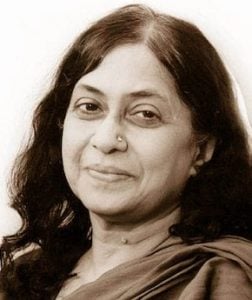
Kamala Das (1934 – 2009) started her career as a poet writing under the name of Madhavi Kutty. The renowned Indian author was bilingual and wrote in her mother tongue, Malayalam, as well as in English.
Born in Punnayurkulam, India as Kamala Surayya, she was better known in her home state of Kerala for her short stories and her autobiography, and in the rest of the country, for her English poetry.
Her explosive autobiography, My Story, written in Malayalam (her native tongue), gained her both fame and notoriety. Later, it was translated into English. Read More→
“The Cry of the Children” by Elizabeth Barrett Browning, first published in 1843, is an example of the esteemed British poet’s foray into the area of social protest poetry.
With the 19th century’s industrial revolution in full force, the poem forcefully decries the all-too-common exploitation of children as laborers, placing blame on both the social structures and institutions that allowed the practice to spread.
Here is an excellent, in-depth analysis of “The Cry of the Children”, which begins as follows: Read More→
The short story “A Wagner Matinee” by Willa Cather was first published in the February, 1904 issue of Everybody’s Magazine. It became part of Cather’s first book of short stories, collected under the title The Troll Garden (1906). Following is the full text of “A Wagner Matinee.”
Plot summary: Clark, a young man living in Boston, finds out that his Aunt Georgiana is coming to town from Nebraska to settle an estate. As a younger woman, Georgiana was an esteemed music teacher at the Boston Conservatory.
While on a trip to the Green Mountains of Vermont, she met Howard Carpenter, a man ten years younger than she. The two eloped and began a homestead in Nebraska. Read More→
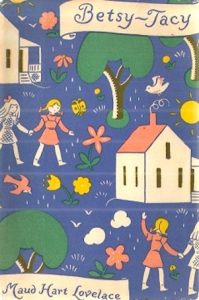
Revisiting the Deep Valley novels by Maud Hart Lovelace (1892 – 1980) during the winter holiday season is a particular delight, though this American author’s stories can be enjoyed year-round.
Perhaps better known as the Betsy-Tacy books, the themes celebrated in these nostalgic novels for young readers are universal: friendship, devotion, love of home, ambition, and comfort.
Though the novels were published in the 1940s, they take place in the early years of the twentieth century, when the author herself was growing up. As young girls, her well-known heroines—Betsy, Tacy, and Tib—have ten cents to spend on Christmas shopping. Read More→
Winifred Holtby (June 23, 1898 – September 29, 1935) was an accomplished British author, journalist, and activist. Best known for her posthumously published novel, South Riding (1936), she had published six novels in her lifetime, and fourteen books in total.
She also had a successful career in journalism and wrote the first critical study of Virginia Woolf in English. During her lifetime, her fame derived from her work for prominent newspapers and magazines, including the feminist publication Time and Tide.
Winifred wrote about democracy and social welfare, feminism and pacifism, education and responsibility, racism and injustice. After her death, her fame grew with the publication of Testament of Friendship (1940), written by her lifelong friend, Vera Brittain. Read More→
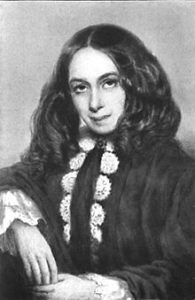
Elizabeth Barrett Browning (1806 – 1861) was a respected and widely read British poet of the Victorian era. Tragedy and loss as well as great love marked her life. Many of her poems were incredibly long, some even book-length (like Aurora Leigh); this post will touch on some of the shorter poems by Elizabeth Barrett Browning.
Their relative brevity (for some aren’t actually that short) in no way diminishes the genius of their author.
Elizabeth Barrett, who enjoyed a cultured and privileged upbringing in England, began writing poetry in earnest before even reaching her teens. She was introduced to British literary society by her cousin, John Kenyan in the 1830s, and soon, her individual poems were becoming known and respected in these circles. Read More→
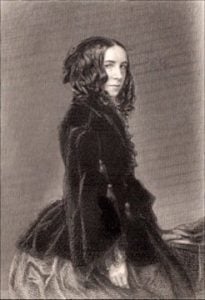
Elizabeth Barrett Browning (1806 – 1861), the British poet, accomplished what few women writers did in her time — and that was gaining the respect and admiration of the literary world. In fact, she was far better known than her husband, fellow poet Robert Browning, in their lifetime.
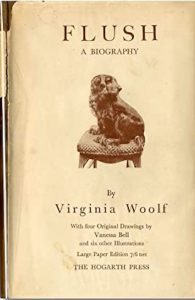
Mary Russell Mitford, another writer, gave Elizabeth the cocker spaniel she named Flush as solace after the death of her brother in 1840.
From the start, Elizabeth adored Flush, so much so that she dedicated this poem to him. However, Flush wasn’t always on board with Robert Browning, his rival for Elizabeth’s affection. Browning even endured a few jealously mean bites during their legendary courtship. Read More→