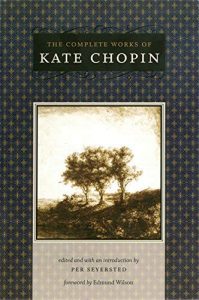
“The Storm” by Kate Chopin is a short story written in 1898, just a year before what is now her best-known work, The Awakening (a novella). Had it been published it would surely have been just as controversial, since it also explores extramarital passion as its theme.
At the time these works were written, women — especially married mothers — were supposed to be “the angels in the house.” Any hint of agency over one’s sexual desires in a work of fiction, particularly from a woman’s pen, was considered shocking.
The Awakening, now considered a proto-feminist work and a staple in literature courses, was reviled by critics and banned in many quarters long after its publication. Read More→
One of Kate Chopin’s most interesting heroines is the tomboyish teen Charlie Laborde of the eponymous short story “Charlie” (1900).
This musing on a little-known character is excerpted from Girls in Bloom: Coming of Age in mid-20th Century Women’s Fiction by Francis Booth, reprinted with permission:
Girls in coming of age novels often keep diaries: it is a very good device for an author to let us in on the girl’s feelings, and in this case for the author to enjoy herself playing with ideas of fiction, style and truth. Read More→
According to the dictionary, a tomboy is “an energetic, sometimes boisterous girl whose behavior and pursuits … are considered more typical of boys than girls.” The insightful musing on literary tomboys presented here is excerpted from Girls in Bloom: Coming of Age in mid-20th Century Women’s Fiction by Francis Booth, reprinted with permission:
The word tomboy goes back to the sixteenth century in England; it was first recorded in 1553, when it meant a ‘boisterous boy,’ but it soon changed its meaning.
The Oxford English Dictionary of 1579 defines it as a ‘bold or immodest woman;’ perhaps from the word ‘tom,’ which had the implication of a prostitute for centuries. Shakespeare used tomboy in this sense in Cymbeline, 1611, as did Thomas Middleton in A Game at Chess, 1624. Read More→
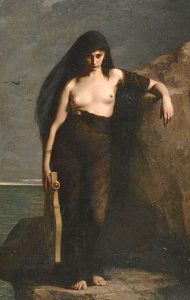
This celebration of the indescribably brilliant and sublime poetry by ancient Greek poetess, Sappho (born around 620 BCE in Lesbos, Greece) was originally published in BookRiot. Contributed by Nancy Snyder; reprinted by permission. The poems by Sappho presented following the introduction were all translated from the Greek.
“Although only breath, words which I command are immortal,” wrote Sappho around 510 BC. And how glad we are that we have Sappho’s words all these centuries later.
Sappho’s lyric poetry, poetry meant to be accompanied by a lyre and sung, entices us to discover Eros and Aphrodite (the god and goddess of romantic love) and all the earthly delights that accompanies such natural pursuits. Read More→
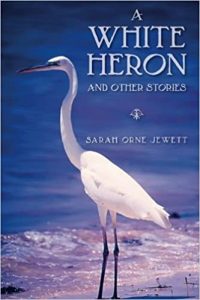
“A White Heron” by Sarah Orne Jewett (1849 – 1900) is one of this esteemed New England author’s most widely anthologized short stories, originally published in 1886. Shortly thereafter, it became the title story in Jewett’s collection, A White Heron and Other Stories.
The story focuses on a city girl named Sylvia who comes to live in the countryside with her grandmother. She meets a hunter who is seeking a rare bird. Sylvia is torn as to whether she should tell him that she spotted the bird. As the story progresses, she grows to love country living and the animals who are part of its habitats.
Sarah Orne Jewett’s short stories and novels reflected her love for the natural surroundings of her native South Berwick, Maine. The coastal community served as the fictionalized setting for most of her novels and short stories. Read More→
“Mother and Poet” is a poem by esteemed British poet Elizabeth Barrett Browning (1806 – 1861). Written in a confessional manner, it’s a mother’s lament for having lost two sons serving in war.
Though this poem isn’t autobiographical, Elizabeth had endured the sudden death of a beloved brother, and perhaps this allowed her to effectively convey the trauma of losing loved ones.
Suffused with grief and guilt, the mother narrating the poem exalts the bravery of her soldier sons doing battle in Italy. At the same time, it conveys the mother’s pain of the personal loss. Read More→
Marilyn French (November 21, 1929 – May 2, 2009) was an American author and radical feminist activist best known for her debut novel, The Women’s Room.
French wrote many other controversial works after The Women’s Room made her a literary star in the modern feminist movement.
Born Marilyn Edwards in Brooklyn, New York, she was the daughter of third-generation Polish immigrants. Her father, E. Charles Edwards was an engineer and her mother, Isabel Hazz Edwards, was a department store clerk. Read More→
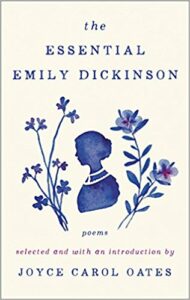
“Sic Transit Gloria Mundi” was the first poem by Emily Dickinson (1830 – 1886) to be published. Without her prior knowledge or consent, it appeared in the February 20, 1852 issue of the Springfield Daily Republican newspaper.
Emily, then twenty-oone years old, wasn’t pleased. Still a budding poet, she was not at all interested in publication. In her teens and twenties, she may have been reserved and a bit shy, but nothing to hint at how reclusive she would become in her later years. In fact, she and her sister Lavinia enjoyed quite an active social life in their youth. Read More→