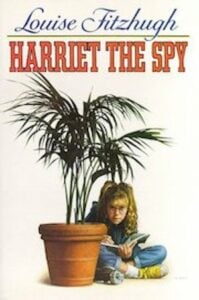
Harriet the Spy (1964), the hugely popular children’s classic novel by Louise Fitzhugh has been both beloved and banned , but it has never been ignored. Following is a selection of quotes from Harriet the Spy, an enduring book that has been beloved by generations of readers.
Louise Fitzhugh (1928 – 1974) hailed from Memphis, Tennessee. She had a varied education, studying art in Italy and France as well as New York City, where she took courses at the Art Students League and at Cooper Union. It may not be surprising that she studied child psychology, art, and literature, as these seem to entwine in the books she produced.
Harriet the Spy put Fitzhugh on the literary map and cemented her legacy. A brief description from the 1964 HarperCollins edition:
“Harriet is determined to grow up to be Harriet M. Welsch, the famous writer; and in order to get a head start on her career, she spends part of every day on her spy route “observing” and noting down, in her singular, caustic, comic way, everything of interest to her. Read More→
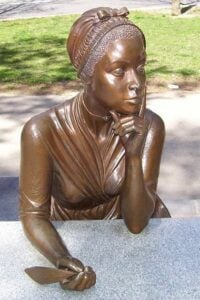
When Poems on Various Subjects, Religious and Moral by Phillis Wheatley was published in 1773, it marked several significant milestones. Following is a selection of poems by Phillis Wheatley from this collection.
It was the first book by a slave to be published in the Colonies, and only the third book by a woman in the American colonies to be published.
Phillis (not her original name) was brought to the North America in 1761 as part of the slave trade from Senegal/Gambia. She was purchased from the slave market by John Wheatley of Boston, as a personal servant to his wife, Susanna. She was given the surname of the family, as was customary at the time. Read More→
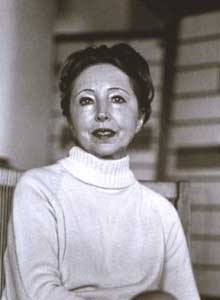
Anaïs Nin (February 21, 1903 – January 14, 1977) embodied the practice of writing as a grand passion and a path to delving deeply into the self. In this sense, she foreshadowed the immediacy of today’s world of self-revelatory memoir. She was a splendid and prolific essayist as well.
Best known for her multi-volume series, The Diary of Anaïs Nin, she wrote these journals over the span of more than thirty years (not including her Early Diaries series).
Born in France, her full original name was Angela Anaïs Juana Antolina Rosa Edelmira Nin y Culmell. Her father, Joaquin Nin, a composer, deserted the family when Anaïs was about 11 years old. He and her mother, Rosa Culmell y Vigaraud, were of Cuban descent with traces of French, Spanish, and Danish ancestry. Read More→
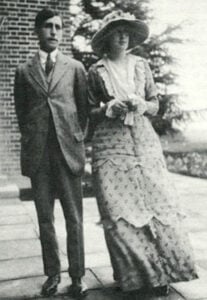
Virginia Stephen first met Leonard Woolf while visiting her brother Thoby at Trinity College at Cambridge in 1900. She wore a white dress and carried a parasol, looking like “the most Victorian of Victorian young ladies,” as Leonard described her.
Leonard and Virginia Woolf, as she would later be known, were destined to be together, though it took considerable persistence and many proposals on his part before she agreed to marry him.
According to The American Reader, “Virginia and her elder sister, Vanessa, were described by Leonard Woolf as ‘young women of astonishing beauty …. It was almost impossible for a man not to fall in love with them.’” Brilliant as well as exquisitely beautiful, Virginia attracted many admirers, both male and female. Read More→
Eudora Welty (April 13, 1909 – July 23, 2001) was an American author whose work spanned several genres — novels, short stories, and memoir.
Much of her writing focused on realistic human relationships — conflict, community, interaction, and influence. As a Southern writer, a sense of place was an important theme running though her work.
She grew up in a close-knit, contented family in Jackson, Mississippi. Her parents instilled a love of education, curiosity, and reading to her and to her brothers, with whom she was close. Read More→
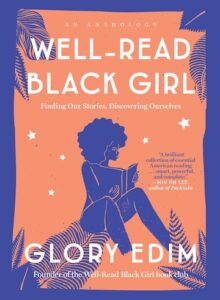
The musing by writer Marita Golden explores the impact Zora Neale Hurston had on her own life and art. She celebrates finding and remaking herself by discovering Zora’s glorious and imperfect life lessons.
Excerpted from the book Well-Read Black Girl: Finding Our Stories, Discovering Ourselves, an anthology edited by Glory Edim. “Zora and Me” ©2018 by Marita Golden, reprinted with permission by arrangement with Ballantine Books, an imprint of Random House:
I saw myself, found myself, and remade myself over and over learning and discovering Zora Neale Hurston. She became and has become a continuing source of possibility and pride for me. Read More→
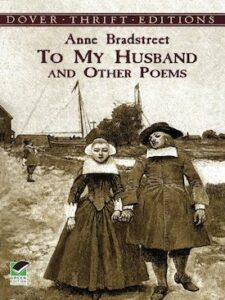
This concise analysis of the poetry of Anne Bradstreet is excerpted from Who Lived Here? A Baker’s Dozen of Historic New England Houses and Their Occupants by Marc Antony DeWolfe Howe, an eminent editor and writer of the late 19th and early 20th centuries.
Anne Bradstreet (1612 – 1672) was the first writer in the American colonies to be published.
She rejected the prevailing notions of women’s inferiority. That opened her to criticism, not for her work itself, but that she dared to write and make her work public. It was considered unacceptable for women of her time to have a voice. She not only used hers effectively but pushed back at her critics. Read More→
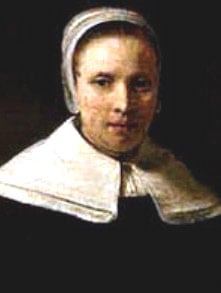
Anne Bradstreet (March 20, 1612 – September 16, 1672) was one of the most prominent early American poets, and the first writer in the American colonies to be published.
It was considered unacceptable for women of her time to write, but Anne rejected the prevailing notions of women’s inferiority. She was roundly criticized, not for the work itself, but for daring to make her work public.
Though Anne wrote sincerely and lovingly about her family, she also expressed her struggles as a woman and as a mother in her poetry.
Read More→