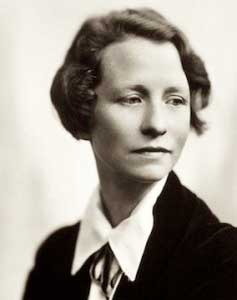
Edna St. Vincent Millay (1892 – 1950) has long been regarded as a major twentieth-century figure in the genre of poetry. Here is a selection of 12 poems by Edna St. Vincent Millay from some of her earlier collections.
Vincent, as her family and friends called her, was introduced by her mother to great works of literature from an early age, especially poetry by Shakespeare, Keats, Longfellow, Shelley, and Wordsworth.
At age of sixteen she compiled a dozen or so poems into a copybook and presented them to her mother as The Poetical Works of Vincent Millay. Read More→
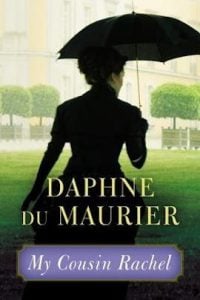
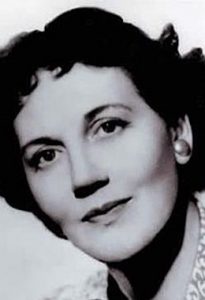
My Cousin Rachel is a novel by British author Daphne du Maurier, first published in the U.K. in 1951 and in the U.S. in 1952.
Echoing du Maurier’s masterwork, Rebecca, My Cousin Rachel is a romantic thriller. It’s set primarily on a large estate in Cornwall, England, where du Maurier drew real-life inspiration from Antony House.
There she saw a portrait of a woman named Rachel Carew, and the creative spark was lit. So highly anticipated was My Cousin Rachel’s publication that the film rights were fought over even before it was published. Read More→
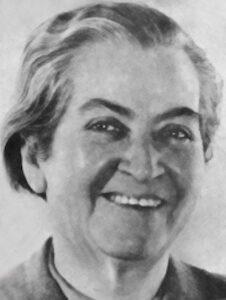
Gabriela Mistral, born Lucila Godoy Alcayaga (April 7, 1889 – January 10, 1957), was a Chilean poet, educator, diplomat, and feminist. Following is a selection of quotes by Gabriela Mistral.
Notably, Mistral was the first Latin American woman to receive the Nobel Prize in Literature. Born in Vicuña, Chile she was raised in the small Andean village of Montegrande where her family was rather poor.
Though she stopped formally attending school at the age of twelve, she became an educator just three years later. As devoted to her work as a diplomat as she was to her writing, she began writing poetry and using her pen name, Gabriela Mistral.
Her poetry was fueled by heartbreak and wide, varied life experiences. Enjoy a sampling of 9 poems by Gabriela Mistral.
Read More→
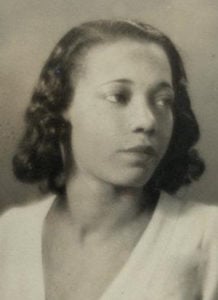
In order to write, a writer must have to just look out the window and stare,” wrote Helene Johnson. “A woman must have money and a room of her own if she is to write fiction,” Virginia Woolf famously wrote. Renaissance House is not able to give money, but they do offer a room of your own with a window to look out and stare.
“The retreat provides the time in which to create new works or finish existing ones. Renaissance House is one of the few retreats designed for issue-oriented writers, writers of color and writers of social justice,” explained Abigail McGrath, founder and director of Renaissance House, daughter of poet Helene Johnson and niece of Dorothy West. “The program is offered to artists who do not have the luxury of time.” Read More→
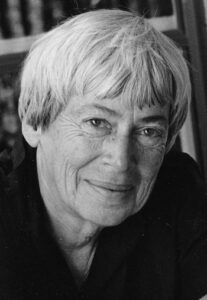
Ursula K. Le Guin (October 21, 1929 – January 22, 2018), born Ursula Krober, was known primarily as a masterful writer of science fiction and fantasy, though she wrote across many genres.
The imaginary worlds she created were commentaries on our real world, with all the complexities of human nature. She also produced children’s books, short stories, essays, and poetry. (photo at right courtesy of Wikimedia Commons.)
Ursula K. Le Guin’s lifelong interest in mythology influenced her mastery of the fantastic in her writings. With an immensely prolific and respected career to her credit, she is perhaps best remembered for The Left Hand of Darkness and the Earthsea series. Lavinia (2008) also made quite a splash. Read More→
Mary Norton (December 10, 1903 – August 29, 1992) was a British children’s book author best known for The Borrowers series.
Born Kathleen Mary Pearson in London, she grew up in a manor house in the town of Leighton Buzzard, Bedfordshire, England, and attended a convent school.
In 1925, in her early twenties, Mary became an actress with the Old Vic theatre company. In 1926, she married Robert Norton. She and her husband moved to Portugal, close to his relatives, and lived there from 1927 until the outbreak of World War II twelve years later. The couple had four children — two sons and two daughters. Read More→
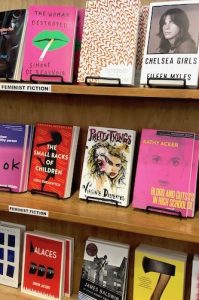
Do you remember feminist bookstores (for those of you old enough to remember, that is)? Oh, and do you remember independent bookstores in Manhattan? For a while, there were less than a dozen, but that seems to be on the upswing, and amazingly, there are lots and lots of indie bookstores in Brooklyn and Queens.
One of Manhattan’s few independent bookstores (and only feminist bookstore) is Bluestockings, located in the lively Lower East Side.
It’s more than than a repository for feminist thought; their shelves are filled with a beautifully curated selection of more than 6,000 titles on queer and gender studies, resistance/liberation, capitalism, climate, race, and a selection of rad children’s books. Also on the shelves are zines, journals, and poetry collections. Read More→
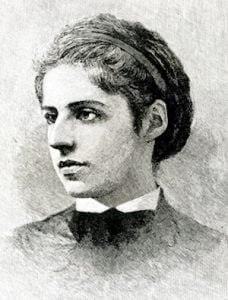
Emma Lazarus (1849 – 1887) was an American poet, translator, and activist best remembered for “The New Colossus.” Following is a sampling of poems by Emma Lazarus, a talented and dedicated woman who deserves to be rediscovered and read.
“The New Colossus,” her most famous poem, is the 1883 sonnet that contains the iconic “lines of world-wide welcome” inscribed at the base of the Statue of Liberty:
Give me your tired, your poor,
Your huddled masses yearning to breathe free,
The wretched refuse of your teeming shore. Read More→