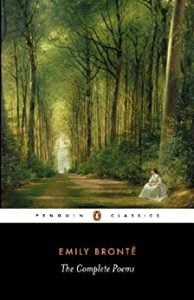
“The Prisoner” is perhaps one of the best known of the achingly beautiful, haunting poems by Emily Brontë, the English author best known for her only novel, Wuthering Heights.
Of the three literary Brontë sisters — Charlotte, Anne, and Emily,—it was always, from the start was, the latter who was regarded as the most brilliant poet, perhaps even the greatest genius among them.
“The Prisoner” was one of the poems included in the volume of poetry the sisters, led by Charlotte, printed at their own expense as a way to break into the world of publishing. Poems of Currer, Ellis, and Acton Bell. Published in 1846, it sold a pathetic two copies. Read More→
For a small number of American female journalist-reformers of the 1800s, starting their own newspapers became a matter of necessity. Refused the opportunity to report on matters of importance by male-dominated mainstream newspapers, they took matters into their own hands.
Launching their own newspapers became platforms for raising awareness of the justice issues they fought for.
Anne Newport Royall, Mary Ann Shadd Cary, and Jovita Idár are no longer familiar names; Ida B. Wells (pictured above right) might be better known to those interested in Black history. But all deserve to be better known and deserve a place of honor as publisher-reformers in an era when women’s voices were more often silenced than heard. Read More→
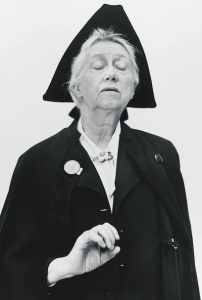
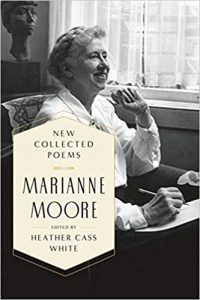
Marianne Moore (1887 – 1972) isn’t an easy poet to read or digest. Yet the patient and diligent reader will be amply rewarded. Here are 12 poems by Marianne Moore sampled from a long writing career that blossomed in the early 1920s and started even earlier than that.
Moore was a modernist poet who both influenced and was influenced by other modernist poets. In Marianne Moore: A Literary Life, biographer Charles Molesworth, attempted to sum up what made her the poet she came to be, not an easy task: Read More→
“Marriage” is a 1923 modernist poem by Marianne Moore that’s considered one of her most fascinating, yet challenging works. Requiring a great deal of insight to fully appreciate, it’s presented here in full, with links to two excellent and thorough analyses.
Marianne Moore (1887 – 1972 ) has stood the test of time as one of the pre-eminent American poets. Born in St. Louis, she graduated from Bryn Mawr in 1909, and had her first work published in Poetry magazine in 1915. Collected Poems (1951) won a Pulitzer Prize as well as the National Book Award. Read More→
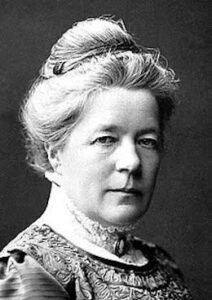
Selma Lagerlöf (November 20, 1858 – March 16, 1940) was a Swedish author who has the distinction of being the first woman ever to win the Nobel Prize in Literature, and the first Swede to win the award.
She was also an active teacher throughout her professional life and in 1914 became the first female admitted to the Swedish Academy.
Once, when asked for her favorite color, Selma answered, “Sunset.” A suitable answer for a woman who more often chose the thrill of a good story over personal adventure, romanticism over realism, and the pleasures of home over traveling afar.
Read More→
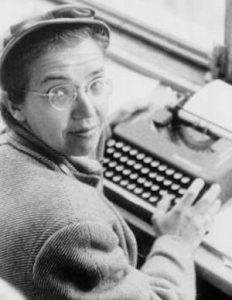
The story of women in American journalism has a common thread: From Colonial times on, women have fought for the right to report. That was (and still remains) especially true for women sports journalists, including this trio of trailblazers: Ina Louise Young, Mary Garber (at right), and Anita Martini.
Sports journalism seems like the final frontier because there have been more women reporting from the battlefield than from the playing field. Consider that during World War II, there were about one hundred forty accredited female war correspondents. That’s not a huge number, yet it eclipses the handful of female sports reporters working at the time. Read More→
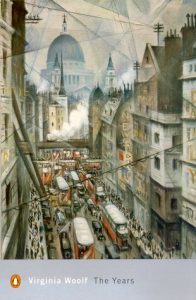
The Years by Virginia Woolf (1937) was the last novel she had published in her lifetime. Spanning some fifty years, it covers the trajectory of the respectable Pargiter family from the 1880s to the 1930s.
One of its overarching themes is the passage of time, and it does so by detailing small, mostly private moments of the characters lives. Still, it moves away from the stream of consciousness style that she’s best known for, and into a more traditional narrative.
The novel is less internal than most of Virginia Woolf’s books, and traces the lives of the Pargiter family and the dailyness of their existence. From the Penguin Modern Classics edition: Read More→
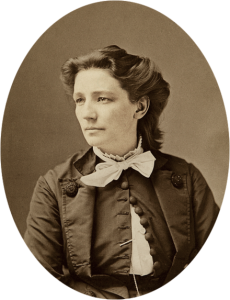
Shirley Chisholm may have been the first woman to seek the presidential nomination from one of the two major political parties — that was in 1972 — but exactly one hundred years before that, Victoria Woodhull (1838 – 1927) was the first woman to launch a national presidential campaign. She did so under the banner of the Equal Rights Party.
And running for president long before women even had the right to vote was just one chapter in an incredibly colorful, yet largely forgotten American life.
Victoria was a suffragist, publisher, stockbroker, orator, and agitator. She was also accused at various points of being a bigamist, prostitute, spiritual charlatan, and adulteress. Read More→