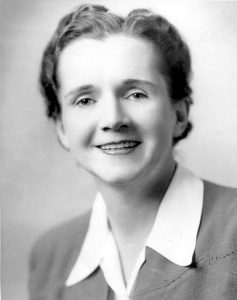
Rachel Carson (May 27, 1907 – April 14, 1964) was a noted American marine biologist, conservationist, and writer whose holistic view of the natural world shaped today’s environmental science.
Her eloquent nonfiction works educated readers about how every entity interacts with the broader web of life. (photo at right courtesy of Wikimedia Commons)
This interconnectedness influenced her research into the indiscriminate use of chemical insecticides and the resulting book, Silent Spring (1962), her best known, raised questions and awareness that contributed to the formation of the Environmental Protection Agency. Read More→
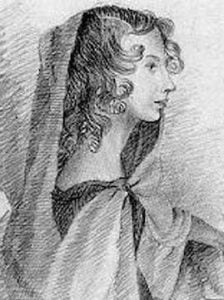
Charlotte, Emily, and Anne Brontë are best known for their classic novels; each was also a poet in her own right. Though Emily is acknowledged as the finest poet of the trio, Anne’s poetry is more than worthy of consideration. Here are presented 12 poems by Anne Brontë (1820 – 1849).
Anne wrote two novels, Agnes Grey and The Tenant of Wildfell Hall, before her death at age 29. Before the sisters attempted to publish their first novels, Charlotte undertook the task of putting together and finding a home for a collaborative book of their poems, hoping that it would be a stepping stone (it wasn’t, as it turned out). They assumed masculine (or at least vague) noms de plume to disguise their identities. In Charlotte’s words: Read More→
Matilda Joslyn Gage was born in 1826 in Cicero, New York, near Syracuse. The important role she played in the women’s suffrage movement has been marginalized, overshadowed by figures like Susan B. Anthony and Eliabeth Cady Stanton.
“All of the crimes which I was not guilty of rushed through my mind,” Gage wrote later, “but I failed to remember that I was a born criminal—a woman.” Her crime: registering to vote. The verdict: guilty as charged.
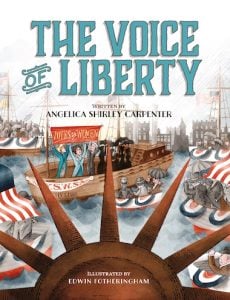
Angelica Shirley Carpenter has a picture book out for grades 2 – 6: The Voice of Liberty, with illustrations by Edwin Fotheringham, published by the South Dakota Historical Society Press (2020). The book tells how three suffragists, Matilda Joslyn Gage, Lillie Devereux Blake, and Lillie’s daughter, Katherine “Katie” Devereux Blake, led a protest at the 1886 dedication of the Statue of Liberty. Read More→
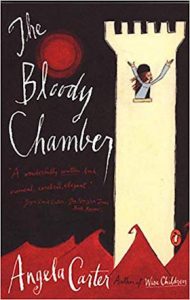
The Bloody Chamber and Other Stories (1979) is perhaps the best-known work by British author Angela Carter (1940 – 1992). A novelist, short story writer, and journalist, she earned a reputation as one of Britain’s most original writers.
Her influences ranged from fairy tales, gothic fantasy, and Shakespeare to surrealism and the cinema of Godard and Fellini. Her work broke taboos and was often considered provocative.
The Bloody Chamber is a collection of re-envisioned imaginings (not, as often described, retellings) of classic European fairy tales. They range in length from very short stories to novellas, and include: Read More→
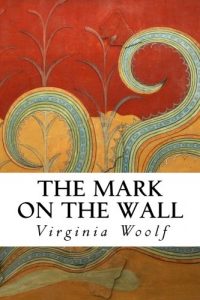
“The Mark on the Wall,” one of Virginia Woolf‘s early short stories, was published in her first collection of fiction, Monday or Tuesday (1921). It was a prime example of the kind of complex (and sometimes perplexing) modernist short stories that she produced especially in her first years of publishing.
Before getting to the full text of the story, here is a link to an excellent summary and analysis of the story, as well as Leonard Woolf’s foreword to A Haunted House and Other Short Stories, an updated collection that also included this story, published posthumously in 1944. Read More→
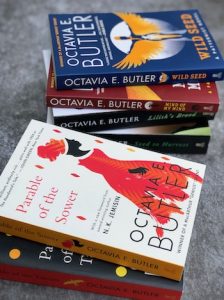
Parable of the Sower and Parable of the Talents by Octavia E. Butler are a duo of books intended to have become a trilogy, though the third never came to be. Now that we inhabit the time in which the novels actually take place, they’re more eerily prescient than ever.
When Parable of Sower (1993) begins, Lauren Olamina is a young Black woman just emerging from her teens, navigating the apocalyptic world of Los Angeles in the 2020s. A fight — and flight — for survival leads to her create a new faith called Earthseed, in hopes of repairing the world.
We find Lauren once again at the center of Parable of the Talents, now a young mother and still fighting to salvage humanity with Earthseed, the new faith she founded. Now she’s battling violent bigots and religious fanatics.
Read More→
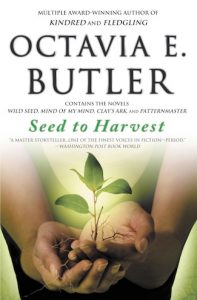
In her New York Times obituary, Octavia E. Butler was described as “an internationally acclaimed science fiction writer whose evocative, often troubling novels explore far-reaching issues of race, sex, power, and ultimately, what it meant to be human.” No wonder that Octavia E. Butler classics are regularly re-issued in beautiful new editions.
It’s possible that Octavia E. Butler’s speculative, dystopian, and science fiction novels and short stories have been over-described as “prescient.”
But there’s hardly a better word for many of her major works, and in tandem with her keen observance of human nature, they’ve transcended genre to become classic literature.
Read More→
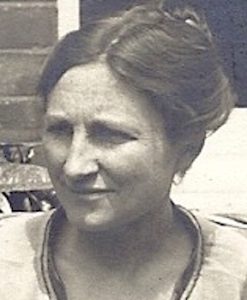
I first heard about Helen Tracy Lowe-Porter (1876 – 1963) when I fell in love with her grandson, a visiting American graduate student at my university in New Zealand.
I knew of the great German novelist Thomas Mann but had not read his novels, and certainly had never wondered about how they came to appear in English.
“My grandmother was Mann’s translator,” my new boyfriend informed me. I was mildly impressed. He told me a little about her: how forbiddingly intellectual she was, how un-grandmotherly. Read More→