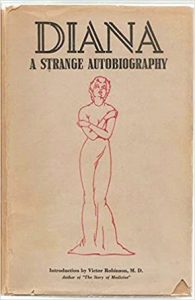
Frances V. Rummell, an American writer and educator, published Diana: A Strange Autobiography (1939) under the pseudonym Diana Frederics. More of an autobiographical novel than an actual memoir, nonetheless draws upon the author’s life. The story details the title heroine’s discovery of her lesbian sexuality.
Positive portrayal of lesbians was considered shocking when the book was published. It’s now considered groundbreaking as one of the first works of gay fiction to have a happy outcome.
Published squarely between The Well of Loneliness by Radclyffe Hall (1928) and the lesbian pulp novels that emerged in the early 1950s, Diana is a worthy, yet often overlooked addition to the genre. This analysis and appreciation is excerpted from Girls in Bloom by Francis Booth, reprinted by permission: Read More→
This musing on The Book End, a used book shop in Blackstone Virginia, highlights the importance of a local bookstore, even a modest one, to a town’s cultural life. Contributed by Tyler Scott:
Two years ago my husband and I realized we needed a change. We had grown tired of city life after raising our children in Richmond, Virginia, our hometown, so one Sunday we drove southside to go antiquing in Blackstone, where my mother-in-law spent part of her childhood. Read More→
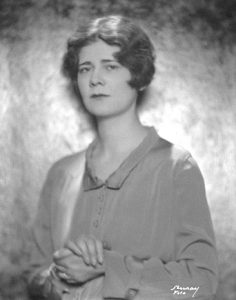
Elinor Wylie (1885 – 1928) was a popular American poet and novelist in the 1920s and 1930s. Also widely known for her tumultuous personal life, many of her works offered insight into the difficulties of marriage and the impossible expectations that come with womanhood.
Though Wylie is no longer widely read, she was a celebrated author in her lifetime, with a cult following in her pinnacle years. She was known for her passionate writing, fueled by ethereal descriptors, historical references, and feminist undertones. Read More→
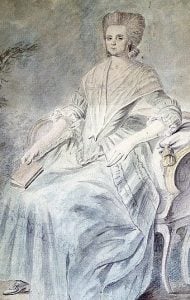
The French playwright, pamphleteer, women’s rights advocate, abolitionist, and early feminist Olympe de Gouges (1748 – 1793), author of over thirty plays, was savagely criticized by the male French literary establishment for the liberalism of her dramas. She was unrepentant in her response — an open letter To the French Littérateurs:
“What crimes have I committed to merit such infamous treatment: how have I transgressed; how have I wronged anyone in any way? What? A dramatic work, a text full of humanity, sensibility and justice has provoked people unknown to me? Has incited the blackest calumny, has encouraged my enemies, renewed their vigour.” Read More→
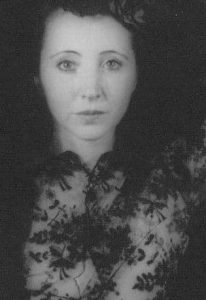
In late 1931, the author and diarist Anaïs Nin met Henry Miller and his wife, June. She first fell in love with his writing, and then with the man himself before being seduced by his wife, June.
This excerpt from Everybody I Can Think of Ever: Meetings That Made the Avant-Garde by Francis Booth recounts what would be a fateful, formative affair:
Henry Miller was the author of banned, erotic novels like Tropic of Cancer and Black Spring, originally published by Jack Kahane’s Obelisk Press in 1934 and 1936 respectively. Read More→
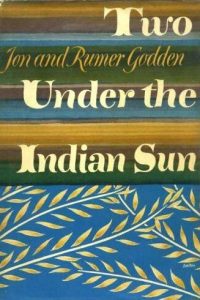
It’s not often that you find two sisters collaborating on a joint memoir, as is the case with Two Under the Indian Sun (1966). That Jon and Rumer Godden did so after becoming successful authors in their own right is all the more interesting.
Among Rumer’s successes were her bestselling novels Black Narcissus and The River, as well as her memoirs, A Time to Dance, No Time to Weep and A House with Four Rooms.
Jon’s works include The Bird Escaped, The House by the Sea, and A Winter’s Tale. The two sisters also collaborated on other highly acclaimed works like Shiva’s Pigeon and Indian Dust. Read More→
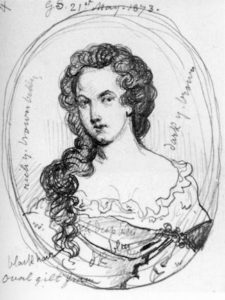
“The Disappointment” by Aphra Behn, a poem first published in 1680, is arguably among the best known and enduring of her works. Considered scandalous in her lifetime, Behn (1640 – 1689), a playwright, poet, and novelist, is recognized as the first British woman to earn a living by her writing.
In this lengthy poem, the shepherd Lisander attempts to force himself on the maid Cloris. It’s implied that that two are in love, and that the encounter is not a random situation.
Cloris, however, is unwilling, and Lisander is unable to perform — experiencing “the Hell of Impotence.” She is able to escape, and yet, since the perspective is on the female sexual experience, we’re left to wonder which of the pair is the most disappointed. Read More→
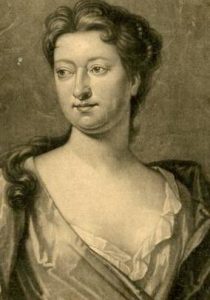
This introduction to Susanna Centlivre (1669 – 1723), the English poet, playwright, and actress, is excerpted from Killing the Angel: Early British Transgressive Women Writers ©2021 by Francis Booth. Reprinted by permission:
Very much as Virginia Woolf wrote about Aphra Behn, the anonymous author of the introduction to Susanna Centlivre’s collected works wished that Centlivre had been buried as a national treasure in Westminster Abbey. Read More→