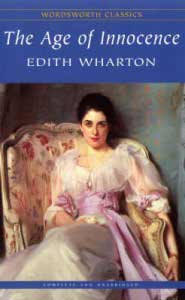
The Age of Innocence, a 1920 novel by Edith Wharton (1862 – 1937), is considered one of her finest. It earned her a Pulitzer Prize for fiction in 1921, which made her the first woman to win this award.
The story centers on Newland Archer, an upper-class New Yorker in the 1870s. Central to the narrative is Archer’s conflicted desires between duty to his staid but loving wife and his passion for scandal-plagued Countess Ellen Olenska, a divorcée.
Edith Wharton grew up and lived in a similarly charmed world of wealth, one that could protect its inhabitants from everything but heartache. Read More→
Librivox is a free resource for audio versions of classic literature that you can download onto your devices or simply listen to from your browser. These audio readings of public domain literature are read by volunteers, so they’re more variable than the kinds of audiobooks read by professional actors.
Librivox offers audio versions of many classic books that are otherwise unavailable. You can search by author or title; while of course, there are many classics by male authors available, for the purposed of this site, we’re here to promote classics by women.
Here’s a list of literary ladies whose novels, short fiction, and poetry have been recorded for Librivox.org. Not all the authors’ bibliographies are complete, so if you notice a public domain work that’s not there, perhaps you can volunteer to create an audio version!
Read More→
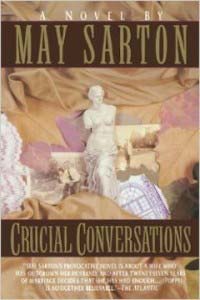
From the review of Crucial Conversations by May Sarton in The Carroll Daily Times Herald, May, 1975: This reviewer found this an utterly satisfying novel because it has lovely language and many messages that tickle the intellect or warm the heart.
May Sarton is a poet of note, also a novelist; she has lived a long time, been a perceptive observer and is a wise woman.
The story is a far cry from blood and thunder and bizarre sexual encounters. Its format is a series of conversations between sensitive people about marriage and divorce and finding oneself. Read More→
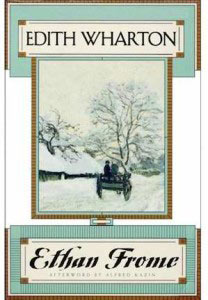
Ethan Frome (1911) by Edith Wharton is a slim but emotionally impactful novel. Subtly and haunting, it keeps the reader’s attention despite the somber storyline.
Make sure to read Edith Wharton’s own introduction to the novel, which begins:
“I had known something of New England village life long before I made my home in the same county as my imaginary Starkfield; though, during the years spent there, certain of its aspects became much more familiar to me.
Even before that final initiation, however, I had had an uneasy sense that the New England of fiction bore little — except a vague botanical and dialectical — resemblance to the harsh and beautiful land as I had seen.” Read More→
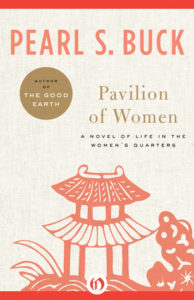
Pavilion of Women by Pearl S. Buck (1946) is a gem of a novel telling the story of the spiritual and intellectual awakening of Madame Wu, a pampered wife of the wealthy House of Wu. She announces to her husband that on the occasion of her fortieth birthday, she wishes to withdraw from their physical life as a couple.
Madame Wu beseeches her husband to take a second wife to serve him as the patriarch of one of the oldest and most prestigious households in China.
She herself carries out the arrangement, and withdraws to her own rooms to read books and live a life of the mind, something she never had the luxury to do as her sons grew up. Read More→
A woman of deep wisdom and compassion, Pearl S. Buck (1892 – 1973) made her humanitarian views clear in both her fiction and nonfiction writings. Following is a selection of feminist quotes by Pearl S. Buck from her nonfiction and novels that were ahead of their time, and are still pertinent today
Pearl S. Buck brought attention to issues of gender, politics, and race, and dared nations and society to help those in need. (photo at right courtesy of Wikimedia Commons)
Her first novel, East Wind, West Wind, was published in 1930. The Good Earth (1931) her best-known work, was her second novel, and the one that cemented her reputation. It received both the Pulitzer Prize and the Howells Medal in 1932. Read More→
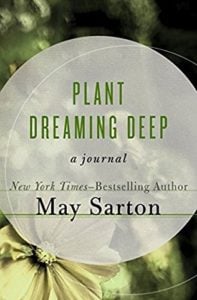
From the Hazleton, PA Standard-Speaker, March, 1968, review by Miles A. Smith of Plant Dreaming Deep by May Sarton, published by W.W. Norton.
The early part of this book describes how the author, in 1958 when she was forty-six, found a dilapidated 18th-century farmhouse in a quiet corner of New Hampshire, settled in it, and began putting down new roots.
It was the first property Miss Sarton ever had owned. The rehabilitation of the house and the problems of furnishing it strike a familiar theme — so many other writers have described similar experiences. Yet she gives the account a fresh, individualistic touch. Read More→
Adapted from the original article in The Emporia Gazette – November 10, 1938: The 1938 Nobel prize for literature today was awarded to Pearl S. Buck, American author of The Good Earth and other novels dealing with China.
She was born in Hillsboro, West Virginia in 1893 and has spent much of her life in China. (photo at right courtesy of Wikimedia Commons)
Parents Missionaries – Mrs. Buck’s parents were missionaries in China and her first husband, J. Lossing Buck, was a member of the faculty of Nanking university. They were divorced in 1935. Read More→