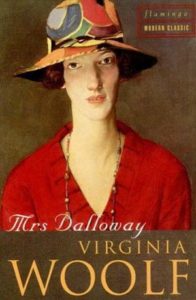
Mrs. Dalloway by Virginia Woolf, published in 1925, describes a day in the life of Clarissa Dalloway, an upper-class woman preparing to host a party that evening. The unique aspect of the novel is that it focuses on her inner world, and that of the peripheral characters, taking the reader as she travels back in time.
As she goes around London, buying flowers and doing other preparations for the evening, she reflects on her youth and her choice of husband. She ruminates on a former suitor, the enigmatic Peter Walsh, and her youthful flirtation with Sally Seton.
The novel covers many themes, encompass time, mental and physical illness, the role of women in society, regret, suicide, sexuality, and more. Read More→
Dear Literary Ladies,
How do I go about developing a distinctive writing style—one that will catch editors’ attention, and that readers everywhere will recognize as my unique voice?
I’ve been called a stylist until I really could tear my hair out. I simply don’t believe in style. The style is you. Oh, you can cultivate a style, I suppose, if you like. But I should say it remains a cultivated style. It remains artificial and imposed, and I don’t think it deceives anyone. A cultivated style would be like a mask. Read More→
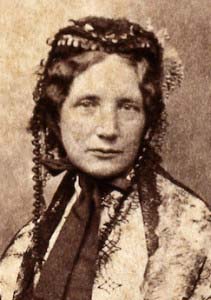
Harriet Beecher Stowe (1811 – 1896), abolitionist, author, and humanitarian, used her pen as a catalyst for change. She was also an advocate for women’s rights. Here is a selection of feminist quotes by Harriet Beecher Stowe, a woman ahead of her time.
Stowe is best known for Uncle Tom’s Cabin, which was the second best-selling book of the 19th century (just after the Bible), and the first international bestseller from any author, male or female. There’s little dispute that the book created a major shift in public perception of slavery.
She was also concerned with the status of women, and used both her fiction and nonfiction writing to impart messages about their strength, intelligence, and worth. Read More→
Writer’s block is a subject that writers try to avoid thinking about, let alone experiencing. Conventional wisdom on what to do when one hits that proverbial wall is about as much fun as the malady.
For example, “try thinking of writing as a job,” or “set deadlines and keep them” are two common ideas for unblocking. The first one is about as inspiring as doing laundry (especially for writers who already have a job); and if you could set and keep deadlines, then you wouldn’t be blocked in the first place, would you?
Learning how to deal with writer’s block is a critical component of the writer’s toolbox, though, so here’s a brief survey of what the women whose shoulders we stand on have had to say on the subject of writer’s block. Read More→
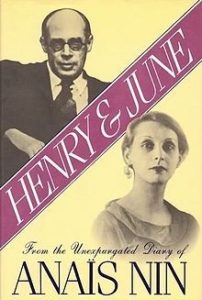
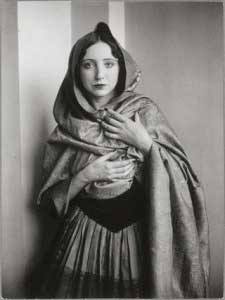
From the 1986 Harcourt, Brace, Jovanovich edition of Henry and June by Anaïs Nin: This autobiographical account of Anaïs Nin’s sexual awakening is without parallel in modern letters.
Drawn from the unexpurgated Paris journals of Anaïs Nin, it describes a single momentous year in her life, from late 1931 to the end of 1932, when she met Henry Miller and his wife, June. She fell in love with June’s beauty and, at first, with Henry’s writing.
Soon after June’s departure for New York, Anaïs began a fiery affair with Henry that gambled with her marriage and her idyllic existence in Louveciennes. She discovered her true sexual nature and the meaning of passion. She also discovered the unknown Henry Miller, the gentle, passive man behind the writer’s violent words. Read More→
Dear Literary Ladies,
Do you think women writers are (or should be) judged by different standards than men?
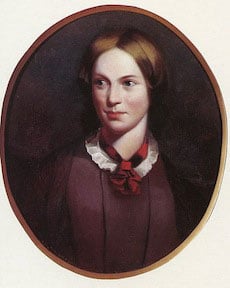
To value praise or stand in awe of blame we must respect the source whence the praise and blame proceed, and I do not respect an inconsistent critic. He says, “If Jane Eyre be the production of a woman, she must be a woman unsexed.’
In that case the book is an unredeemed error and should be unreservedly condemned. Jane Eyre is a woman’s autobiography, by a woman it is professedly written. If it is written as no woman would write, condemn it with spirit and decision—say it is bad, but do not eulogise and then detract. I am reminded of The Economist. The literary critic of that paper praised the book if written by a man, and pronounced it ‘odious’ if the work of a woman. Read More→
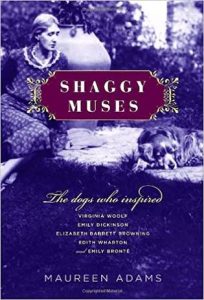
Shaggy Muses by Maureen Adams is the story of how dogs inspired five of the greatest female writers in history: Virginia Woolf, Emily Dickinson, Elizabeth Barrett Browning, Edith Wharton, and Emily Brontë.
Each woman had a very different relationship with her dog. The premise of the book is that the relationships the women had with their dogs influenced their writing. My two favorite sections were those about Elizabeth Barrett Browning and Emily Dickinson. Read More→
Women writers and money — not always a comfortable combination. Writing isn’t always (or isn’t often) a vocation with which one can make a good living, though it is possible, even without a runaway bestseller.
“How quickly the minutes fly when you are writing to please your heart. I pity those who write for money or for fame. Money is debasing, and fame transitory and exacting. But for your own heart … Oh, what a difference!” ( Anaïs Nin, The Early Diaries of Anaïs Nin, October, 1921)
Ah, youth! To be unconcerned with the intersection of art and commerce, to create only to please your own heart! How lovely, how idealistic—but ultimately, if you want to shape any semblance of a career doing what you love, how unrealistic. Read More→