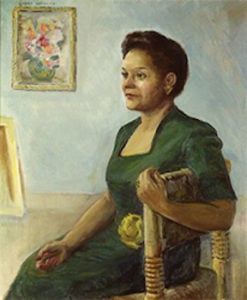
Jessie Redmon Fauset is remembered as one of the literary “midwives of the Harlem Renaissance,” an influential circle that ushered in a new generation of creative voices in the black arts movement. She was also a poet and novelist in her own right.
Fauset started her career after reading T.S. Stribling’s novel Birthright (1922). This novel about black life written by a white man introduced fallacies to the public, and influenced Fauset among others to write about their experiences as people of color for a more accurate account.
Read More→
Dear Literary Ladies,
I dream of the day when all my efforts might come to a completely successful culmination. Like many writers, I’ve had some modest coups, but who doesn’t long for that big breakthrough, a work that shines in the national spotlight, or climbs the bestseller lists? How does it feel when you first realize that your work has achieved this kind of dreamed-about success? Read More→
We all know that writing, in its essence, isn’t about publishing. At the risk of stating the obvious, writing is a journey, one that, if you follow it with passion and heart, will take you where you need to go.
But admit it — you’ve fantasized at least once about what it would be like to be a famous, bestselling author. I’ll admit that I’ve daydreamed about it at least once or twice—per day, that is.
Fame has its pleasures and advantages, but has its down side, too. Many of the classic authors on this site admitted to craving recognition — and the financial independence that was rare for women of their times. Few were “overnight successes,” though it may have appeared so to the world. Hard work, setbacks, and disappointments most often preceded their breakthroughs. Read More→
It’s not easy to accept that success and failure for writers are intertwined, and it’s hard to achieve our dreams without taking risks.
Most of us would rather not fail at all, gloriously or otherwise. That’s why we’re content to settle for modest success, instead of taking bold steps needed for resounding success. To fail at that which we most long for seems like a terrible fate.
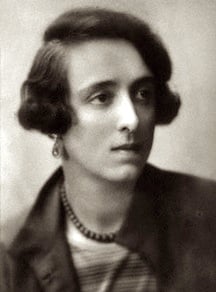
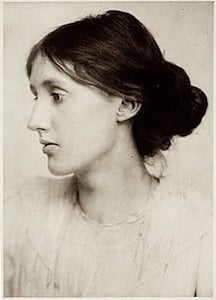
In a 1928 letter to her friend Virginia Woolf, British author Vita Sackville-West pondered, “Is it better to be extremely ambitious, or rather modest? Probably the latter is safer; but I hate safety, and would rather fail gloriously than dingily succeed.” Read More→
For writers and other creatives, it’s a tough task to gain the kind of self-acceptance that allows them to feel deserving of using their talent and reap the rewards of hard work and perseverance.
I used to have a cartoon tacked on my bulletin board, showing two caterpillars creeping along on the ground and a butterfly hovering above them. One caterpillar eyes the butterfly suspiciously, and says, “You’ll never catch me going up in one of those things!”
Maybe it isn’t what the cartoonist intended, but I see it as a metaphor for the sad state of self-regard. It’s so hard to feel worthy, both before and after achieving any kind of success.
Read More→
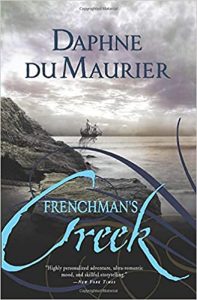
Frenchman’s Creek by Daphne du Maurier (1941) is a historical novel set in Cornwall, England, during the reign of King Charles II. The story centers on a love affair between Dona, Lady St. Columb, and Jean-Benoit Aubéry, a French pirate.
A tale rich in love, adventure, and historic detail, it’s among du Maurier’s most iconic novels. Read a detailed plot summary here. The novel was reissued in a new edition in 2020. From the publisher (Sourcebooks):
“A classic from the master of gothic romance and suspense, Daphne du Maurier, Frenchman’s Creek is an electrifying tale of love and scandal on the high seas. Read More→
Dear Literary Ladies,
I’ve saved a bit of money, and I’m considering taking a few months or a year off of work to write full time. I want to see if I can make a go of it, once and for all. Is this a good idea, or would I be putting too much pressure on myself?
It might be dangerous for you to have too much time to write. I mean if you took off a year and had nothing else to do but write and weren’t used to doing it all the time then you might get discouraged too easily. Read More→
In exploring the challenges faced by women writers, a questions that often comes up is why it has always been (and still is) so difficult to master the work / life / motherhood and writing balance. Note that this question is rarely (or more like never) applied to men who write.
Being a mother and a writer was grueling for Harriet Beecher Stowe in the nineteenth century; and while it may have been somewhat easier for Madeleine L’Engle in the twentieth, it was just as guilt-inducing. For women who write today, there are still no easy answers.
I’m not one to bandy about gender stereotypes, but it’s hard to dispute that in traditional, heteronormative relationships, women still bear the greatest share of childcare and household management. Read More→