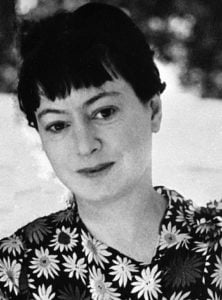
Dorothy Parker (1893 – 1967) was American journalist, short story writer, and poet. Here’s you’ll find a sampling of quotes by Dorothy Parker that show off her wit and wisdom.
Parker is best remembered for her trenchant wisecracking and wit, which she used to great effect in her reviews, nonfiction, and verse. She was also one of the founding members of the Algonquin Roundtable, an exclusive group of New York City literati.
She got her start in magazine writing, including theatre criticism for Vanity Fair. In the 1920s, she became known for her book review column, “Constant Reader,” in the New Yorker. Her reviews — some snarky, others sensitive, always pithy — were a pleasure to read. The magazine also published some of her short stories. Read More→
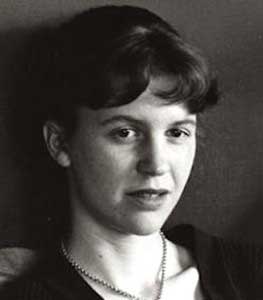
Sylvia Plath (1932 – 1963) has achieved cult-like status as a major American poet. Ambitious, brilliant, and beautiful, she was cursed with a lifelong struggle with depression that led to suicide at the age of thirty.
Because most of her work was published after her untimely death, she wasn’t alive to enjoy very many of the fruits of her labors. But her place in the American literary canon is secure and well deserved.
Her poetry as well as her journals are frank and revelatory about her personal life and innermost thoughts. Passages from her journals reveal her attempts to balance nagging self-doubt with a hunger to write and create. Here are introspective quotes by Sylvia Plath from a variety of sources. Read More→
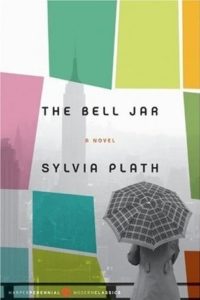
Sylvia Plath’s only published novel, The Bell Jar, was originally published in England under the pseudonym Victoria Lucas in 1963. That was the same year in which she committed suicide. Here we’ll explore quotes from The Bell Jar, an influential modern novel that took mental illness head on in a chronicle both terrifying and tender.
Born in 1932, Plath, the gifted American poet, struggled with chronic depression and made no pretense of concealing her pain in her writings. Her poetry is considered part of the frank and revelatory “confessional movement.”
The Bell Jar wasn’t published in the U.S. until 1971, in accordance with the wishes of Ted Hughes, to whom she had been married at the time of her death (though they were separated at the time). From the 1971 Harper and Row edition: Read More→
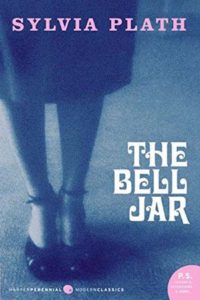
The Bell Jar, Sylvia Plath’s semi-autobiographical novel was published in England just before this iconic American poet took her own life at age thirty.
It was released on January 14, 1963 under a pseudonym, Victoria Lucas, and was published in the U.S. under her real name eight years later (April 11, 1971), in accordance with the wishes of fellow poet Ted Hughes, to whom she was married at the time of her death (though the two were separated).
The Bell Jar reflects Plath’s real-life struggles with severe depression and a breakdown through her character, Esther Greenwood. Read More→
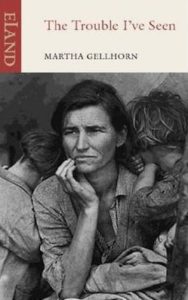
The Trouble I’ve Seen: Four Stories from the Great Depression by Martha Gellhorn (1936) is a book of four linked stories based on the author’s firsthand observations of the Great Depression.
They capture the emotional, financial, and spiritual devastation wrought by the financial collapse in America in the 1930s.
Unemployment, loss of hope, and abject poverty are captured by a woman who would go on to become one of the greatest war correspondents of the twentieth century. Read More→
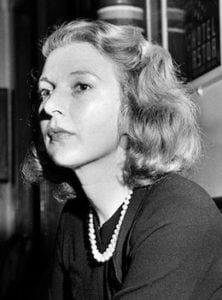
Martha Gellhorn (November 8, 1908 – February 15, 1998) was best known as an American war correspondent, though she was a prolific writer of fiction and memoir as well. She was the third wife of iconic American author Ernest Hemingway.
Gellhorn is ranked among the top war journalists of the twentieth century — and didn’t wish to be remembered as one of the four wives of “Papa” Hemingway. Famously, she lamented, “Why should I be a footnote to somebody else’s life?”
Indeed, she was more than accomplished in her own right. having covered nearly every global conflict from the Spanish Civil War to Vietnam. She reported on virtually every major world conflict that took place during her sixty-year career. Read More→
Gwendolyn Brooks (1917 – 2000), a highly honored poet, broke new ground speaking to the black and female experience in America. Born in 1917 and raised in Chicago, there is much to celebrate about Gwendolyn Brooks, a truly iconic poet.
In 1945, she broke into book publishing with the well-received A Street in Bronzeville, referring to an area in the Chicago’s South Side. This collection led to numerous prestigious awards and a life in poetry.
Here are five things to love about Gwendolyn Brooks, a great American poet — and there are lots of other things to admire, so learn more about her and better yet, read her work! Read More→
During World War I, Enid Bagnold was a member of the British Women’s Services. She served for about a year and a half in the V.A.D. (Voluntary Aid Detachment), as a nurse’s aide.
Her duties were to attend to the non-medical needs of wounded British soldiers recovering from wounds in the Royal Herbert Hospital, just a few miles southeast of London. Some of the injuries she witnessed were absolutely horrific.
A Diary Without Dates was written almost as a dreamlike prose-poem, portraying the suffering of soldiers, many of whom faced mutilation, wrenching pain, and death. Thus, it became a timeless commentary on the traumas of war. Read More→