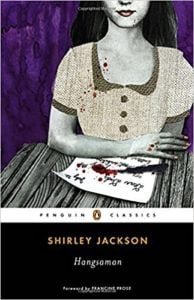
Shirley Jackson (1916 – 1965) occasionally turned to true crime news stories as jumping off points for her novels of psychological terror and suspense. This was apparently the case for her second novel, Hangsaman (1951).
Jackson, her husband Stanley Edgar Hyman, and their four children were living in North Bennington when 18-year-old Bennington College freshman Paula Jean Weldon disappeared. She went out for a hike on December 1, 1946, and simply never returned.
There were, and have since been, theories about what might have happened to Weldon, but neither she —nor her body — were ever found. Read More→
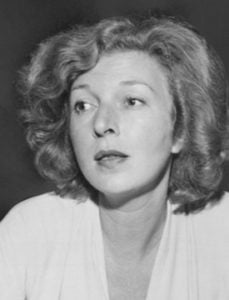
Martha Gellhorn was a fearless war correspondent who reported on nearly every major conflict at a time when such female journalists were a rarity.
Her debut as a novelist wasn’t auspicious. What Mad Pursuit was generally panned by critics, if it got any attention at all. One called it “palpable juvenilia;” another stated that it was “a rather futile book.
The story of three college friends seeking fulfillment, meaning, and sexual adventure meet mostly with disappointment — and an STD. Read More→
In 1971, Linda Nochlin, a well-regarded art historian and critic, asked the provocative question, “Why Have There Been No Great Women Artists?” in essay that quickly became iconic.
Now a standard of feminist art theory and history, it explores the institutional barriers that prevented women, but for a few exceptions, to rise to the level of their male peers in the art world.
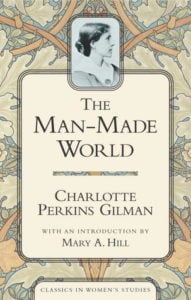
Exactly 60 years earlier, pioneering feminist author Charlotte Perkins Gilman (best known for The Yellow Wallpaper) examined the same question in a chapter of one of her lesser-known works of nonfiction, The Man-Made World (1911) — originally titled Our Androcentric Culture. Read More→
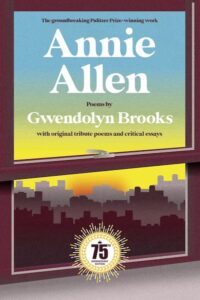
Annie Allen is a 1949 collection of poems by Gwendolyn Brooks. It won the Pulitzer Prize in 1950, making her the first Black writer to receive this award.
The poems don’t flinch from the violence and racism that are part of Annie’s milieu, and end with her hopes for a better world than the one she has inhabited.
Central to this book, in addition to individual poems, is a 43-stanza epic poem, “The Anniad” (a reference to the epic poem “The Aeneid” by Virgil, the ancient Roman poet) follows the life of Annie, an African-American girl, from birth to womanhood, as she seeks self-awareness and fulfillment. Read More→
If you’re looking for some inspiration to sit yourself down and set words to paper (or screen), these images of women authors at their writing desks (posed though they are) might just do the trick.
A famous quote goes something like: “The art of writing is the art of applying the seat of the pants to the seat of the chair.” Attributed to Mary Heaton Vorse, variations of it have been credited to (mostly male) authors from Ernest Hemingway to Kingsley Amis. Read More→
To commemorate the centenary of iconic poet Gwendolyn Brooks (1917 – 2000), A Surprised Queenhood in the New Black Sun: The Life and Legacy of Gwendolyn Brooks was published in 2017.
The author of this biography, Angela Jackson (herself a poet as well as a playwright and novelist) was granted unprecedented access to Brooks’s family and personal papers. She provides new perspectives on the woman who would be the first Black American writer to receive a Pulitzer prize. Brooks won the award for her 1949 poetry collection, Annie Allen.
At the time, Brooks already had a young son, Hank. About a year and a half later her daughter Nora was born. Read More→
June 2017 marked the 100th anniversary of legendary poet Gwendolyn Brooks. In commemoration, Beacon Press has published A Surprised Queenhood in the New Black Sun: The Life and Legacy of Gwendolyn Brooks by award-winning poet, playwright, and novelist Angela Jackson.
The first trade biography Brooks in over two decades, the book offers a fresh account of this literary icon.
Granted unprecedented access to Brooks’s family, personal papers, and writing, Jackson provides a new retrospective on the first African-American ever to receive a Pulitzer prize. Read More→
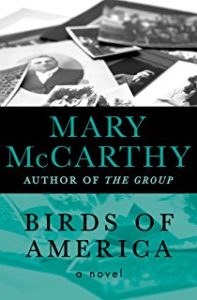
The original edition of Birds of America by Mary McCarthy describes it as “the story of Peter Levi, an innocent abroad, who is Ms. McCarthy’s Candide. In the fall of 1964, he arrives in France to do his junior year at the Sorbonne after spending a bizarre holiday in New England with his enchanting mother.”
Mary McCarthy (1912 – 1989) was an American author, drama critic, and political activist. During her lifetime, she authored more than two dozen books, and gained attention as a cutting critic who argued for the need for creative liberty that transcended ideology.
Her work is known for its precise prose and intricate blend of fiction and non-fiction. Read More→