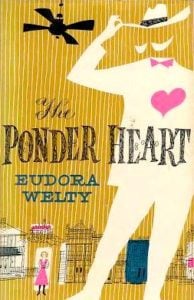
The Ponder Heart by Eudora Welty is a 1954 novella originally published in The New Yorker magazine the year before it appeared in book form. Two years later, it was staged as a Broadway play. In 2001, it was also adapted into a made-for-television film for PBS.
Narrated by Edna Earle Ponder, it’s the story of her uncle, Daniel Ponder, a sweet man who is considered a bit “slow.” He has inherited a hefty fortune from his father and wants to give it away.
This plan, not surprisingly, is opposed by the extended family. The book was widely praised when released; here are two typical reviews of this darkly comical gem from Eudora Welty: Read More→
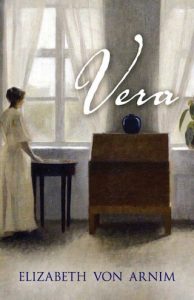
The novels of Elizabeth von Arnim are often marked by their dry wit and charm, plus a touch of autobiography. Vera obliquely refers to the author’s disastrous second marriage to an Earl, but unlike her references to her first husband, who she referred to as “The Man of Wrath,” Elizabeth saw no humor in the situation.
Vera (1922) is arguably this author’s darkest novel, a psychological thriller that in a unique way is a predicts Rebecca by Daphne du Maurier.
Read More→
Elizabeth and Her German Garden was published anonymously in 1898. Elizabeth von Arnim, born Mary Annette Beauchamp in Australia, continued to publish simply as “Elizabeth” following the success of this, her debut novel.
Told in the form of a diary, the book is written by a protagonist who, like the author herself, chafes against the conventions of marriage and motherhood and takes solace in her summer garden.
Enormously popular upon publication, Elizabeth and Her German Garden earned the author quite a tidy sum in its time. Though it has had a mini-revival as a quietly feminist tale, it has struggled to maintain stature as a classic. Read More→
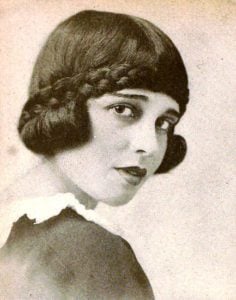
Anita Loos (1889 – 1981) was an incredibly prolific screenwriter, playwright, and writer of fiction and memoir, best known for Gentleman Prefer Blondes — the bestselling book, successful Broadway show, and blockbuster movie.
She briefly considered but ultimately rejected the life of acting. Nevertheless, Anita was drawn to the world of film and theater. She began writing film scripts in 1912, and went on to create more than two hundred screenplays for D.W. Griffith, Douglas Fairbanks, and Constance Talmage.
More than 100 scripts flowed from her pen between 1912 and 1915, only a handful of which weren’t filmed in that era of silent films. Read More→
Anita Loos (April 26, 1889 – August 18, 1981) was an American author, playwright, and screenwriter, best known for Gentleman Prefer Blondes. She was born Corinne Anita Loos in what is today Mount Shasta, California.
The story of her actual childhood seemed like a scenario fit for screen treatment. A curious girl, she tagged along with her father, a dissolute alcoholic, whose company included others of his proclivity, prostitutes, and others who resided in San Francisco’s underbelly.
Anita performed on stage from an early age in her father’s stock theatre company, on occasion becoming the sole support of the family. She disliked the work, however, knowing that what she really wanted was to be a writer. Read More→
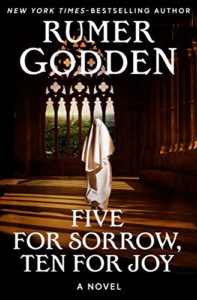
From the 1979 Viking edition of Five for Sorrow, Ten for Joy by Rumer Godden: In this novel, Rumer Godden returns to the theme of the religious life, which has inspired some of her most successful novels including Black Narcissus and In This House of Brede.
She now moves to the world of the French Dominican Sisters of Béthanie, who work among the prostitutes, drug addicts, and vagrants of the great cities.
The heroine is Lise, an English girl who, after the liberation of Paris, falls into bad company and, after a period in one of Paris’s smartest brothels, becomes a successful madam — La Balafrée, the Scarred One. Read More→
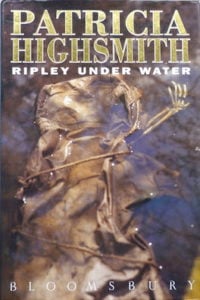
Ripley Under Water by Patricia Highsmith (1991) is the last of five novels featuring the psychopath Tom Ripley, a man who is cultured, intelligent, and occasionally dabbles in murder. As a group, this quintet of novels is known as “The Ripliad.”
This description is from the 1991 Viking Press edition of Ripley Under Water by Patricia Highsmith: For more than four decades, Highsmith has developed her unique mastery of suspense — not the least in her renowned cycle of novels featuring Tom Ripley.
Now, in the fifth of this series, she demonstrates yet again her ability, as Graham Greene wrote, “to create a world of her own, a world claustrophobic and irrational which we enter each time with a sense of personal danger.” Read More→
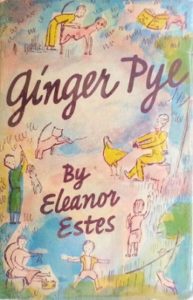
From the 1951 Harcourt, Brace edition of Ginger Pye by Eleanor Estes: Eleanor Estes has written a book with tenderness and humor — a family story in which children will find all the realities of their world, and adults will catch echoes of years gone by.
Who can resist the Pyes? There is Mrs. Pye, the youngest mother in the town of Cranberry; Mr. Pye, a famous bird man who is often called down to Washington for consultation (“Call in Mr. Pye” is a family byword) …
Rachel and Jerry, who see the world through fresh eyes and sometimes react surprisingly; Uncle Bennie, their real uncle though he is only three years old; Gramma and Grampa, and many delightful friends. Read More→