When did literary agents become a must-have to get through the door of traditional publishers? Many of the authors we celebrate on this site, if not most, didn’t have one. They did it the old-fashioned way, by submitting directly to editors, or getting a referral through a fellow writer.
But things have changed since the days when the Brontë sisters were rejected by many of London’s top publishers, and even well into the twentieth century, when an agent just wasn’t a necessity.
The big publishers have consolidated and the mid-sized and smaller ones have proliferated. There’s more opportunity, but the competition is much stiffer. Everyone and their cousin wants to be an author. If you’re a writer determined to go the traditional publishing route, agents can be extremely helpful, and sometimes completely necessary, to achieve that goal. Here we’ll explore how to find a literary agent. Read More→
In The Battle of the Villa Fiorita, a 1963 novel by Rumer Godden, this prolific author delves into a universal dilemma — does a mother have the right to pursue love, or should she set those needs aside for the sake of her children?
This story, which centers on Fanny Clavering and her youngest children, Hugh and Caddie, explores this theme. When the children learn that their mother has run off with a new and enticing man, they begin their quest which culminates in the titled “battle.”
Looking at love, infidelity, and divorce through the eyes of adolescents gives this story its charm, and Rumer Godden, in her usual, skillful way, creates characters about whose fate the reader grows to care about. Read More→
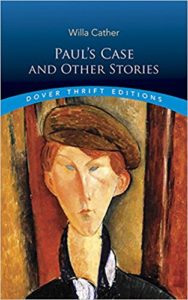
“Paul’s Case: A Study in Temperament” is a short story by Willa Cather first published in McClure’s Magazine in 1905. Shortly after, it became part of Cather’s first published collection The Troll Garden (also 1905), in which it was one of seven stories.
Like the other stories in that collection,”Paul’s Case” is in the public domain. See also this excellent analysis of “Paul’s Case” if you’re studying this story or wish to delve into its deeper meaning.
Some of the original paragraphs have been broken up to improve readability on devices; otherwise, the story is intact.
Read More→
“Paul’s Case: A Study in Temperament” is a short story by Willa Cather, first published in McClure’s Magazine in 1905. That year, it also appeared in a collection of Cather’s stories, The Troll Garden. This analysis of “Paul’s Case” is by Sarah Wyman, Associate Professor of English at SUNY-New Paltz:
You probably know someone who reminds you of Paul, someone who does not seem to fit in with others in society. Paul’s mannerisms are tense and nervous. He appears antisocial with his classmates, confrontational with his teachers, and emotionally estranged from his family.
Read More→
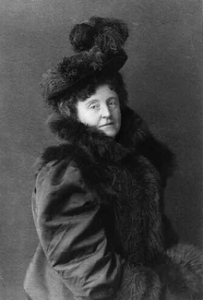
Frances Hodgson Burnett (1849 – 1924) was a British-American novelist and playwright. She wrote more than fifty books and thirteen plays, many for adult audiences.
While most of these have been forgotten, we’ll be looking at the four children’s books by Frances Hodgson Burnett that have remained timeless classics.
Born in Cheetham, England, Burnett emigrated to the U.S. with her mother and siblings when she was in her teens, settling in rural Tennessee. By age nineteen, Burnett had started publishing stories in magazines to help support her family. Read More→
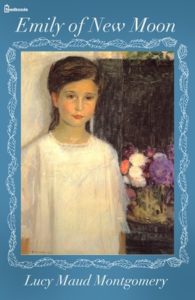
Emily of New Moon by L.M. Montgomery, published in 1923, is the start of a trilogy of novels about Emily Byrd Starr that invites comparison with the beloved Anne of Green Gables series. These books, as is true for many of L.M. Montgomery’s writings, are meant for “children of all ages.”
Maud Montgomery considered Emily more of a reflection of herself and her own personality than Anne. Emily was a loyal friend, loved learning, appreciated nature, and most of all, wanted to be a writer.
Emily of New Moon was followed by Emily Climbs (1925) and Emily’s Quest (1927). The books follow her through her school years into adulthood as she becomes a successful author. Read More→
Many of us grew up reading and re-reading Little Women by Louisa May Alcott. But while most fans cheer on Jo March, based on Louisa herself, Amy March is often the least favorite sister. Now, it’s time to learn the truth about the “real Amy” — Louisa’s sister, May.
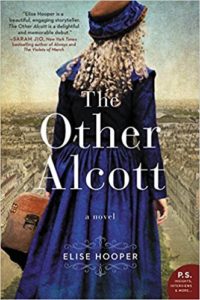
In The Other Alcott, a captivating work of historical fiction, Elise Hooper gives readers a glimpse into the youngest Alcott’s artistic pursuits and her side of the sibling rivalry. Here’s an in-depth conversation with Elise Hooper, the author of this intriguing work of historical fiction. Read More→
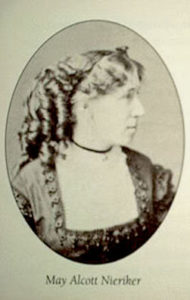
The Other Alcott by Elise Hooper, the author’s debut 2017 novel, is a believable imagining of the life of May Alcott. The youngest of the Alcott sisters, she was the inspiration for the character of Amy March in Little Women. May (who, after she married, was known as May Alcott Nieriker) was a talented artist in her own right.
As she seeks to establish her own identity apart from the close-knit family, the personality of a dynamic and determined young woman, in many ways ahead of her time, unfolds. The Other Alcott is a satisfying entry into the genre of biofiction, in which a real-life person is becomes the heroine (or hero) of a novel. Read More→