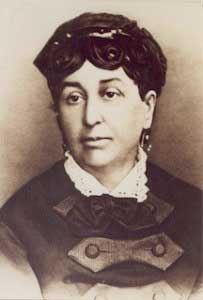
George Sand (born Amantine-Lucile-Aurore Dupin; July 1, 1804 – June 8, 1876) was a French novelist, essayist, and playwright known for pushing the envelope on female agency, gender expression, and cultural expectations.
She’s also notorious for the drama in her everyday life, not the least of which was her lively love life, filled with countless romantic entanglements.
Her literary legacy includes more than seventy novels in addition to several plays, countless essays, journalistic pieces, and a multi-volume autobiography. Few authors since have matched her prolific output, and she remains a model for creating a full palette of love, productivity, and family life.
Read More→
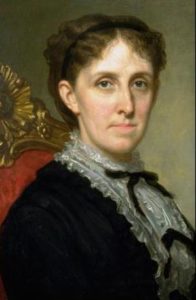
Louisa May Alcott (November 29, 1832 – March 6, 1888) is best known as the author of Little Women and its sequels, including Jo’s Boys and Little Men, though the scope of her work goes far beyond these beloved books.
She also wrote essays, poems, and pseudonymous thrillers. Alcott’s most beloved heroine, the complicated and talented Jo March, was an idealized version of herself.
She did grow up in a family much like the one she presented in Little Women — once again, idealized and a bit altered — with practical and wise Marmee, a dreamer of a father, and three sisters, May (“Amy”), Anna (“Meg”), and Elizabeth (“Beth”). Read More→
If you’d like a taste of a classic author’s work but don’t have the time or patience to read a tome, consider the novella form. Here we’ll look at novellas by classic women authors that make great introductions to to their work.
What defines a novella? It’s generally based on word count of between 17,000 and 40,000, though it isn’t always so cut and dry. The Awakening by Kate Chopin is often described as a novella, though as far as word count, it’s slightly outside that parameter. Read More→
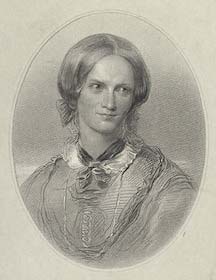
Charlotte Brontë (April 21, 1816 – March 31, 1855), the British novelist best known for Jane Eyre, was born in Thornton, a small West Yorkshire village in England.
She was born into a clerical family that valued education; she became the family chronicler and champion.
Charlotte lead the charge for herself and her two brilliant sisters, Emily and Anne, in their quest to become published authors.
Read More→
Georgia Douglas Johnson (September 10, 1880 – May 14, 1966) was an American poet and playwright associated with the Harlem Renaissance.
Born Georgia Douglas Camp in Atlanta, Georgia, she grew up in a mixed-race family with African American, Native American, and English roots.
Her poetry addressed issues of race as well as intensely personal yet ultimately universal themes including love, motherhood, and being a woman in a male-dominated world. Read More→
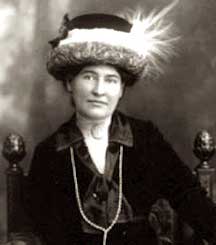
Willa Cather (December 7, 1873 – April 24, 1947), author of classic American fiction, was born in Winchester, Virginia. At nine years of age, she moved with her family from the staid, conservative life of Virginia society to Red Cloud, Nebraska.
Growing up among hardworking European immigrants who worked the land inspired some of her best-known novels, including O Pioneers! and My Antonia.
In this untamed landscape, young Willa Sibert Cather rode her pony about to get to know her foreign-born neighbors who were homesteading on the Great Plains. She observed their struggles to conquer an unforgiving land with its extremes of droughts, blizzards, storms, and prairie fires. Read More→
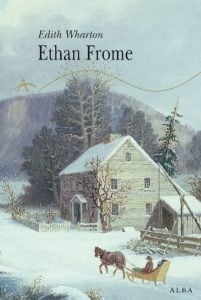
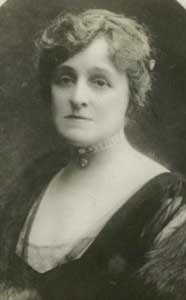
Edith Wharton (January 24, 1862 – August 11, 1937), was born Edith Newbold Jones in New York City. One of the Grande Dames of American letters, everything about her — from her wealthy background to her stately demeanor — suggests a woman in possession of herself.
Beneath the surface, however, was a deep insecurity about her talent and abilities. Fortunately, it was one she gradually overcame in a substantial way.
Most of us have heard the expression “Keeping up with the Joneses.” But it might come as a surprise that this doesn’t refer to a hypothetical family, but Edith Wharton’s parents, George Frederic Jones and Lucretia Rhinelander Jones. Read More→
Colette (January 28, 1873 – August 3, 1954) was a French author whose original name was Sidonie-Gabrielle Colette. In her lifetime, she was known for her writing as much as for her sensational lifestyle.
Her mother, Sido, was her greatest inspiration. She allowed the young Colette to drink deeply from the well of life to gain experience and express her individuality.
Colette’s novels and stories featuring strong female characters were often inspired by her own experiences. Bold and sexually expressive, her stories were rather scandalous for their time, though the public loved them.
Read More→