By Marita Golden | On December 10, 2018 | Updated July 2, 2023 | Comments (0)
The musing by writer Marita Golden explores the impact Zora Neale Hurston had on her own life and art. She celebrates finding and remaking herself by discovering Zora’s glorious and imperfect life lessons.
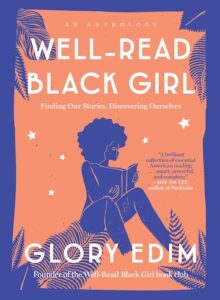
Excerpted from the book Well-Read Black Girl: Finding Our Stories, Discovering Ourselves, an anthology edited by Glory Edim. “Zora and Me” ©2018 by Marita Golden, reprinted with permission by arrangement with Ballantine Books, an imprint of Random House:
I saw myself, found myself, and remade myself over and over learning and discovering Zora Neale Hurston. She became and has become a continuing source of possibility and pride for me. Read More→
By Taylor Jasmine | On December 6, 2018 | Updated June 7, 2026 | Comments (0)
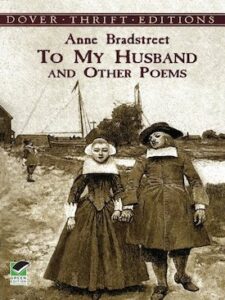
This concise analysis of the poetry of Anne Bradstreet is excerpted from Who Lived Here? A Baker’s Dozen of Historic New England Houses and Their Occupants by Marc Antony DeWolfe Howe, an eminent editor and writer of the late 19th and early 20th centuries.
Anne Bradstreet (1612 – 1672) was the first writer in the American colonies to be published.
She rejected the prevailing notions of women’s inferiority. That opened her to criticism, not for her work itself, but that she dared to write and make her work public. It was considered unacceptable for women of her time to have a voice. She not only used hers effectively but pushed back at her critics. Read More→
By Nava Atlas | On December 3, 2018 | Updated February 11, 2023 | Comments (0)
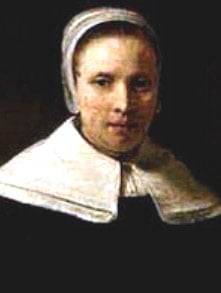
Anne Bradstreet (March 20, 1612 – September 16, 1672) was one of the most prominent early American poets, and the first writer in the American colonies to be published.
It was considered unacceptable for women of her time to write, but Anne rejected the prevailing notions of women’s inferiority. She was roundly criticized, not for the work itself, but for daring to make her work public.
Though Anne wrote sincerely and lovingly about her family, she also expressed her struggles as a woman and as a mother in her poetry.
Read More→
By Taylor Jasmine | On November 30, 2018 | Updated December 27, 2023 | Comments (11)
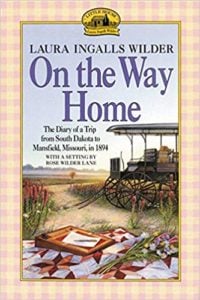
Laura Ingalls Wilder (1867 – 1957) has a permanent place in the American imagination for her Little House series of books for young readers. Born in a log cabin on the edge of an area called “Big Woods” in Pepin, Wisconsin, her life was the inspiration for her semi-autobiographical novels.
Laura’s publishing career began at the ripe age of sixty-five and consisted of the 8-volume set of Little House books (9, if you count Farmer Boy) and a small number of autobiographical volumes. The first installment, Little House in the Big Woods, was published in 1931; the best known of the series, Little House on the Prairie, was published soon after. Read More→
By Nava Atlas | On November 28, 2018 | Updated December 27, 2023 | Comments (5)
Laura Ingalls Wilder (February 7, 1867 – February 10, 1957) gained renown for her autobiographical writings reflecting her life as an American pioneer. Her Little House series of books have been beloved by generations of young readers.
Born in a log cabin on the edge of an area called “Big Woods” in Pepin, Wisconsin, her life was the inspiration for her novels and richly informed her memoirs.
The Ingalls family traveled by covered wagon through Kansas and Minnesota with all that they owned, until finally settling in De Smet, Dakota Territory. The family loved the open spaces of the prairie, where they farmed and raised animals. Read More→
By Taylor Jasmine | On November 26, 2018 | Updated December 20, 2025 | Comments (0)
“The Two Offers” by Frances Watkins Harper (1825 – 1922; also known as Frances E.W. Harper and Frances Ellen Watkins Harper) is believed to be the first published short story by an African American writer.
It first appeared in the June and July 1859 issues of the Anglo-African Magazine, a publication based in New York that featured the writings of black authors.
Written in the sentimental, somewhat stilted style of the era, the story is an example of “reform literature,” steeped in the values of Christianity, morality, and domesticity. It’s set in an era in which women of any class or race were basically the property of their fathers and husbands, were they not owned in the bonds of slavery. Read More→
By Taylor Jasmine | On November 25, 2018 | Updated August 1, 2026 | Comments (0)
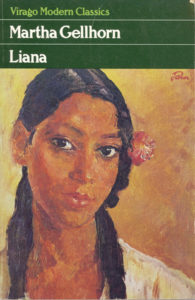
Martha Gellhorn was married to Ernest Hemingway when Liana, her fifth novel, was published in 1944. She had already made quite a name for herself as a war correspondent by that point and it rankled her to be described as “Mrs. Ernest Hemingway” in reviews of her books.
Though her fiction varied in its quality and critical acclaim, her book of linked stories titled The Trouble I’ve Seen (1936), based on her actual observations as a journalist during the Depression, earned her a great deal of respect.
Her brief marriage to Hemingway was already in jeopardy the year that Liana appeared. In her capacity as a war correspondent, Gellhorn wanted to cover the action, wherever it happened to be. Read More→
By Nava Atlas | On November 21, 2018 | Updated August 26, 2026 | Comments (6)
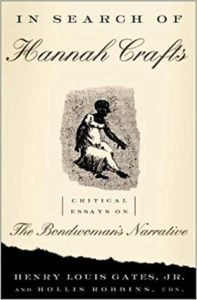
Given the circumstances of the 19th century, both before and after emancipation, Black women writers who took up the pen to write full books or other substantial bodies of work were rare indeed.
It’s worth noting that before the Civil War, it was illegal to teach African Americans to read in many states, not just in the South. So to write a novel or autobiography was a radical act for a Black woman of that era, whether she had been enslaved or free born.
Not surprisingly, many of the books, essays, and poetry produced by Black women writers dealt with slavery. Most of the autobiographies and thinly veiled novels discussed here were in the genre of slave narrative. Read More→