By Nava Atlas | On November 29, 2019 | Updated July 23, 2026 | Comments (1)
Louisa May Alcott (1832 – 1888) may be best known as the author of Little Women and its sequels, but there was more to her than these genteel (yet gently subversive) domestic tales. The fascinating facts about Louisa May Alcott that follow might surprise those who don’t know a lot about the woman behind Little Women.
From her teen years on, Alcott was determined to make a living as a writer. She became her family’s primary breadwinner at a young age, mostly by writing and selling anonymous thrillers, or what she called “blood and thunder” tales.
And from there her writing life unfolded, often in unexpected ways. She was a complex woman whose views were reflected in her literary output. Read More→
By Nava Atlas | On November 26, 2019 | Updated September 2, 2022 | Comments (0)
Hilda Doolittle (1886 – 1961), known by her nom de plume H.D., was an American-born poet, novelist, translator, and essayist. Following is a selection of poems by H.D. that speak to her experimental and innovative approach to the craft.
Modernism, psychoanalysis, and feminism were all influences on her work, as were the effects of World Wars I and II. H.D earned her place among iconic modernist writers including T.S. Eliot, Ezra Pound, Marianne Moore, and William Carlos Williams.
Read More→
By Skyler Gomez | On November 24, 2019 | Updated December 5, 2024 | Comments (11)
Anne Spencer, born Annie Bethel Bannister (February 6, 1882 – July 27, 1975), was a poet, teacher, librarian, gardener, and civil rights activist. In this sampling of poems by Anne Spencer, we experience her affinity for nature, love, and life itself.
Anne Spencer was a prominent figure in the Harlem Renaissance. Her literary career began as she was a student in Virginia Seminary with her first poem, “The Skeptic.” After creating this poem, she continued to write on any surface she could find to record her thoughts, including the walls of her home and random scraps of paper.
This talented poet and gardener was an outspoken advocate for women’s rights, civil rights, and granting the right of respect to everyone.
Read More→
By Elodie Barnes | On November 17, 2019 | Updated September 29, 2025 | Comments (0)
Hilda Doolittle (September 10, 1886 – September 27, 1961) was an American-born poet, novelist, translator, and essayist who wrote under the pen name H.D.
She was profoundly influenced by the effects of World War I, and the subsequent trends of modernism, psychoanalysis, and feminism.
Her work is often framed within the context of other important modernist writers such as T.S. Eliot, Ezra Pound, Marianne Moore, and William Carlos Williams. Today, she’s best remembered for her innovation and experimental approach to poetry. Read More→
By Skyler Gomez | On November 13, 2019 | Updated August 28, 2025 | Comments (0)
Anne Spencer (born Annie Bethel Bannister; February 6, 1882 – July 27, 1975) was an American poet, teacher, librarian, gardener, and civil rights activist.
She’s best remembered as an important figure of the Harlem Renaissance and as the second African-American poet to be included in the Norton Anthology of Modern Poetry.
Anne was born in Henry County, Virginia, to Joel Cephus Bannister and Sarah Louise Scales. Both parents were part of the first generation of African Americans born into bondage whose childhood followed the end of slavery. As an only child, she was the center of her parents’ lives, and they were determined to make a better life for her.
Read More→
By Nava Atlas | On November 9, 2019 | Updated June 13, 2023 | Comments (0)
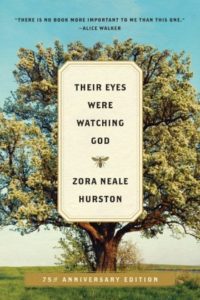
Zora Neale Hurston (1891 – 1960), the African-American author and anthropologist, was a natural storyteller. Presented here is a survey of books by Zora Neale Hurston — her novels, folklore collections, and essays.
Zora’s love of story resulted in an array of novels and short stories as well as compilations gathered from oral traditions of the Black cultures of the American South and the Caribbean.
Zora made a name for herself during the Harlem Renaissance movement of the 1920s, when she began producing novels, short stories, plays, essays, and a modest output of poetry. Upon graduating from Barnard College in 1928, she embarked on a parallel career as an anthropologist. Read More→
By Erica Obey | On November 5, 2019 | Updated September 2, 2022 | Comments (1)
Despite having published seven books in her long lifetime, Candace Wheeler (1827–1923) might not be classified as a “literary lady,” let alone a classic author. She was one of the first American women to practice as an interior and textile designer, and opened the profession to other women who followed in her footsteps.
Born Candace Thurber, her father was a Puritan abolitionist so severe that he would not allow the family to use sugar or cotton, and he applied similarly stringent standards to his children’s reading habits, decreeing that they read nothing more fanciful than the Bible and Pilgrim’s Progress.
Yet, she evolved into a superlative aestheticist and the godmother of many female artists, writers, and designers. Often referred to as “the mother of interior design,” she was the actual mother of the accomplished artist and book illustrator Dora Wheeler Keith. Read More→
By Taylor Jasmine | On November 4, 2019 | Updated September 19, 2023 | Comments (2)
Octavia E. Butler (1947 – 2006), the esteemed American author of science fiction, blazed a trail in what was once a white male-dominated genre. Here we’ll explore Octavia Butler’s rules for writers, with wisdom for every wordsmith no matter where you are on the journey.
Butler was one of the first women and one of the first African Americans to succeed in the genre of sci-fi. To break through in this realm, she had to blaze her own trail, and became rigorously self-disciplined in her writing practice.
She stuck to a strict schedule, sometimes rising at 2:00 am to write for several hours before heading out to whatever odd job she held before becoming a full-time author. Read More→