By Nava Atlas | On July 10, 2015 | Updated September 8, 2026 | Comments (0)
Emily Brontë (July 30, 1818 – December 19, 1848), British author known for Wuthering Heights, was the sister of Charlotte and Anne Brontë. She has also been recognized as a brilliant poet.
The fifth child born to Maria Branwell Brontë and Reverend Patrick Brontë, Emily Jane was, like her sisters, born in the West Yorkshire village of Thornton in England.
The family moved to the quiet Haworth setting where the sisters grew up, along with their brother Branwell. Their mother died while the children were still young. The two oldest sisters, Elizabeth and Maria, both died before adolescence.
Read More→
By Taylor Jasmine | On July 7, 2015 | Updated September 23, 2022 | Comments (0)
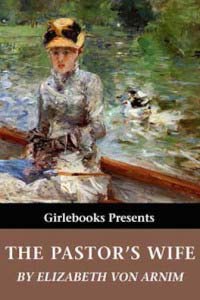
From the original review in the Salisbury Evening Post (NC), November 1914: One of the leading books of the season is by the same anonymous author, “Elizabeth,” whose fame spread so quickly after the publication of her inimitable Elizabeth and Her German Garden. And like that book, this one deals with German life and how an English girl lived it.
To attempt to describe this book would be manifestly unfair to the reader (that and criticism of the story must remain for the reviewer) but a few samples of its incisive humor and the searching contrasts drawn between British and German ideals and temperaments when drawn together in the mosh of family life, may perhaps not be amiss. Read More→
By Taylor Jasmine | On July 7, 2015 | Updated September 23, 2022 | Comments (0)
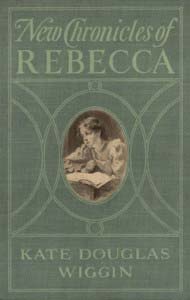
New Chronicles of Rebecca by Kate Douglas Wiggin is the 1907 companion to the hugely successful Rebecca of Sunnybrook Farm (1903). The original volume is a classic tale of an orphan girl — a trope that was quite popular in this era — finding her way in a world that’s indifferent to her plight.
Rebecca Rowena Randall also, not surprisingly, has to win the hearts and affection of tart maiden aunts who are at first annoyed by having to take her in.
The original Rebecca of Sunnybrook Farm was a huge success from the time it was published. It was adapted for the the theater starting in 1910, and was filmed several times. The best-known film adaptation starred Shirley Temple (1938), with a rather altered plot. The book’s success paved the way for the sequel. Read More→
By Taylor Jasmine | On July 7, 2015 | Updated September 23, 2022 | Comments (0)
From the original review in Newport Daily News, March 1951: This is the poignant story, by Maud Hart Lovelace, of a girl who has a difficult adjustment to make, and makes it with courage and success. Emily Webster was an orphan who lived with her grandfather, a Civil War veteran.
When the story opens she is graduating from high school in the class of 1912. She is a class officer and she goes with a merry crowd of girls. Many of the class go off to college, but Emily, although she longs for more education, will not leave her grandfather. Read More→
By Nava Atlas | On June 28, 2015 | Updated September 23, 2025 | Comments (0)
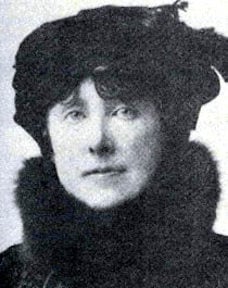
Elizabeth von Arnim (August 31, 1866 – February 9, 1941) was born Mary Annette Beauchamp in Sydney, Australia. This prolific writer was best known for The Enchanted April and Elizabeth and her German Garden, though the psychological thriller Vera is arguably her masterwork.
When she was young, her parents moved their family to London, and it was there and in Switzerland that she enjoyed a privileged upbringing and education. A rather shy child in the midst of a brood of siblings, she early on became an avid reader, and also showed precocious musical ability.
Read More→
By Taylor Jasmine | On June 15, 2015 | Updated September 23, 2022 | Comments (0)
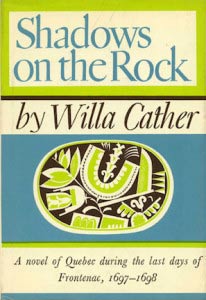
From the 1946 edition, Alfred A. Knopf: In this novel by Willa Cather, Cécile Auclair is a child in the Quebec of the waning seventeenth century, when both Louis de Buade, Comte de Frontenac, Governor of French Canada, and François-Xavier de Laval-Montmorency, the first Roman Catholic Bishop of Quebec, are very old men living their last days.
The city on the rock above the St. Lawrence, though containing only about two thousand souls, retains many Old World characteristics and amenities.
Through Cécile Auclair and her father Euclide, the apothecary protected by Frontenac, Miss Cather recreated the atmosphere, life, and historical events of those days when new men, less influenced by European ideas, had begun to reshape the city’s life and thought. Read More→
By Taylor Jasmine | On June 11, 2015 | Updated June 13, 2026 | Comments (0)
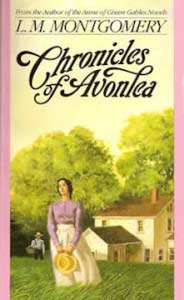
From the 1940 Grossett & Dunlap edition of Chronicles of Avonlea by L.M. Montgomery, originally published in 1912: The first thing every young reader will want to know about this collection by L.M. Montgomery is whether Anne Shirley appears in this collection of stories of Avonlea and Spencervale.
She certainly does. As a matter of fact, page one starts off in this manner: “Anne Shirley was curled up on the window seat of Theodore Dix’s sitting-room one Saturday evening, looking dreamily afar at some fair star land behind the hills of sunset …” Read More→
By Taylor Jasmine | On June 11, 2015 | Updated May 29, 2023 | Comments (0)
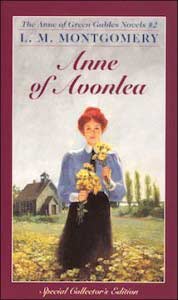
From the 1940 Grossett & Dunlap edition of Anne of Avonlea, the 1909 sequel to Anne of Green Gables:
“A tall, slim girl, ‘half-past sixteen’ with serious grey eyes and hair which her friends called auburn, had sat down on the broad red sandstone doorstep of a Prince Edward Island farmhouse …”
So began this gentle and much-loved sequel to Anne of Green Gables by L.M. Montgomery. Five years have passed since the orphan girl Anne Shirley came to the childless home of siblings Matthew and Marilla , bringing with her all of the joy and love of her generous nature.
She has come back to Avonlea to teach school in the same village school where she herself was taught. Teaching in neighboring village schools are her friends Diana Berry, Jane Andrews, Priscilla Gray, and Gilbert Blythe. Read More→