By Nava Atlas | On March 20, 2017 | Updated September 5, 2026 | Comments (4)
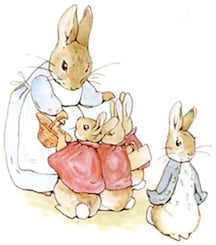
Over the recent years, writers have increasingly turned to self-publishing. The reasons vary: It’s a route to consider if finding a publisher or agent has proven impossible; one has a niche audience that’s easily reachable; or there’s a specific reason to want complete control over the process. Here’s a bit of surprising self-publishing history by some classic authors.
Gone are the days of having to store copious numbers of cartons of unsold books in the garage or under the bed. User-friendly print-on-demand or e-book services allow writers to create books on an as-needed basis, avoiding the pitfalls of overprinting.
Whether the product ends up only in the hands of the author’s mom and cousins or becomes one of the rare successes that sells like wildfire, it’s good to have options. Read More→
By Nava Atlas | On March 20, 2017 | Updated October 4, 2022 | Comments (1)
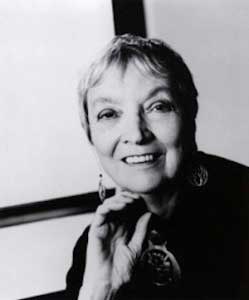
Madeleine L’Engle (1918-2007) conducted a writing life that can best be described as one of perseverance. Best known for her award-winning young adult science fiction, particularly A Wrinkle in Time, L’Engle offered much wisdom on writing and the writing life in her memoirs.
L’Engle often wrote of the struggles of what the called the triad of “mother-wife-writer.”
When she was writing, she felt guilty that she wasn’t doing enough for her children, and when she was mothering, she felt awful that she wasn’t writing. It was typical angst of midcentury mothers, who took on the lion’s share of childrearing. Read More→
By Emma Ward | On March 18, 2017 | Updated August 21, 2022 | Comments (0)
Zora Neale Hurston, the American novelist, memoirist, and folklorist was an active member of the Harlem Renaissance, an era of flourishing art and literature created by the Black community in New York City.
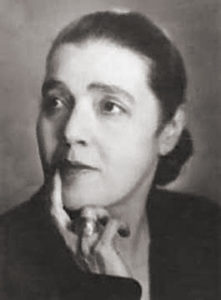
Fannie Hurst, her contemporary, was an author who supported social equality causes, and became sought after for her short stories.
Hurst was incredibly successful as a novelist and story writer in the 1920s and 1930s, becoming one of the era’s top-earning authors. Through a strange twist of fate that Zora, who was virtually forgotten when she died in 1960, is now a revered, widely read, and studied American author while today Hurst is rarely read and little known.
Read More→
By Adam Burgess | On March 13, 2017 | Updated October 4, 2022 | Comments (1)
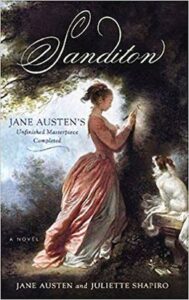
Sanditon, though unfinished, is perhaps Jane Austen’s most exciting, unusual, and promising piece of literature. Unlike The Watsons, whose plot and ending can be relatively inferred, Sanditon, the novel she worked on in 1817, the year of her death, is quite different from any of her other stories.
The narrative of Sanditon could probably have followed a variety of paths, so predicting its resolution is difficult to do.
The story’s heroine, Charlotte Heywood, is a somewhat-exaggeratedly sensible young woman. She comes to the small coastal tourist town of Sanditon upon the urgings and guardianship of its proprietor, who is attempting to build the town’s reputation. Read More→
By Nava Atlas | On March 13, 2017 | Updated May 16, 2023 | Comments (0)
Dear Literary Ladies,
Do you think it’s a good practice to keep a journal? What did you use your journal for, and how did it benefit your writing practice?
One of the most helpful tools a writer has is [her] journals. Whenever someone asks how to become an author, I suggest keeping a journal. A journal is not a diary, where you record the weather and the engagements of the day. A journal is a notebook in which one can, hopefully, be ontological. Read More→
By Tony Riches | On March 13, 2017 | Updated August 22, 2026 | Comments (4)
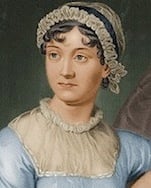
What is known of the writing habits of Jane Austen, the beloved author, is simple and fascinating. Reprinted by permission from The Writing Desk; contributed by Tony Riches.
Most of Jane Austen’s best known writing was done at Chawton Cottage in Hampshire, where she revised Pride and Prejudice, Sense and Sensibility, and Northanger Abbey. It was there that she wrote Mansfield Park, Emma, and Persuasion.
Jane would try to write every day, close to a window for the light, using an amazingly small walnut table (which survives at the Chawton Cottage Museum) and a ‘writing box’ thought to have been a gift from her father. Read More→
By Emma Ward | On March 12, 2017 | Updated October 6, 2026 | Comments (2)
Zora Neale Hurston was an American novelist, memoirist, and folklorist. In I Love Myself When I Am Laughing and Then Again When I Am Mean and Impressive: A Zora Neale Hurston Reader, the chapter titled “What White Publishers Won’t Print” discusses the lack of average black people appearing in literature and film.
Though the essay was originally published in Negro Digest in April, 1950; pages 85-89, the above mentioned anthology is more accessible.
In it she wrote about the importance of accurate portrayal of society’s marginalized groups.
In some ways this was ironic, because some Black writers like Richard Wright criticized her for applying the “minstrel technique” to her characters and penned a scathing review of what is arguably Hurston’s best-known work, Their Eyes Were Watching God.(Link to the October 5, 1937 issue of The New Masses; see Wright’s review, “Between Laughter and Tears,” on page 22.)
Read More→
By Taylor Jasmine | On March 7, 2017 | Updated January 12, 2026 | Comments (0)
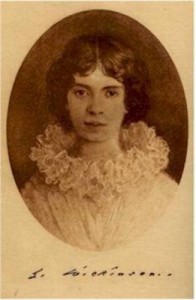
Emily Dickinson (1830-1886) lived in Amherst, Massachusetts where she studied at Amherst Academy with her siblings and wrote 1,800 poems over the course of her lifetime. Here we’ll enjoy a selection of poetic quotes by Emily Dickinson, most being beautiful isolated lines from her poems.
It was during the Civil War years that Emily developed her identity as a poet. She sent some of her poems to Thomas Wentworth Higginson, a noted literary figure.
His critique of her unorthodox style seemed to discourage her, and she retreated to the habit of keeping her writing private. Nevertheless, she continued to write copiously. Read More→