By Taylor Jasmine | On November 6, 2017 | Updated March 28, 2022 | Comments (0)
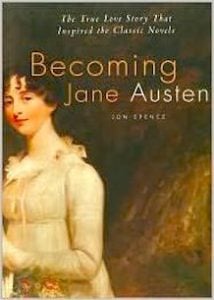
From the 2003 edition of Becoming Jane Austen by Jon Spence: In Becoming Jane Austen, Jon Spence shows how events and people in Jane Austen’s own early life affected her so deeply that she continually reshaped them into the plot and characters of her fiction. He pays special attention to two individuals: Tom Lefroy and Eliza de Feuillade.
Tom is the charming young man, about to begin law studies, whom Austen met at a ball when she was just twenty. The two quickly fell in love and hoped to marry.
Eliza is the glamorous, flirtatious older cousin who married a French count who lost his head to the guillotine during the French Revolution. Her unabashed pursuit of Jane’s younger brother Henry, which began when he was only fifteen, shocked the future author.
Read More→
By Taylor Jasmine | On November 6, 2017 | Updated March 15, 2026 | Comments (2)
Three Daughters of Madame Liang by Pearl S. Buck is a 1969 novel in the tradition of her colorful and vivid China stories. This one is takes place in China around the time of the cultural revolution.
Madame Liang is the proprietor of a fashionable restaurant in Shanghai, serving the top echelon of the city. She sends her three daughters to America to be educated, with varying and dramatic results.
Grace, Mercy, and Joy are torn between loyalties to their home country and their adopted one. Here’s a review of this engaging novel from the time of its publication date: Read More→
By Nava Atlas | On November 4, 2017 | Updated August 18, 2026 | Comments (2)
The Black American women journalists presented in this survey were true trailblazers, each in her own unique way, from newspaper publishing and investigative reporting to foreign correspondence and broadcasting.
It took an inordinate amount of perseverance for Black female journalists to break into white male-dominated fields, at the time that each did so. At right, Ethel Payne.
The power of language to document news and social issues often affects change. Each of these trailblazers from the past helped open new professional paths for women of all backgrounds to pursue.
Read More→
By Taylor Jasmine | On November 3, 2017 | Updated September 13, 2026 | Comments (2)
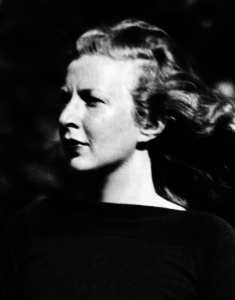
Are you in the mood for some gutsy quotes? Martha Gellhorn (1908 – 1998) was best known as an American war correspondent, though she was a prolific writer of fiction and memoir as well. She was the third wife of iconic American author Ernest Hemingway.
Gellhorn is ranked among the top war journalists of the twentieth century — and didn’t wish to be merely remembered as one of the four wives of “Papa” Hemingway. Famously, she lamented, “Why should I be a footnote to somebody else’s life?”
Indeed, she was enormously accomplished in her own right, having covered nearly every global conflict spanning the twentieth century. Read More→
By Taylor Jasmine | On November 3, 2017 | Updated May 2, 2023 | Comments (0)
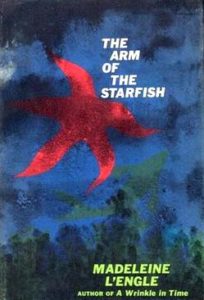
From the 1965 Farrar, Straus, Giroux edition of The Arm of the Starfish by Madeleine L’Engle: Young Adam Eddington, a brilliant student specializing in marine biology, secures a summer job as assistant to the world famous Dr. O’Keefe, who’s laboratory is situated on Gaea, a small island off the coast of Portugal.
Before the plane takes of from Kennedy International Airport, Adam makes the acquaintance of Caroline Cutter, an attractive girl whose father has business interests in Portugal. Read More→
By Emma Ward | On October 31, 2017 | Updated April 5, 2026 | Comments (0)
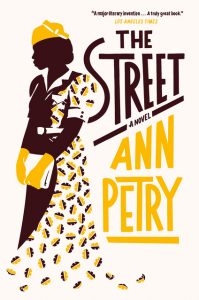
Ann Petry’s 1946 novel, The Street, presents the story of a single mother struggling to raise her young son and avoid the dangerous influences surrounding their Harlem apartment. The following quotes from The Street illustrate the raw energy and engrossing storytelling of the novel that make it feel fresh and engaging for the contemporary reader.
The Street was the first novel by an African-American woman author to sell over a million copies, and in total, sold more than a million and a half.
The story centers on Lutie Johnson, who copes with racism, sexual harassment, violence, and class divisions in World War II-era New York City. Lutie loves the wisdom of founding father Benjamin Franklin, and believes that if she follows his principles of thrift and hard work, that she can aspire to the American dream. Read More→
By Taylor Jasmine | On October 30, 2017 | Updated December 18, 2022 | Comments (0)
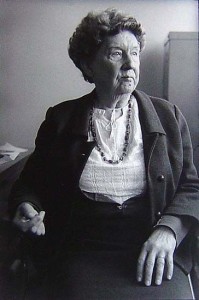
Christina Stead (1902 – 1983), the Australian-born novelist and short story writer, was best known for the novel The Man Who Loved Children. Following is a selection of quotes from this talented but somewhat embittered author.
The author of fifteen novels and numerous short stories, Stead never gained the success she felt she deserved. Viewed as a misanthrope and curmudgeon, she was a largely unapproachable person who revealed little of herself even as she self-invented. She destroyed many of her personal papers, making it more difficult to preserve her legacy.
In her works, the main characters were often based on herself and the stories very close to her own life. Read More→
By Taylor Jasmine | On October 30, 2017 | Updated December 18, 2022 | Comments (0)
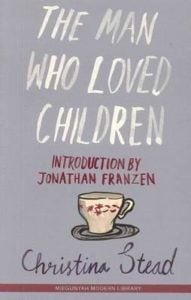
The Man Who Loved Children by Christina Stead, the Australian author, was originally published in 1940. But it wasn’t until this novel was reissued twenty-five years later, in 1965, that it received critical acclaim and a wide audience.
Sam Pollit the title character, is the father and husband in the dysfunctional Pollit family. Supposedly, he was inspired by Stead’s father, a marine biologist. Egotistical, perhaps even narcissistic, Sam dominates the blended family, especially his wife Henny and older daughter Louie.
When it was first published, The Man Who Loved Children was set in Sydney. The reissued edition changed the venue to Washington, D.C. as a way to appeal more to American readers. Read More→