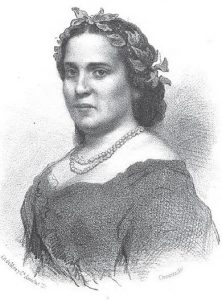
Gertrudis Gómez de Avellaneda y Arteaga (March 23, 1814 – February 1, 1873), a Cuban-born Spanish writer, was considered one of the most romantic writers and greatest women poets of the 19th century.
Avellaneda was born in Santa Maria de Puerto Principe, currently known as Camagüey. Upon arriving in Cuba in 1905, her father, Manuel Gómez de Avellaneda y Gil de Taboada was a Spanish naval officer in charge of the port of Nuevitas.
Her mother, Francisca María del Rosario de Arteaga y Betancourt, was a criolla and a member of the wealthy Arteaga y Betancourt family, one of the most high-ranking families in Puerto Principe. Gertrudis was the first-born of the couple’s five children, but only she and her younger brother, Manuel, survived past childhood.
Read More→
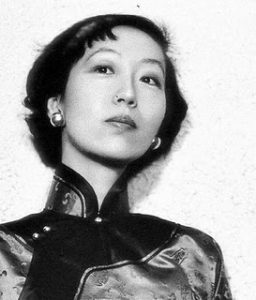
Eileen Chang, also known as Chang Ai-ling or Zhang Ailing (September 30, 1920 – September 8, 1995), was a Chinese essayist, novelist, and screenwriter.
Although Chang’s somber love stories are widely recognized, her construction of an alternative wartime narrative is considered a significant contribution to Chinese literature.
Chang was born in Zhang Ying, Shanghai, China to a well-known family; her grandfather was a son-in-law to Qing court official Li Hongzhang. In 1922 when Chang was two, her family relocated to Tianjin. Her father introduced her to Tang poetry at the age of three. Her mother also introduced her to painting, piano, and English in her early years.
Read More→
Elizabeth Barrett Browning and Robert Browning are both remembered and revered for their contributions to English literature and poetry, and their love story is also celebrated. After all, it was Elizabeth who wrote the immortal words “How do I love thee? Let me count the ways” …
The tale of their courtship and marriage is a real-life Victorian romance that includes love letters, an elopement, and the Italian adventure of a lifetime.
The two met in 1845 and eloped the following year. They married on September 12, 1846, much to the disapproval of Elizabeth’s father, who disowned her.
Read More→
Angelina Weld Grimké (1880 – 1958) was an American playwright, poet, and educator best known as a figure in the Harlem Renaissance of the 1920s. Following is a selection of poems by Angelina Weld Grimké on love (and the longing for it), race, and nature.
Born in Boston, Massachusetts, Grimké was part of a family of Black, white, and mixed-race civil rights activists, and in earlier generations, abolitionists. Her father served some time as the Vice-President of the NAACP.
Her great-aunts (including the similarly named Angelina Grimké Weld) were well-known abolitionists and advocates for women’s rights in the 19th century. They were significant influences for Grimké’s use of literature as a propagandist tool. Read More→
There are many more classic Latina poets to discover (or rediscover) than is possible to including in a roundup such as this one. But for those just getting acquainted with this area of Spanish literature, this is a good starting point. Shown at right, Rosario Castellanos.
Presented here is a sampling of poets whose works have been fairly extensively translated into English, or whose achievements in their home countries were significant. The Latina poets listed following represent Cuba, Puerto Rico, a number of South American countries, Mexico, and Spain.
Read More→
Some of the earlier works of classic feminist fiction presented here were considered shocking, and those that came later were still considered quite daring. All are essential works in the canon of feminist literature, and all are great reads.
The courage and foresight of these creators granted the women who came after them the freedom to speak their truths and more readily get them into print.
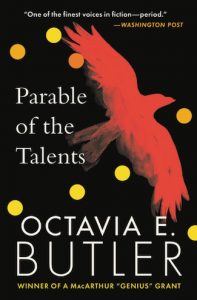
These timeless classics have proven foundational for contemporary feminist novels. From Jane Eyre (1847), Charlotte Brontë’s gothic romance, through Octavia Butler’s Afro-futurist Parable of the Sower and Parable of the Talents (1993/1998), the books listed here feature heroines who continue to inspire and surprise.
Read More→
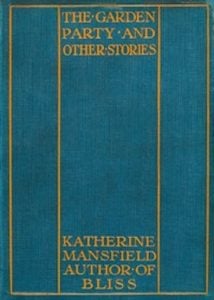
“Miss Brill” by Katherine Mansfield (1888 – 1923) is a much-anthologized short story by this New Zealand-born author considered a master of the genre. It was first published in The Garden Party and Other Stories in 1920.
Miss Brill is an elderly woman who has created her own illusory world. Some of the themes in this classic short story include loneliness, aging, and alienation. It’s considered a modernist piece and is replete with symbolism rather than plot.
Here is some supplementary information on Miss Brill: Read More→
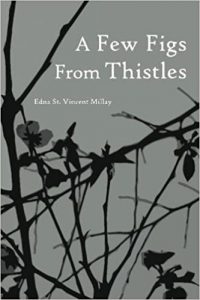
Presented here is the full text of A Few Figs from Thistles: Poems and Sonnets by Edna St. Vincent Millay (1892 – 1950). It was her second collection, published in 1921.
As a poet, Millay is considered as a major twentieth-century figure in the genre. Wildly popular, and actually famous as a poet in her lifetime, she’s no longer as widely read and studied, though still well regarded in the field of poetry.
The poetry in this collection explored love and female sexuality, among other themes. In the poems, including the oft-quoted “First Fig,” Millay both celebrates and satirizes herself. Read More→