Quite often in life, the innocence and idealism of one’s childhood years are intruded upon by the realities and pragmatism of adult life.
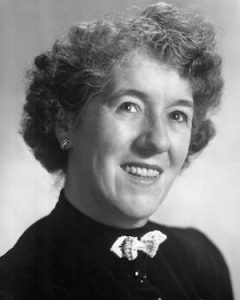
The author in question is Enid Blyton, who was called “a racist, sexist homophobe and not a well-regarded writer,” by the members of the Royal Mint, who in 2019 blocked attempts to give her a commemorative coin.
When one is forced to reckon with the labeling of a favorite author of one’s childhood, there will necessarily need to be a dialogue with the past to find a balance with the present. Read More→
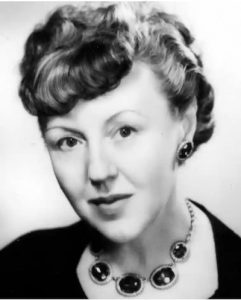
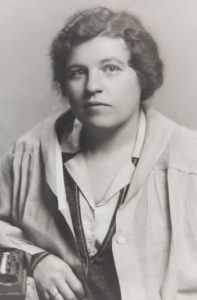
Antonia White (born Eirene Botting, March 31, 1899 – April 10, 1980) was a British author best known for her autobiographical novel Frost in May.
In addition to producing other novels and short stories, she was an accomplished translator from French to English.
Her well-documented struggles with mental health resulted in her being committed to an asylum in her early twenties, an experience that she used as the basis for some of her fiction. Other notable themes in both her life and work were religion, particularly Catholicism, and her difficult relationship with her father and daughters. Read More→
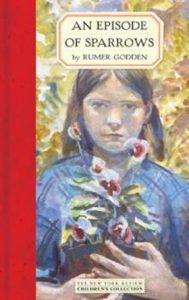
This analysis of Rumer Godden’s 1956 novel, An Episode of Sparrows, features its tenacious young heroine, Lovejoy Mason. Excerpted from Girls in Bloom: Coming of Age in the Mid-20th Century Woman’s Novel by Francis Booth, reprinted by permission.
Growing up in the colonial era, like the family in Rebecca West’s The Fountain Overflows are the sisters Bea and Harriet in The River, 1946, set in what was then Bengal by Rumer Godden (1907–1998), who herself grew up partly in India. Like many of the girls in these semi-autobiographical novels, Harriet wants to be a writer when she grows up. Read More→
This character analysis of Ántonia Shimerda, the heroine of My Ántonia by Willa Cather (1873-1947) is excerpted from Girls in Bloom: Coming of Age in the Mid-20th Century Woman’s Novel by Francis Booth, reprinted by permission.
My Ántonia (1918) is the third of Willa Cather’s Midwestern pioneer novels (often referred to as the Prairie Trilogy) of early twentieth century frontier life which, despite their brevity, manage to encompass the epic sweep of the pioneering move to the West, seeming to hark back to an earlier era of rugged individualism.
Despite the title, Ántonia (the Shimerda family have come from Bohemia; all Czech names have the stress on the first syllable, hence the accent over the Á) is not the narrator nor even the central character; she is always slightly off to one side and a little out of focus. Read More→
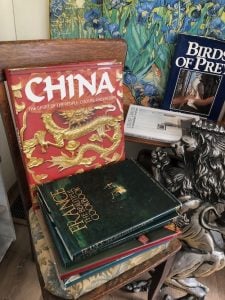
Have you ever heard of a book town or book village? Chances are you haven’t, if you live the U.S.; there are only three of them in all of North America. One of the most charming and accessible book towns is Hobart Book Village in upstate New York. (At right, a stack of books at LionEyes Books, which specializes in art books.)
It just so happens that Hobart, NY (Delaware County), one of North America’s rare book towns, is just a couple of winding, mostly country road hours from my home in upstate New York.
Hobart Book Village was started in 2005 by local entrepreneur Don Dales; and while there’s an occasional turnover in shops and/or their location, the book village concept has been going strong in this hamlet for an impressive number of years. Read More→
Rachel Field (1894 – 1942) was an astonishingly prolific playwright, poet, children’s writer, novelist, and illustrator. I knew almost nothing about her before I moved into her old house on an island in Maine, but now I know better. Here is a selection of fascinating facts about Rachel Field, a talented and prolific author who deserves to be rediscovered and read. (photo at right, Beineke Library, Yale)
Due to the tragedies that reverberated from her sudden death and the subsequent hardships of her bereaved family, Rachel’s work and her famous bright spirit faded prematurely from the national literary scene. Fortunately, the first biography of Rachel Field arrived in 2021 to celebrate the woman and her writing. Read More→
You have a great idea for a memoir, but you don’t know where to start or what to do next. There are so many options for book publishing, and no one seems to agree on the best way to go about it. Here’s some simple and sound advice on how to write a memoir, and the steps to take to get it published.
This guide will help you overcome the main obstacles and show you how to get your memoir published and in the hands of an audience who wants to read it.
Though memoir writing is a specific genre unto itself, writers who have produced well-known memoirs (some of which have become classics) are also known as novelists, short story writers, and poets. Here are some of the classic authors on this site who have at least one memoir to their credit. Read More→
Home libraries of many different styles are popular today. From classic traditional to retro, rustic to modern minimalist, myriad types and sizes of home book havens can be created. Yet there are major differences between these contemporary reading rooms and designs. Most often, there’s no need for a designated room for your home library.
You may choose a corner of a spacious area in an open-concept living room or den; even a cozy nook beneath a long staircase or floor-to-ceiling shelving in your office space works well. Libraries no long need doors or specially structured spaces. Read More→