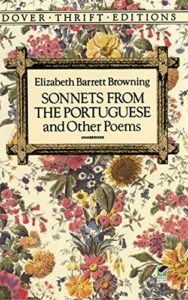
Elizabeth Barrett Browning (1806 – 1861) was immensely accomplished and respected in her own lifetime, no small accomplishment for a female poet. Following is the full text of what is arguably her best-known work, Sonnets from the Portuguese, a fragment of one of her major collections, Poems (1844/1850).
Born in County Durham, England, Elizabeth Barrett grew up in an atmosphere of privilege and culture, which allowed her to develop a precocious talent in poetry.
After having a collections of her poetry published while still in her teens, Elizabeth was introduced to British literary society in the 1830s. Her individual poems were becoming known and respected in these circles. Read More→
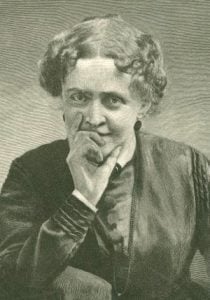
Helen Hunt Jackson (born Helen Maria Fiske, October 15, 1830 – August 12, 1885), was an American novelist, poet, and writer of nonfiction. She gained fame as an advocate of Native Americans, using her pen and her voice to expose their disgraceful treatment by the U.S. government.
Her best-known novel, Ramona (1884), called attention to the mistreatment of Native Americans, much as Harriet Beecher Stowe’s Uncle Tom’s Cabin (1882) raised awareness of the evils of slavery.
Though Ramona is no longer as widely known as the latter, it was hugely successful in its time, going through hundreds of editions. And though the intent behind both Ramona and Uncle Tom’s Cabin could smack of white saviorism, they were the most widely read “moral novels” of the 19th century. The two authors fervently believed in the causes that propelled their writings. Read More→
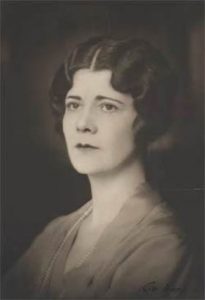
Elinor Wylie (1885- 1928) was an American poet and novelist who had her heyday in the 1920s and 1930s. Her poetry was considered by some a modern successor to the romantic poets, and she was compared favorably with John Donne and Percy Shelley. Following is the full text of Nets to Catch the Wind (1921), her first officially published collection.
In her lifetime, she was celebrated nearly as much for her ethereal beauty and charm as for her talent. Her love life was marked by heartbreak, multiple marriages, and affairs.
Born Elinor Morton, she was stalked for years by the much-older Horace Wylie, a married attorney and father of three. Given her ultimate renown under the name Elinor Wylie, she might have echoed the immortal line by Charlotte Brontë’s Jane Eyre — “Reader, I married him” — but with greater scandal. Read More→
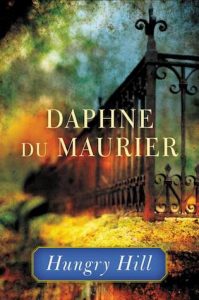
Hungry Hill by Daphne du Maurier is a 1943 novel by the prolific British author and playwright. Her seventh novel takes the form of a multigenerational family saga taking place from 1820 to 1920.
Inspired by actual events and places, the story follows the fortunes of the Brodricks, Anglo-Irish landowners who inhabit Clonmere castle.
While Hungry Hill hasn’t remained as well-known as some of du Maurier’s more famous novels, notably Rebecca, My Cousin Rachel, Jamaica Inn, Frenchman’s Creek, and The Scapegoat, it was successful in its time. It went through dozens of editions, and like many of du Maurier’s other works, it was adapted to film. However, the 1947 movie version was roundly panned. Read More→
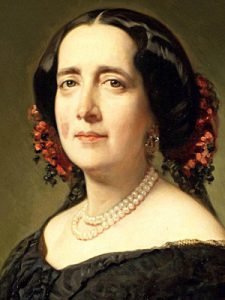
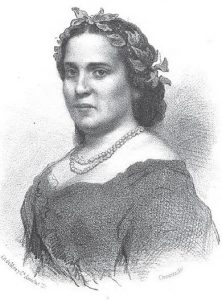
Gertrudis Gómez de Avellaneda y Arteaga (March 23, 1814 – February 1, 1873), a Cuban-born Spanish writer, was considered one of the greatest romantic poets of the nineteenth century. Presented here is a selection of poems by Gertrudis Gómez de Avellaneda, both in their original Spanish (poemas) and in English translation, exploring her views on religion and romance.
Much of the themes in Avellaneda’s work focuses on her experiences living in a male-dominated society. She also wrote about themes of love, feminism, an evolving world, and her experience being exiled from Cuba.
Read More→
Gertrude Stein and Alice B. Toklas, both Americans, met on September 8, 1907 as new expats in Paris. The two bonded immediately. They remained lifelong partners until Stein’s death, with Alice serving as the doting wife, and later, keeper of her legacy.
“I may say that only three times in my life have I met a genius and each time a bell within me rang and I was not mistaken…The three geniuses of whom I wish to speak are Gertrude Stein, Pablo Picasso, and Alfred Whitehead.”
This is the meeting of Gertrude Stein (1874 – 1946) and Alice B. Toklas (1877 – 1967) as written in The Autobiography of Alice B. Toklas (1933). It is Gertrude’s writing, Alice’s voice, and their meeting — twenty-five years previously — recounted as both of them wished to remember it. Read More→
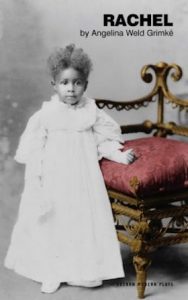
Rachel by Angelina Weld Grimké (1880 – 1958) is considered the first staged play (1916) by a Black American woman, and the first to be performed by an all-Black cast. Grimké may have been better known as a poet, but Rachel, her three-act drama, was a singular achievements for these “firsts.”
Angelina Weld Grimké (not to be confused with her white abolitionist great-aunt, Angelina Grimké Weld), was a talented yet lonely figure in the field of literature. Ann Allen Shockley, in Afro-American Women Writers (1991) wrote of her: Read More→
Gertrudis Gómez de Avellaneda y Arteaga (March 23, 1814 – February 1, 1873), a Cuban-born Spanish writer, was considered one of the most romantic writers and greatest women poets of the 19th century.
Avellaneda was born in Santa Maria de Puerto Principe, currently known as Camagüey. Upon arriving in Cuba in 1905, her father, Manuel Gómez de Avellaneda y Gil de Taboada was a Spanish naval officer in charge of the port of Nuevitas.
Her mother, Francisca María del Rosario de Arteaga y Betancourt, was a criolla and a member of the wealthy Arteaga y Betancourt family, one of the most high-ranking families in Puerto Principe. Gertrudis was the first-born of the couple’s five children, but only she and her younger brother, Manuel, survived past childhood.
Read More→