Characters are the lifeblood of your creative writing, and you want them to power your stories to the end. Here you’ll find some actionable tips on how to create memorable characters for your fictional works, with a few case studies of famous literary heroines to guide and inspire you.
While the world you create in your fictional works is important, readers are more likely to remember the characters that populate it. Indeed, a well-developed central character (or characters) will stay with readers long after they’ve turned the final page.
Strong characters are a must if you want people to stay invested in your story! After all, if readers don’t care about the characters themselves, why should they care what those characters do or say? Read More→
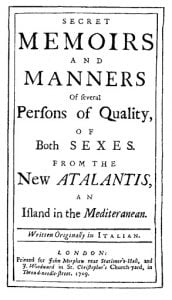
Many women authors have been criticized and even ostracized for their writing but very few have been arrested for it. The New Atalantis by Delarivier Manley (1709) was considered so scandalous that its publisher, printer and author were all arrested for scandalum magnatum.
This introduction to the best-known work by Delarivier Manley (1663 – 1724) is excerpted from Killing the Angel: Early Transgressive British Woman Writers by Francis Booth ©2021, reprinted by permission.
Manley herself considered that it was her gender that most upset the censors; in the follow-up book The Adventures of Rivella, 1714, she says, very much as Aphra Behn had said earlier: Read More→
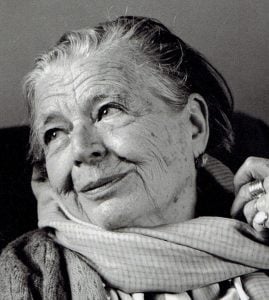
Marguerite Antoinette Jeanne Marie Ghislaine Cleenewerck de Crayencour (June 8, 1903 – December 17, 1987) was a French short story writer, novelist and essayist known as Marguerite Yourcenar.
Best known for her novel Memoirs of Hadrian, she was the first woman to be elected to the Académie Française.
From the beginning of World War II, she lived in the United States with her partner, the American professor Grace Frick. She took American citizenship and died in Maine at the age of eighty-four. Read More→
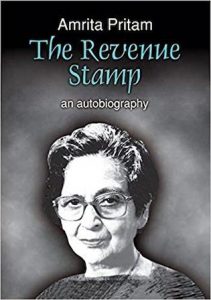
Amrita Pritam (1919 – 2005) was a poet, novelist, and essayist, with a huge body of work to her credit. So it’s surprising that her autobiography is just under two hundred pages, and it’s curious why she chose this particular title — The Revenue Stamp.
Behind the name is the exchange between Amrita and the famous author and journalist, Khushwant Singh, who told her that her life was of so little consequence that it could be written on the back of a revenue stamp (‘Raseedi Ticket’ in the original).
When choosing the name for her autobiography, Amrita recalled this banter and opted for this name. Credit must be given to the English translator, Krishna Gorowara, who seems to have picked up on all the nuances and depth of Amrita’s thoughts. Read More→
Marjory Stoneman Douglas (1890-1998) was an American writer and environmentalist who famously fought to protect the Florida Everglades, and also used her talents to advocate for women’s rights and racial justice in Miami and beyond. Here you’ll discover 10 fascinating facts about Marjory Stoneman Douglas, whose multifaceted accomplishments shouldn’t be forgotten.
Marjory’s long life was full of adventure, heartbreak, loss, discovery, and – ultimately – impact on the health and preservation of the wetlands critical to South Florida’s survival.
This unconventional woman helped shape the future of South Florida at a time when Miami was barely more than a frontier town and the “swamp” to the west of it was considered there for the taking by developers, speculators, and agricultural industrialists. Read More→
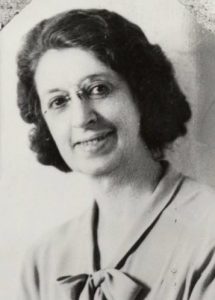
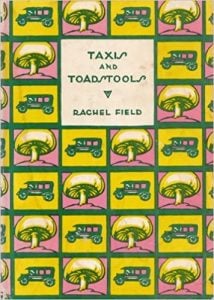
Rachel Field (1894 – 1942) was a National Book Award winning novelist and a Newbery Medal winner. Her plays were produced all over the country, and she was a sought-after writer in Hollywood by the time her life ended abruptly in 1942.
But when interviewers asked her which of her writings she liked best, she always said it was her poetry. I have to agree and perhaps you will, too, after sampling these poems by Rachel Field.
It was Rachel Field’s poetry that first caught my interest when I moved into her old summer house on an island in Maine in 1994, partly because so much of her poetry referenced both interior and exterior island scenes that were intimately familiar to me. Read More→
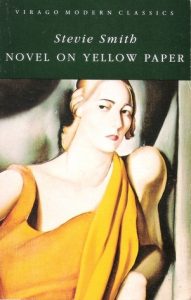
This analysis of Novel on Yellow Paper by Stevie Smith (1936) is excerpted from Amongst Those Left by Francis Booth. Reprinted by permission.
‘This book is the talking voice that runs on, and the thoughts come, the way I said, and the people come too, and come and go, to illustrate the thoughts, to point the moral, to adorn the tale.’
Born Florence Margaret Smith, in Kingston Upon Hull, England, Stevie Smith (1902 – 1971) is now better known and loved as a poet than as a novelist. All her novels were written relatively early in her life and are all unconventional. Smith was brought up, along with her sister, by her feminist aunt Madge Spear, whom she called ‘The Lion Aunt’ and with whom she lived all her life. Read More→
Quite often in life, the innocence and idealism of one’s childhood years are intruded upon by the realities and pragmatism of adult life.
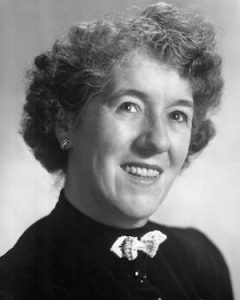
The author in question is Enid Blyton, who was called “a racist, sexist homophobe and not a well-regarded writer,” by the members of the Royal Mint, who in 2019 blocked attempts to give her a commemorative coin.
When one is forced to reckon with the labeling of a favorite author of one’s childhood, there will necessarily need to be a dialogue with the past to find a balance with the present. Read More→